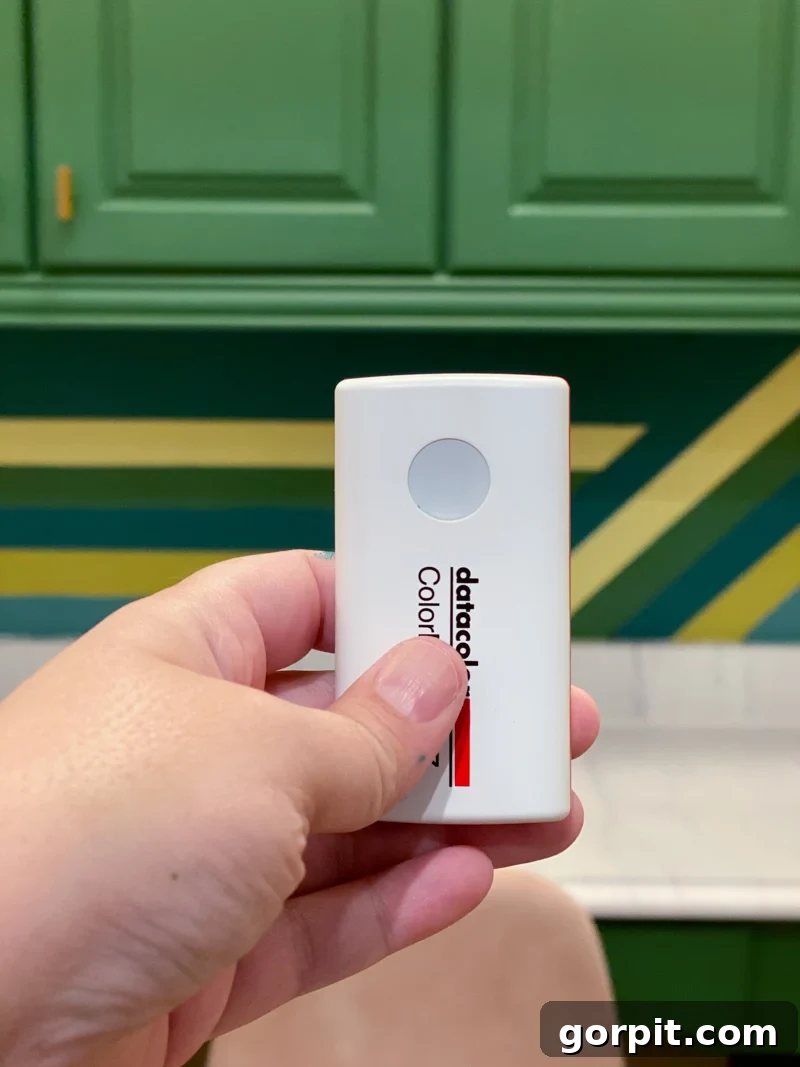
Ever found yourself staring at a wall, wondering how to match that perfect shade of paint without a clue where it came from? You’re not alone! This common homeowner dilemma can feel overwhelming, especially when you have no record of the original paint name or formula. But don’t fret! Achieving a seamless paint touch-up or renovation is absolutely possible, even in the absence of original records. With the right approach and a few clever techniques, you can accurately match existing wall paint with surprising ease. This comprehensive guide will walk you through four effective options to perfectly color match paint, ensuring your walls look flawless once more.
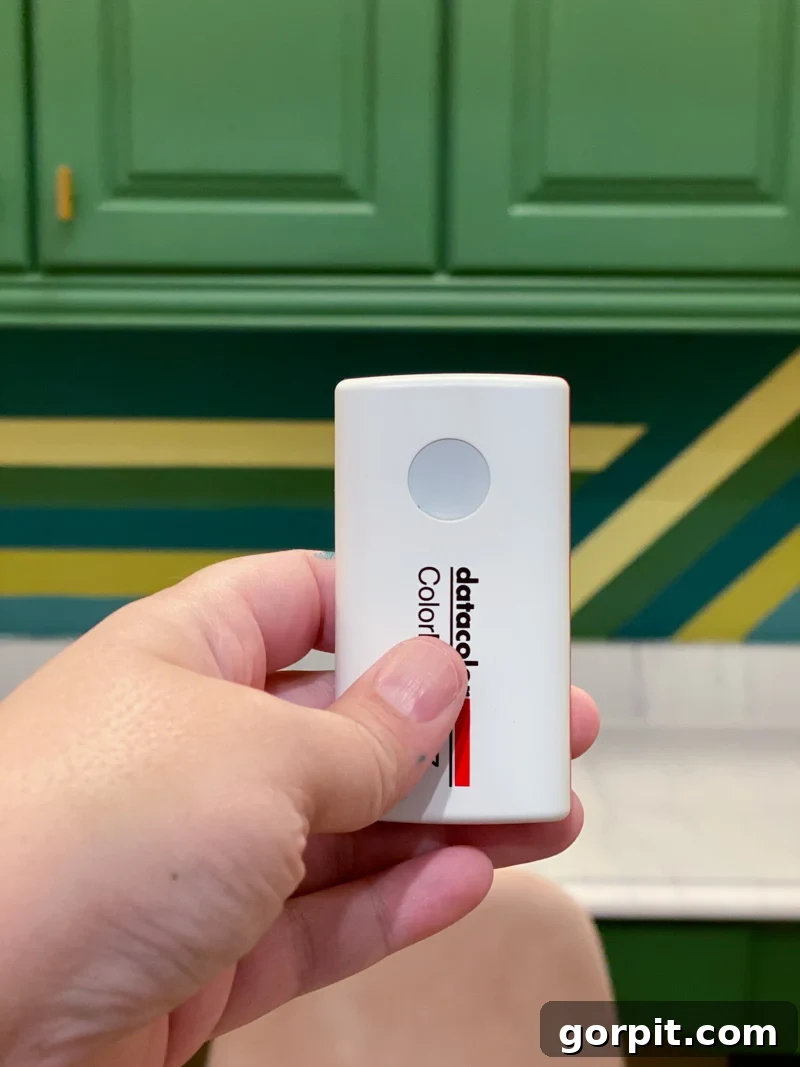
Table of Contents
This post contains some affiliate links for your convenience. Click here to read my full disclosure policy.
Paint touch-ups are an inevitable part of homeownership. Whether it’s the result of ambitious furniture rearrangements, accidental scuffs, or countless nail holes from a gallery wall that didn’t quite work out, walls eventually need a little refresh. Even something as simple as a poorly sealed paint can rendering your stored paint unusable can leave you in a bind. New homeowners often face this challenge too, falling in love with existing paint colors but finding no leftover paint or color information from previous residents.
So, what’s a DIY enthusiast or busy homeowner to do when you need to refresh your walls but lack crucial paint details? The thought of finding an exact match without a name or formula can seem daunting, but thankfully, several reliable methods exist to help you conquer this common decorating dilemma. Let’s dive into the best strategies for perfectly matching that mysterious paint color already on your walls.
4 Reliable Options to Match Existing Wall Paint Like a Pro
If you’re facing the daunting task of matching a paint color on your wall with absolutely no records, take a deep breath! All hope is certainly not lost. There are several effective options available, ranging from traditional methods to modern technological solutions. These strategies will help you achieve a seamless match, allowing you to tackle touch-ups or partial repaints with confidence. (If you’re not particularly fond of the current color and are open to a change, feel free to explore these expert tips for choosing new paint colors for your home).
Option 1: Take a Physical Sample from Your Wall to the Paint Store
This method is often the most reliable way to achieve an accurate color match, especially if your walls are made of drywall. Paint stores are equipped with advanced spectrophotometer machines that can analyze a physical sample of your paint, identifying not only the exact color formula but often the sheen level as well. The key is to provide them with a sample large enough for their equipment to get a precise reading.
To obtain a sample, select an inconspicuous area on your wall – perhaps behind a large piece of furniture, inside a closet, or near a baseboard where any future patch-up will be less noticeable. Using a sharp utility knife or craft knife, very gently score and cut out a small square or rectangle, roughly 2×2 to 4×4 inches. The goal is to remove just the painted surface, and ideally, a thin layer of the drywall paper or plaster beneath it, ensuring you have an adequate thickness to avoid flaking. For plaster walls, exercise extra caution to prevent larger damage. Bring this sample to a reputable paint store. Their experts can scan it and usually provide you with the custom color formula, brand recommendations, and even the appropriate sheen (e.g., flat, eggshell, satin).
Once you have your perfectly matched paint, you’ll need to repair the small area where you removed the sample. This can be done with spackle or joint compound. Apply it in thin layers, allowing each to dry thoroughly before sanding smooth. Once patched and sanded, prime the repaired spot to ensure the new paint adheres evenly and doesn’t “flash” (show a dull spot). Then, apply your newly matched paint to the repaired area and any other spots needing touch-ups. This meticulous process ensures a flawless finish that blends seamlessly with the rest of your wall.
Option 2: Utilize an Electronic Color Matcher Device
In the past, accessing professional-grade color analysis required a trip to a specialized paint store. However, technological advancements have brought powerful spectrophotometer technology into compact, handheld devices. These electronic color matchers, such as the Datacolor ColorReader EZ (which I personally use and recommend), are now readily available and can be shipped directly to your home, offering professional-level accuracy at your fingertips.
These devices work by placing a sensor directly against the painted surface you wish to match. They emit their own internal light source and block out all ambient external light, ensuring the most accurate color reading possible. This method is significantly more precise than simply taking a photo with your phone, as it eliminates variables like lighting conditions and camera calibration. My Datacolor EZ Color Reader, for example, is surprisingly affordable and has proven to be very accurate with a wide range of hues. However, I’ve noticed it can sometimes struggle with extremely subtle white paint colors. For instance, when I tested it on my Sherwin-Williams Pure White walls, it didn’t list that specific color in the results. This might be due to white paints’ dramatic sensitivity to ambient light, a factor I explore in more detail in my post on how to choose paint colors.
To use an electronic color matcher, you typically pair it with a dedicated smartphone app. The app then displays the closest paint matches from various popular brands, often providing color codes and names that you can take directly to the paint store. These devices offer incredible versatility beyond just walls; you can use them to match paint colors to fabric, artwork, rugs, or even a favorite decorative object, truly expanding your design possibilities. They are an excellent investment for anyone who frequently undertakes home decor projects or simply wants the convenience of precise color matching on demand.
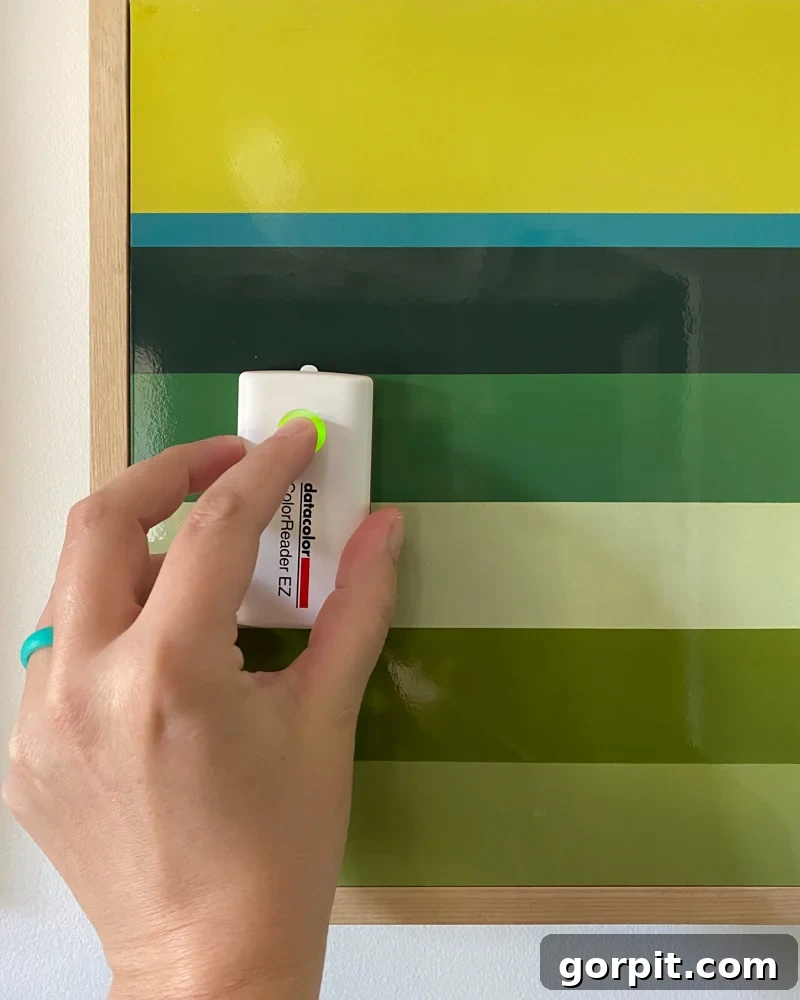
This image illustrates a typical output you might see within the companion app after prompting the color reader to match a surface, showing recommended paint colors and their corresponding details.

Option 3: Leverage a Paint Matching Mobile App
Many leading paint companies have developed sophisticated mobile applications to assist homeowners in finding suitable paint matches using just their smartphone cameras. Brands like Behr, Valspar, and Sherwin-Williams, among others, offer user-friendly apps that can simplify the color matching process. While the specific features might vary between apps, the core concept remains consistent: you use your phone’s camera to capture an image of the paint color you want to match, and the app processes this image to suggest the closest color options from its database.
To achieve the most accurate results with a paint matching app, several factors are absolutely vital. Firstly, lighting is paramount. Always take your photo in natural light, ensuring there are no artificial lights (lamps, overhead fixtures) influencing the color perception. Artificial light sources can significantly alter the appearance of a color, leading to inaccurate matches. Try to photograph the wall during daylight hours, ideally on a cloudy day or in indirect sunlight, to minimize harsh shadows and glare. Secondly, hold your phone steadily and as close to the wall as possible without casting a shadow. Take multiple photos from slightly different angles to give the app more data to work with. Some apps even allow you to “virtually paint” your room, offering a preview of how a suggested color might look.
It’s important to set realistic expectations for paint matching apps. While incredibly convenient, they typically offer a “closest match” rather than a perfect, exact match due to the limitations of phone cameras and varying screen calibrations. However, they can be an excellent starting point, narrowing down your options and providing a solid foundation for finding a complementary color. After getting a suggestion from an app, it’s always recommended to purchase a few paint samples (or peel-and-stick samples) of the closest matches and test them on your wall before committing to a larger purchase.
Option 4: Repaint the Entire Affected Wall from Corner to Corner
There are instances when despite your best efforts, none of the first three options yield a perfectly undetectable match. This can happen due to paint fading over time, unique paint formulas, or simply the subtle nuances of color perception. In such cases, your most effective solution might be to repaint the entire affected wall from one corner to the other. While this might sound like more work, it often saves frustration and delivers a far more satisfying result than attempting a flawed touch-up.
The beauty of the “corner-to-corner” method lies in an optical illusion: slight color variations are much harder to detect when they meet at a corner, where two different planes of a room intersect. Your eye naturally expects a subtle shift in color or shading at a corner, making any minor discrepancy between the old and new paint virtually unnoticeable. This means you don’t necessarily have to repaint the entire room, saving significant time, effort, and paint.
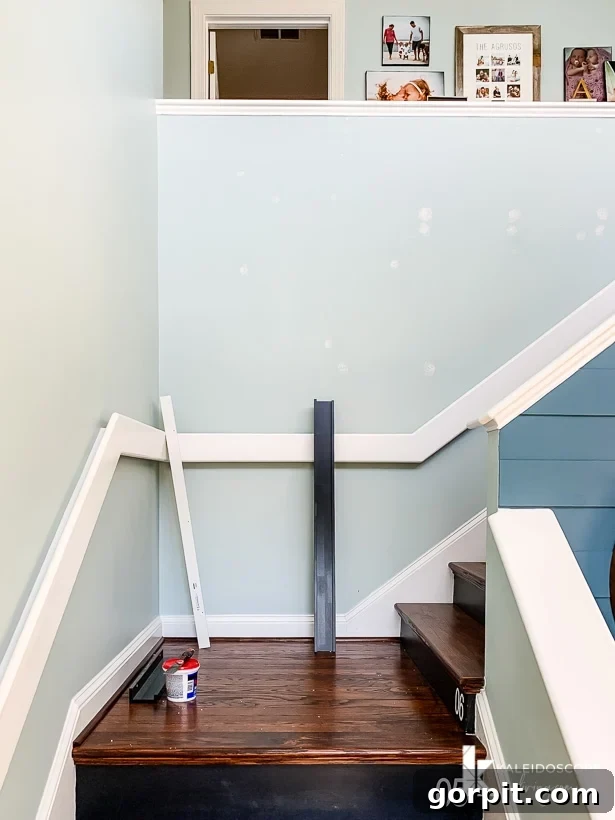
I experienced this exact scenario in our old house. When we first moved into our current home, our two-story foyer needed painting, but we lacked a ladder tall enough. We hired a painter and specified a particular paint color. Later, we discovered he had color-matched it in a different brand – which wasn’t a problem until he left us with no leftover paint! When we tried to get it color-matched ourselves for touch-ups, we faced persistent challenges. Despite multiple attempts with various brands, we couldn’t achieve a perfect, undetectable match. This became particularly evident when we decided to add new artwork to our staircase wall, requiring us to patch old nail holes from a previous gallery display. Painting over these patched areas with an imperfect match would have been visibly jarring. So, I repainted the entire staircase wall, seamlessly blending the new paint into the adjacent two-story wall at the corner. The result was flawless, and I was incredibly relieved not to have to repaint the entire foyer!
To successfully execute this option, ensure you meticulously tape off the edges where the wall meets the ceiling, adjacent walls, and baseboards. Prepare the surface by cleaning and patching any imperfections before applying the new paint. By repainting from one corner to the next, you create a natural break point that disguises any minor color difference, making your touch-up or renovation efforts completely unnoticeable.
So, there you have it: four distinct and effective options for matching paint colors when you’re without extra paint or critical color information, and the paint is already on the walls! These methods offer a spectrum of solutions, from DIY-friendly approaches to professional-grade tools, ensuring you can tackle any paint matching challenge.
Prevent Future Paint Matching Headaches
Of course, the absolute best strategy is to prevent this dilemma from happening again! Making sure you never forget a paint color is surprisingly simple and will save you immense time and aggravation down the road. I personally use my copy of Designer in a Binder to diligently keep records of all the paint colors, finishes, and brands we use throughout our home. This allows me to quickly reference any paint detail when needed, eliminating guesswork and stress.
For those who don’t have a dedicated system like Designer in a Binder, I’ve created a handy Paint-Color Record Keeper specifically for my subscribers. It’s an invaluable tool included in our VIP subscriber hub, which you can subscribe to below. It takes mere seconds to jot down essential details like the paint brand, color name, specific code, sheen level, and the room where it was used. This small effort upfront can save you hours of searching, frustration, and potential costly mistakes. Furthermore, if you ever decide to sell your home, your buyers will undoubtedly appreciate and love you for keeping such thorough records of everything, adding value and convenience to their new homeownership experience.
More Inspiring Paint and Home Decor Posts
SEE ALL PAINT POSTS
-
9 Life-Changing Painting Hacks Everyone Should Know
-
How Durable are DIY Painted Kitchen Cabinets?
-
How to Paint Kitchen Cabinets (From a DIYer Who Has Done it 3 Times)
-
How Have Our Painted Countertops Held Up?
-
How to Paint IKEA Furniture and Mistakes to Avoid
-
How Much Paint Do I Need for My Room?
Other posts you may enjoy:
- How to Choose Paint Colors for Your Home: 6 Simple Tips to Follow
- Samplize Peel & Stick Paint Samples: An Unbiased Review
- Sherwin-Williams Alabaster Color Review With Pictures
- Beautiful Blue Paint Colors Designers Love & Use
Wondering how I approach transforming rooms and spaces in our home? Check out Designer in a Binder®, my ultimate guide to decorating your home with confidence and ease.
And for exclusive content, behind-the-scenes sneak peeks, and valuable home decor insights, be sure to subscribe to our newsletter before you leave!