Transforming your kitchen is one of the most impactful home improvement projects you can undertake, instantly boosting both aesthetics and home value. While a complete kitchen overhaul can be incredibly costly, especially when it involves replacing existing cabinetry, there’s a remarkably effective and budget-friendly alternative: painting your kitchen cabinets. It’s a question I hear constantly: “Should I paint my kitchen cabinets?” If you’re pondering this very thought, you’ve come to the right place. This comprehensive guide will walk you through everything you need to consider, from essential questions to ask yourself to practical tips, ensuring you approach this DIY project with confidence and achieve stunning, long-lasting results without breaking the bank.
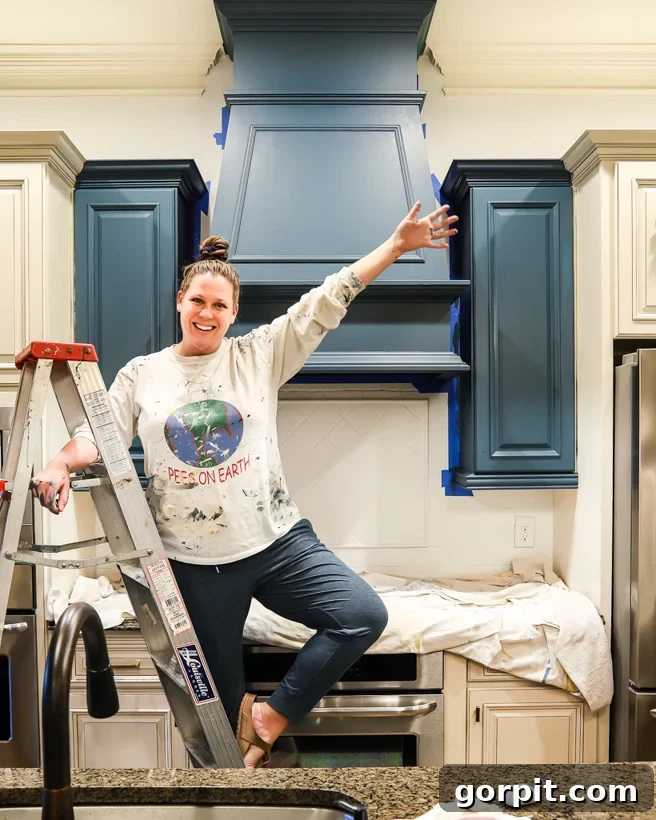
Table of Contents
My Proven Experience with Painting Kitchen Cabinets
Over the years, I’ve personally tackled the project of painting kitchen cabinets three separate times, each with its unique approach and remarkable success. My journey began in our old house, where I painted the kitchen cabinets without the traditional priming or sanding steps. The results were not only beautiful but incredibly durable, holding up perfectly for over five years until we decided on a full kitchen renovation. We even did a two-year check-in to showcase their resilience—they were truly amazing!
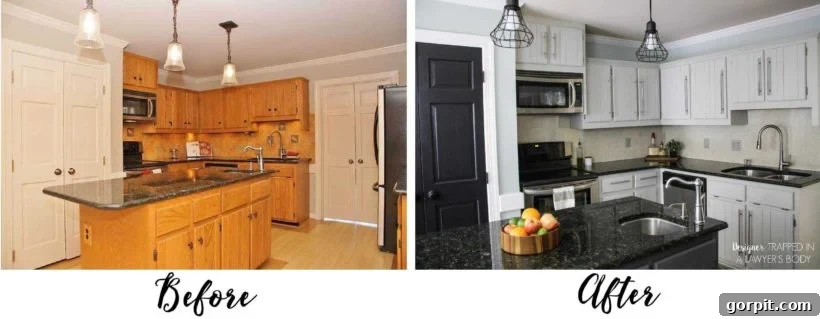
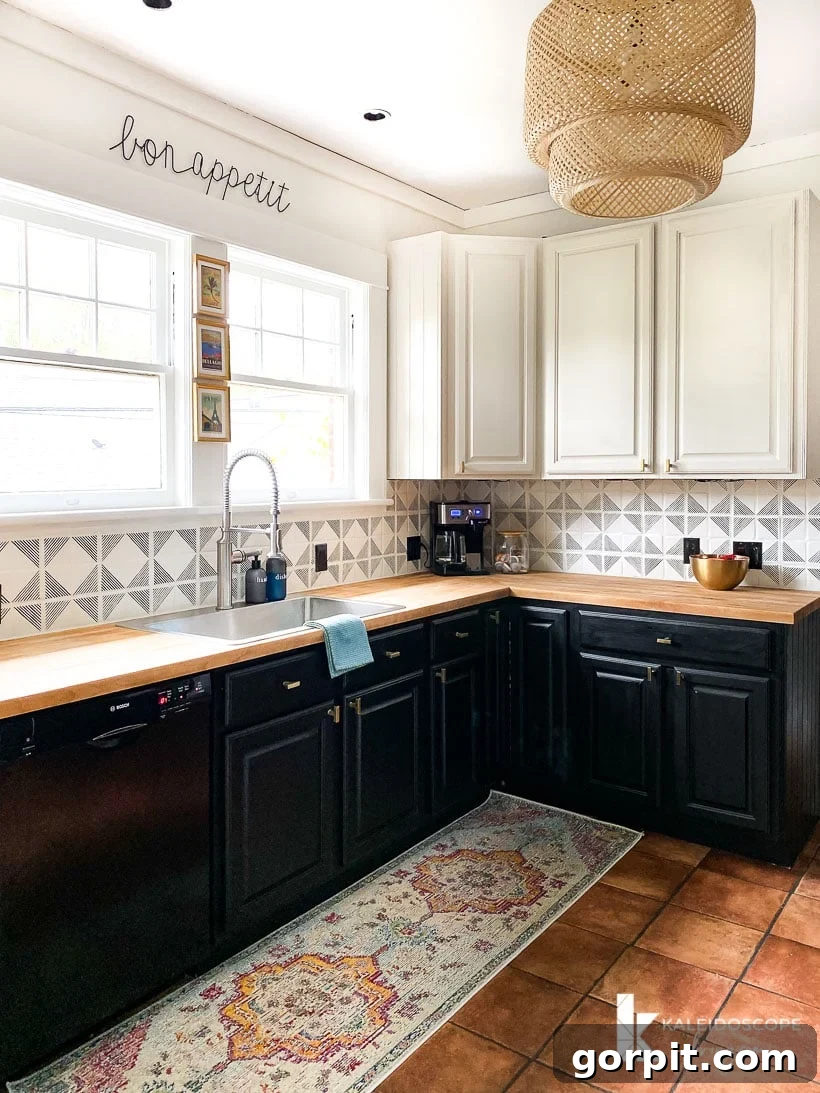
My second experience involved helping a friend, Thea, paint her kitchen cabinets using a different set of products and an even quicker, simpler method. This project was completed three years ago, and her cabinets continue to look flawless. The entire kitchen transformation cost just $997, proving that a stunning update is achievable on a modest budget.
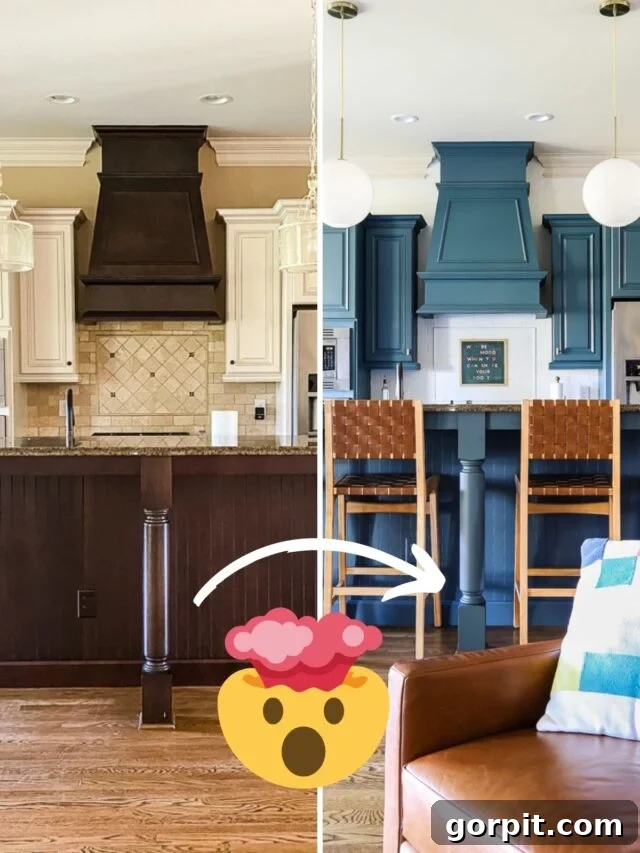
Most recently, I applied a similar successful method to paint my own kitchen cabinets as part of a budget-friendly kitchen makeover in our current home about two years ago. Given these extensive hands-on experiences, I can confidently say I possess considerable knowledge regarding the nuances of painting kitchen cabinets and achieving professional-looking results. So, when people ask, “Should I paint my kitchen cabinets?” my answer is always: it depends! The decision hinges on several crucial factors that you’ll need to evaluate. Let’s explore these essential questions to help you determine if this rewarding DIY project is right for you.
This post contains affiliate links for your convenience. Click here for my full disclosure policy.
Crucial Questions to Ask Before You Paint Your Kitchen Cabinets
Before you even pick up a paintbrush, it’s vital to thoroughly assess your situation. Asking yourself these specific questions will help you plan effectively, manage expectations, and ultimately decide if painting your kitchen cabinets is the best path for your home improvement goals.
What is Your Budget for This Kitchen Makeover?
Budget is often the primary driver for any home renovation project, and painting kitchen cabinets is no exception. Generally, painting is significantly more cost-effective than a full cabinet replacement. If you opt for the DIY route, you’ll save considerably on labor costs. However, even a DIY cabinet painting project requires an investment of several hundred dollars for quality paints, primers, brushes, rollers, cleaning supplies, and masking materials. If you plan to replace hardware like hinges, pulls, and knobs, your expenses could approach or even exceed $1,000, depending on your choices.
Hiring a professional to paint your kitchen cabinets can be surprisingly expensive, often more so than many homeowners anticipate. The final cost depends on various factors, including the size of your kitchen, the number of cabinets and drawers, the chosen paint quality, and the professional’s experience and location. On average, you might expect to pay around $100 per drawer face and $175 per cabinet door, which can easily add up to $4,500 or more for a typical-sized kitchen. It’s important to remember that a higher price doesn’t automatically guarantee superior results. I’ve heard numerous stories from friends whose professionally painted cabinets turned out less than perfect. If you decide to hire a professional, always request multiple references and contact them directly. Ideally, ask if you can see their completed work in person to truly assess the quality and durability before making a commitment.
What Are Your Kitchen Cabinets Made Of?
The material of your existing kitchen cabinets is a critical factor when considering painting. The vast majority of older cabinets are constructed from solid wood, which is generally a dream to paint due to its porous nature and excellent adhesion properties. However, many modern or budget-friendly cabinets are made from engineered wood products such as MDF (Medium-Density Fiberboard), plywood, or particleboard. These are often covered with various finishes like veneer, thermofoil, or laminate.
Painting engineered wood cabinets can be more challenging than painting solid wood. The smooth, often non-porous surface of veneer, thermofoil, or laminate doesn’t readily accept paint, making chipping or peeling a common issue if not prepped correctly. To ensure durable adhesion with most paints, engineered wood cabinets typically require thorough cleaning, a light sanding to scuff the surface, and an appropriate primer designed for difficult-to-adhere-to surfaces. Always perform a test in an inconspicuous area first. After the test patch dries and cures, check its durability by gently scratching or pressing on it to ensure the paint won’t flake or chip, especially given the high-traffic nature of a kitchen environment.
Can My Cabinet’s Material Accept Paint Effectively?
Beyond the base material, the specific paint you choose plays a significant role in adhesion, especially for those trickier surfaces like engineered wood or older, slick finishes. The market offers a wide array of excellent kitchen cabinet paints, each formulated for durability and adherence to various materials. Don’t despair if your cabinets aren’t solid wood; there are still fantastic options for a successful paint job!
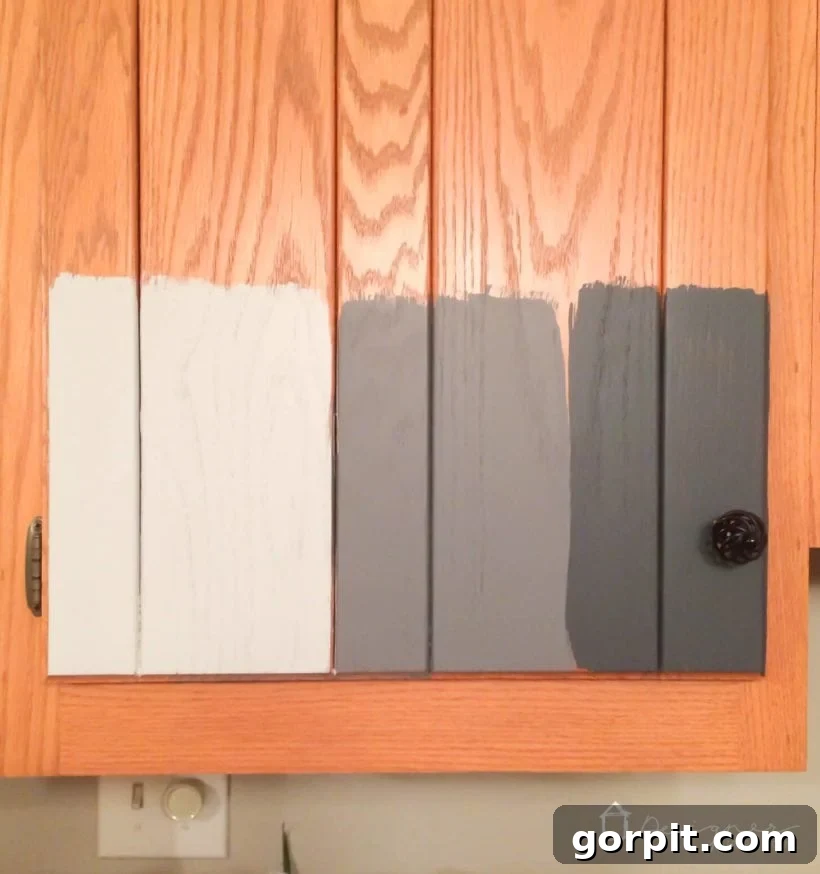
For instance, the General Finishes Milk Paint that I used on our old kitchen cabinets demonstrated remarkable adhesion across diverse surfaces. General Finishes explicitly states that their milk paints “will adhere to a variety of surfaces including wood, fiberglass, PVC, vinyl, and most composite materials. Additionally, these paints can be applied over existing finishes, stains and other paints so long as the existing finish is fully dry. However, when painting over other finishes, it’s important to always test a small area first to make sure the paint adheres well to the original surface.” This means even if you have composite or synthetic cabinets, painting them is still a viable option. I highly recommend ordering a pint-sized can of the General Finishes Milk Paint to perform a test. When I undertook our project, I tested three different colors, which not only helped me finalize my color choice but also provided valuable confidence in the paint’s exceptional adhesion properties.
Similarly, the Fusion Mineral Paint we used in Thea’s kitchen is renowned for its outstanding adhesion and durability. It’s an excellent choice for a wide range of surfaces and comes in an extensive palette of beautiful colors. These advanced paint formulations significantly broaden your options for achieving a professional finish, regardless of your cabinet’s original material.
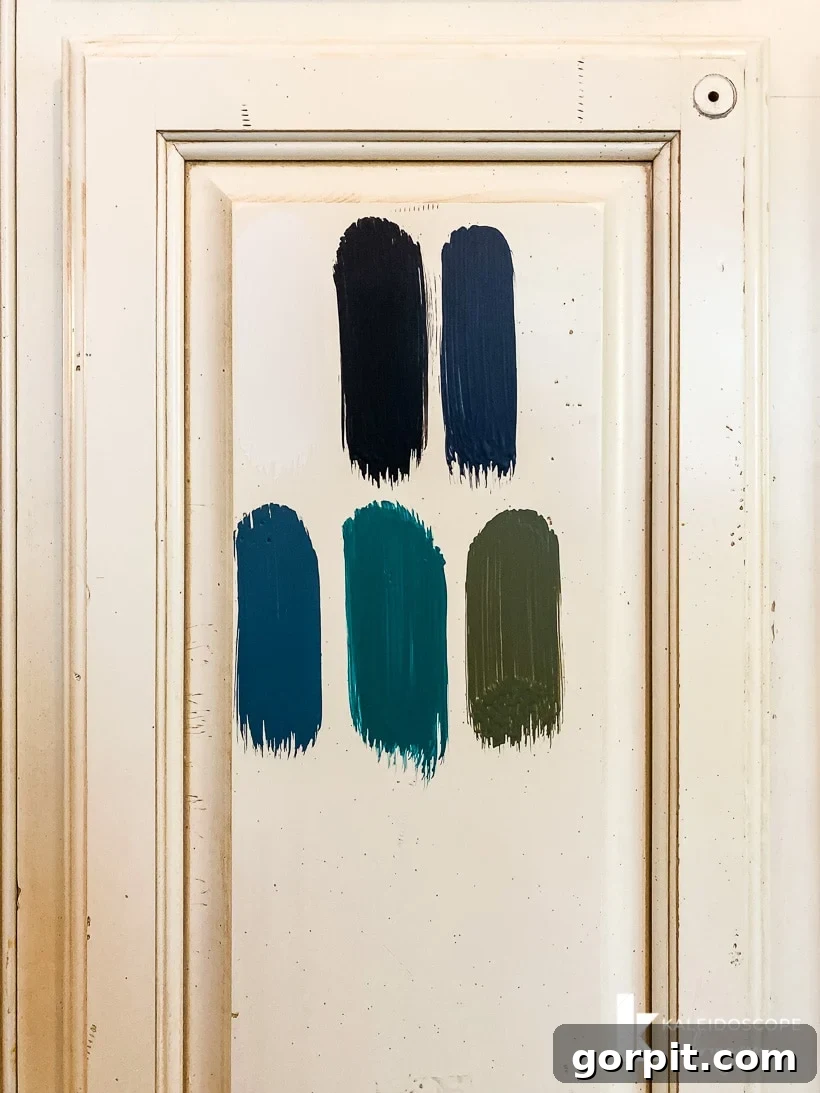
What is the Existing Finish on Your Cabinets?
Assuming your cabinets are solid wood, it’s still crucial to examine their current finish. Most common finishes, such as stains and polyurethane, can typically be painted over with proper preparation. However, you might encounter challenges if your goal is to transition from a painted finish to a stain, for example. To paint over an existing latex paint finish, extensive sanding will likely be necessary to ensure proper adhesion and a smooth surface. In cases where cabinets are already heavily painted with latex, refacing your kitchen cabinets by replacing the doors might be a more efficient and aesthetically pleasing option.
As previously mentioned, we achieved fantastic results using General Finishes Milk Paint on our old cabinets. Another excellent product from the same brand is their Java Gel Stain, which is perfect if you’re looking to achieve a richer, darker finish. Java Gel Stain is a thick, highly pigmented product that can cover almost anything. You can see how we used it to darken a light pine cabinet in this detailed post. A key principle to remember is that it’s always significantly easier to darken an existing finish than it is to lighten a dark paint or stain without extensive stripping or priming.
For Thea’s kitchen, we relied on Fusion Mineral Paint products to achieve a complete transformation. Her cabinets already had a painted wood finish, which simplified the preparation process considerably. All that was required was a quick, light scuff-sanding, which took approximately 30 minutes. You can find all the details on how we prepped and painted Thea’s cabinets in this dedicated blog post. If you prefer visual instructions, a video tutorial is available showcasing our method.
How Do You Feel About Visible Wood Grain?
A common question I receive is whether the natural wood grain, especially on oak cabinets, remains visible after painting. The straightforward answer is yes, the grain will likely still be visible, and in my experience, this was perfectly acceptable. Unfortunately, I am not aware of any paint product that can completely fill in and conceal wood grain without extensive additional steps.
However, you can certainly minimize its prominence. When we painted our old cabinets, we used General Finishes Milk Paint, which has a very flat finish. We also applied a flat top coat, which added only a subtle sheen. The flat finish significantly reduced the noticeable appearance of the grain because it reflects minimal light. While the grain was still discernable upon close inspection, its overall impact was greatly diminished.
If seeing any wood grain is an absolute deal-breaker for you, then you have a few options. You could follow a specialized process involving wood fillers and high-build primers to effectively eliminate the grain. Alternatively, you might need to consider more extensive solutions such as refacing your cabinets with new, smooth doors or replacing them entirely if a perfectly smooth, grain-free finish is your top priority.
How Much Time Can You Commit to the Project?
Painting kitchen cabinets is a highly achievable DIY project for many homeowners, but it’s crucial to approach it with a realistic understanding of the time commitment involved. This project will undoubtedly disrupt your normal kitchen routine for at least a few days, possibly longer depending on your pace and the specific method you choose. Preparation, painting multiple coats, and allowing for adequate drying and curing times are all critical steps that cannot be rushed.
When we painted the cabinets in our old house, we decided not to paint the insides of the cabinet boxes, which allowed us to keep dishes stored in place. The paint we used dried very quickly, enabling us to complete the project in just a few days. However, it’s important to acknowledge that the kitchen was quite a mess during the entire process. Similarly, painting Thea’s kitchen cabinets was an even quicker endeavor because we didn’t remove the cabinet doors or empty them, further streamlining the workflow. Despite the speed, her kitchen was still temporarily out of commission while we worked on the transformation.
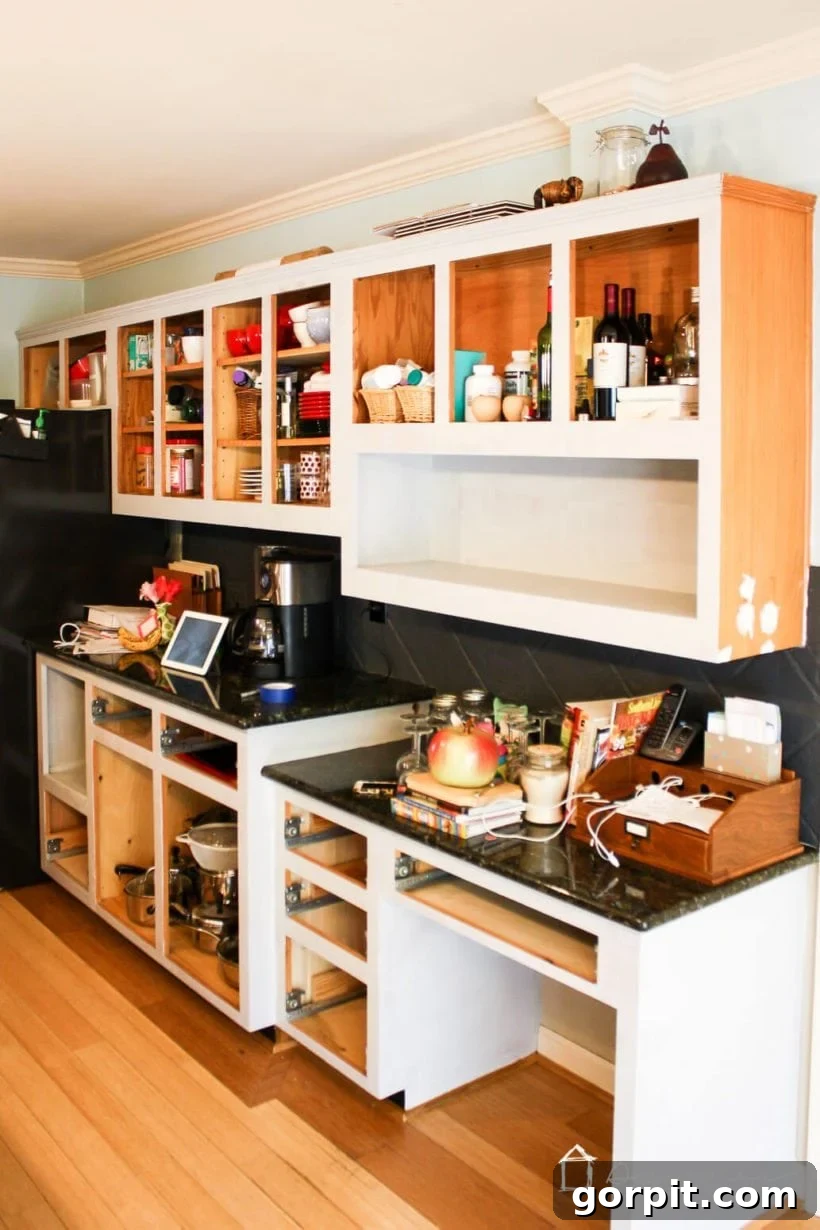
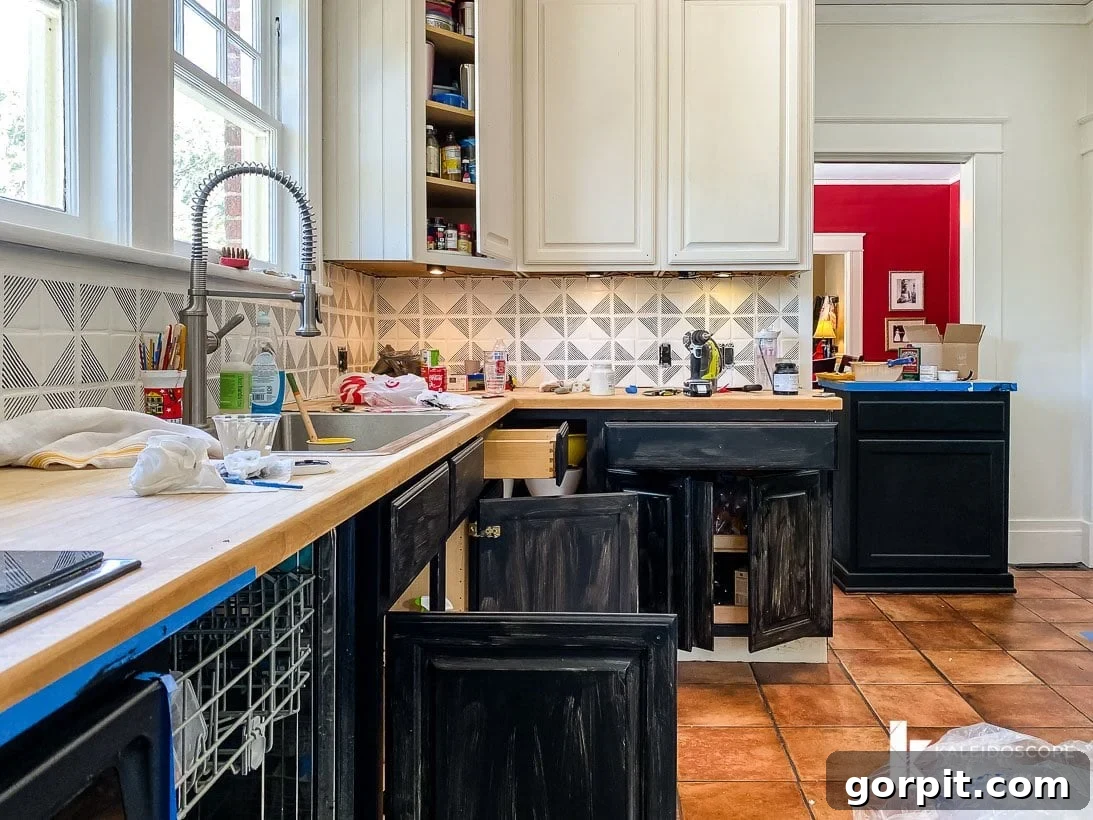
The bottom line is to always have a “Plan B” in mind. What will you do if you run out of paint, decide you dislike the color, or realize the project is more daunting than anticipated? Consider how you will manage without a fully functional kitchen during unexpected delays. Kitchen renovations, even cosmetic ones, can be challenging because the kitchen is such a central hub of most homes. With the right paint and a solid plan, the project can indeed progress rapidly. Just ensure you block out a sufficient amount of time to complete the work before any major scheduling conflicts, like hosting a holiday gathering. This is definitely not a project to start the day before Thanksgiving!
How Particular Are You About Perfect Details?
Your personal tolerance for imperfections will significantly influence your satisfaction with a DIY cabinet painting project. While I appreciate quality, I’m also someone who can live with slight imperfections. For instance, it didn’t bother me that the insides of our cabinet boxes weren’t painted; we only painted the interior of the doors. A little normal wear and tear is to be expected, especially as a mom of twins! It’s part of the lived-in charm of a home.
However, if you are extremely particular about details and strive for absolute perfection, you must carefully weigh your time and effort against the potential cost. If the thought of tiny brush strokes, minor drips, or slight unevenness will keep you awake at night, or if you find yourself meticulously scrutinizing every corner, then painting your kitchen cabinets yourself might not be the most suitable project for you. In such cases, investing in a professional painter who can deliver a factory-like finish might be a better use of your resources and ensure your peace of mind.
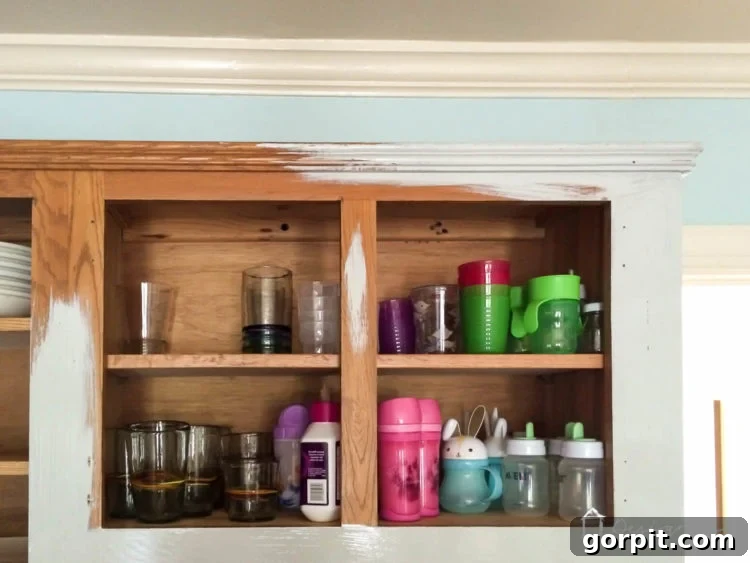
What is the Current Condition of Your Cabinets?
Before committing to a kitchen cabinet painting project, conduct an honest assessment of their current state. Ask yourself: are these cabinets truly worth the effort of painting? If your cabinets are severely damaged—exhibiting significant rot, warping, peeling laminate, deep cracks, or structural integrity issues—a fresh coat of paint will only serve as a superficial band-aid. Paint cannot fix underlying structural problems or extensively damaged surfaces. In such cases, painting would be a wasted effort, and replacement or professional refacing should be considered.
However, if your cabinets are in generally good structural shape, meaning they are solid, not warped, and free from major damage, painting them is an excellent option! Even if they have minor cosmetic flaws, a good cleaning, light sanding, and a fresh coat of paint can dramatically improve their appearance. Pairing the new paint with updated hardware can further elevate the look, making your kitchen feel brand new. In Thea’s kitchen, for example, her cabinets were in good condition, allowing us to keep the hidden hinges (painting carefully around them) and simply replace the hardware with these modern, elegant, and incredibly inexpensive knobs, which made a huge difference.
Comparing Costs: Replacement vs. Refinishing
For most homeowners, the cost comparison between replacing and refinishing cabinets is often the deciding factor. The financial savings achieved through painting are simply unbeatable. For instance, when I first painted my kitchen cabinets, we managed to update the entire kitchen for just $700, a figure that included flooring, fixtures, and all other elements. Similarly, Thea’s complete kitchen makeover cost only $997, which encompassed updated lighting, a rug, new cabinet hardware, and all decorative accessories.
These prices are incredibly competitive, especially when you consider the exorbitant costs associated with a full kitchen gut and renovation. Having gone through a large-scale, full kitchen remodel in our old home eventually, I can attest to how expensive such projects can be. If your cabinet structures are sound but you’re simply dissatisfied with the door styles or finishes, you might also explore refacing your cabinets by swapping out only the doors and drawer fronts. This option is still considerably less expensive than replacing all your existing cabinets and can offer a completely new look.
Beyond monetary costs, it’s also important to factor in the value of your time, sanity, and stress levels. While painting cabinets does require effort and can be temporarily disruptive, it remains one of the most cost-effective kitchen transformations available. In most scenarios, the immense visual upgrade and financial savings make painting kitchen cabinets a worthwhile investment.
Are You Happy with Your Kitchen’s Current Layout?
Your satisfaction with your kitchen’s existing layout is a crucial consideration. If you are generally content with the functional arrangement of your kitchen and primarily seek a modern update or a change in aesthetic, then painting your cabinets is absolutely the ideal solution. It’s a straightforward way to refresh the space and bring you much closer to the kitchen of your dreams without major structural changes.
However, if your kitchen feels cramped, lacks sufficient storage, or has a layout that is fundamentally inefficient and needs to be altered—perhaps by adding or relocating cabinets—then simply painting might not address your core problems. Obviously, painting won’t magically change the physical layout of your cupboards or increase their storage capacity. In such cases, consider alternative solutions. One popular approach is to opt for open shelving on the upper cabinets, which can create a more open feel, and then paint only the lower cabinets. You could also explore adding a kitchen island for extra workspace and storage, or resurface the doors to update the style without a total overhaul, all while potentially increasing storage with smart inserts. These options allow for significant improvements without a full renovation.
In our old home, we initially painted the kitchen cabinets as a temporary update, knowing that a full kitchen renovation was in our long-term plans. Those beautifully painted cabinets allowed us to thoroughly enjoy our kitchen for over six years while we diligently saved for the extensive renovation. We knew a full renovation was inevitable because we specifically wanted to change the kitchen’s layout, including removing a wall between the kitchen and dining room to create a more open concept. It took considerable time and saving, but the joy and improved functionality we experienced from both the temporary paint job and the eventual full renovation made every penny and minute spent worthwhile! Painting kitchen cabinets is an excellent solution for anyone primarily seeking a cosmetic uplift. So, if you’re still asking yourself, “Should I paint my kitchen cabinets?”—start by answering these crucial questions. They will guide you toward making the right decision and embarking on your kitchen painting project with clarity and confidence. I promise, you can do it and keep your sanity intact!
More Resources for Kitchen Cabinet Projects
SEE ALL cabinet POSTS
-
The Best Neutral Paint Colors for Kitchen Cabinets
-
Should I Paint My Kitchen Cabinets? Crucial Questions to Ask Before Getting Started
-
How to Organize Kitchen Cabinets (In a “Normal” Kitchen)
-
The Best Paint for Kitchen Cabinets: Everything You Need to Know!
You may also enjoy these budget-friendly kitchen idea posts:
- How to Paint Countertops to Look Like Marble
- Budget-Friendly DIY Backsplash Ideas
- 15 Affordable DIY Countertops That Will Blow Your Mind
- How to Paint Your Tile Backsplash in 5 Simple Steps
Wondering how I approach transforming rooms and spaces in our home? Check out Designer in a Binder®.
And if you want exclusive content and behind-the-scenes sneak peeks, be sure to subscribe before you head out!