The Tidy Myth: Why Your Clean House Still Looks Messy (and How to Fix It)
It’s a common compliment many homeowners receive: “Your house is always so clean!” or “I could never keep my house this clean.” Yet, for many, the reality behind these words is a quiet struggle. You might spend hours scrubbing, dusting, and vacuuming, only to step back and feel that something is still amiss. Your home is undoubtedly clean, but it just doesn’t feel or look truly *tidy*.
This subtle but significant distinction between “clean” and “tidy” is at the heart of many household frustrations. A clean house is free of dirt, dust, and grime. A tidy house, however, is one where everything has a designated place, surfaces are clear, and visual clutter is minimal. It’s the difference between a sanitized space and one that feels serene, organized, and effortlessly put-together. You might be meticulously clean, yet unknowingly falling victim to common organizing mistakes that continuously undermine your efforts, making your home appear messier than it truly is.
The good news is that these organizing pitfalls are remarkably common and, more importantly, entirely solvable. By identifying and addressing these recurring errors, you can transform your home from merely clean to genuinely tidy, allowing your beautiful decor and diligent cleaning efforts to finally shine. Read on to discover the top five organizing mistakes that create visual chaos and learn simple, effective strategies to restore order and tranquility to your living space.
Mastering Home Organization: 5 Mistakes That Undermine Tidiness
Achieving a truly tidy home requires more than just regular cleaning; it demands strategic organization. Many people make fundamental errors in how they manage their belongings and daily influx of items, leading to a constant battle against visual clutter. Let’s delve into five of the most pervasive organizing mistakes that make even the cleanest houses look messy, along with actionable solutions to overcome them.
Mistake #1: The Refrigerator as a Paper Command Center
The refrigerator door, often a focal point in the kitchen, has an uncanny ability to become a magnet for paper clutter. School notices, party invitations, outdated coupons, appointment reminders, and children’s artwork quickly accumulate, transforming a sparkling clean kitchen into a chaotic visual landscape. Even if your countertops are spotless and your sink is gleaming, a fridge adorned with a mosaic of papers will instantly detract from the overall tidiness of the space, creating a pervasive sense of disarray.
The issue isn’t just aesthetic; it’s a matter of functionality. A refrigerator door, no matter how magnetic, is inherently inefficient for managing important documents. Papers get lost behind others, deadlines are missed, and the sheer volume can create a feeling of overwhelm. It’s an unsustainable “system” that ultimately fails to organize anything effectively. The solution isn’t merely to remove the papers, but to establish a robust and centralized “command center” – a dedicated organizational hub designed to process and categorize the constant influx of paper and information into your home.
Creating a true command center involves designating a specific area, perhaps a small section of a wall or a desk corner, where all incoming papers are handled. This system should typically include an inbox for new items, a visible calendar for family schedules and appointments, a simple filing system for essential documents that need to be kept, and a shredder for sensitive or unneeded items. By implementing a systematic approach, you can effectively clear your refrigerator door, prevent paper from accumulating elsewhere, and restore both visual calm and functional efficiency to your kitchen. You can explore various command center systems in this post to find one that perfectly suits your family’s needs and workflow, transforming a cluttered visual space into an organized hub of productivity. Don’t forget to review my best tips for setting up a command center and system that works to ensure long-term success.
Mistake #2: Allowing Paper Piles to Accumulate
Beyond the refrigerator, another pervasive organizing mistake is the proliferation of paper piles throughout the house. Whether it’s stacks of mail on the kitchen counter, magazines on the coffee table, or important documents forming towers on a desk, these piles, even if neatly aligned, are a significant source of visual clutter. More critically, they are not an effective method of organization. Piles often lead to forgotten items, overlooked bills, and the unnecessary retention of outdated or unneeded mail. This results not only in a messy appearance but also in increased stress and potential late fees.
The key to conquering paper clutter is to implement a daily routine for incoming mail and documents. This task, while seemingly daunting, can be completed in just a few minutes each day. The goal is to touch each piece of paper once and make an immediate decision about its fate. Here are some essential tips for managing your incoming paper effectively:
- Sort Your Mail Daily: Do not let mail pile up. As soon as you bring it into the house, dedicate a couple of minutes to sort through it. Immediately recycle or shred anything you don’t need (junk mail, expired offers). Act on anything that requires immediate attention, such as signing a permission slip or noting an appointment. For items that need to be kept, place them in your designated command center inbox or filing system – never back on a counter or table.
- Manage Your Bills Online: If you haven’t already, make the switch to online bill pay immediately. Most utility companies, credit card providers, and service providers offer electronic statements and automatic payment options. This drastically reduces the amount of paper mail you receive and minimizes the risk of forgetting due dates. For bills that don’t auto-pay, set specific days, like the 1st and 15th of the month, to log in and pay them promptly online.
- Reduce Unwanted Paper Mail: Take proactive steps to decrease the amount of junk mail that arrives at your doorstep. Services like PaperKarma and Catalog Choice can help you opt out of unwanted catalogs, solicitations, and marketing materials. Additionally, evaluate your subscriptions. Could you read your favorite magazines or newspapers online instead of receiving physical copies? If so, cancel your print subscriptions to further minimize paper waste and clutter.
By adopting these simple, consistent habits, you can effectively halt the accumulation of paper piles, ensuring a cleaner, tidier home and a more organized life.
Mistake #3: A Dysfunctional and Cluttered Entryway
The entryway, whether it’s a grand foyer or a small landing by the back door, serves as the first impression of your home. A dysfunctional entryway, cluttered with coats, backpacks, shoes haphazardly strewn about, and various odds and ends, can make even the cleanest home appear immediately messy and unwelcoming. This isn’t just about aesthetics; a cluttered entryway creates daily friction, making it difficult to find what you need when you’re rushing out the door and preventing smooth transitions into and out of your living space.
To transform this high-traffic area, start by rigorously decluttering anything that doesn’t belong or isn’t frequently used in that space. Create dedicated “homes” for every item that legitimately needs to be there. If you have a coat closet, ensure it’s not overstuffed and that there’s sufficient room for all coats and bags. Consider the height of hanging items, especially for younger children, by adding lower hooks or bars to ensure they can easily put away their own belongings. We found great success when we redid our coat closet to be more user-friendly for our young girls, preventing items from ending up on the floor.
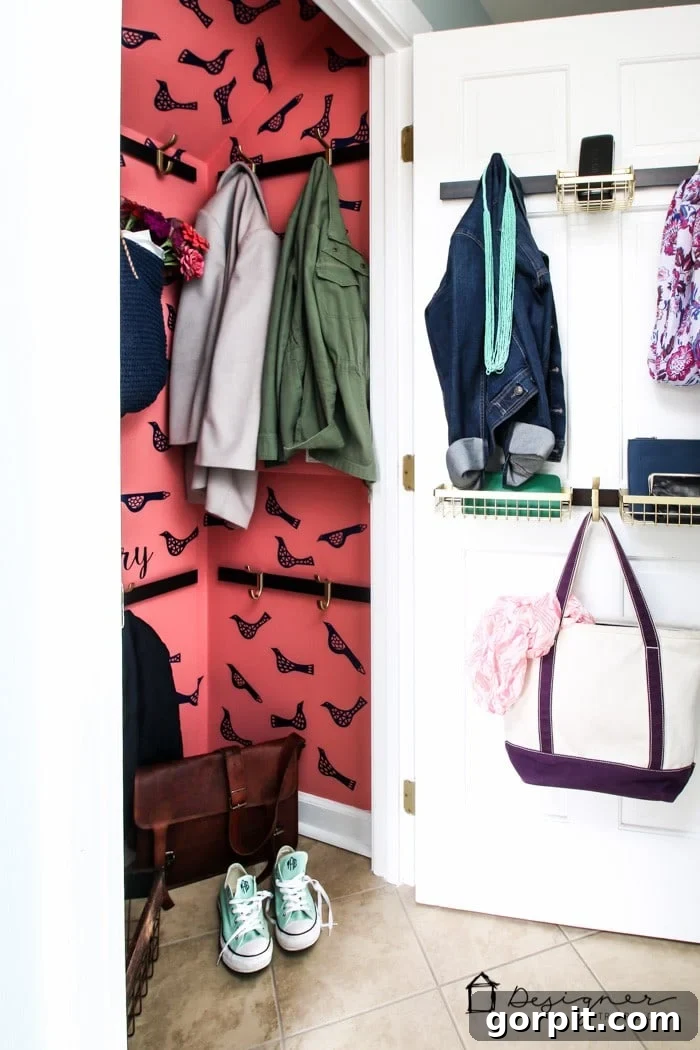
If your home lacks a dedicated coat closet, don’t despair! Wall-mounted coat racks with hooks are excellent alternatives for hanging jackets and bags. For shoes, hats, gloves, and other smaller items that tend to accumulate, utilize decorative baskets or bins. These provide enclosed storage, instantly reducing visual clutter while keeping essentials within reach. My friend Aniko, who blogs at Place of My Taste, devised an ingenious solution for her front door area, creating a highly organized and stylish entryway. You can click here for all the details of how she created an organized entryway, offering fantastic inspiration for any home, regardless of size or layout. A functional entryway sets a positive tone for your entire home, making daily routines smoother and welcoming you with a sense of calm.
Mistake #4: Too Many Small Decor Items and Knick-Knacks
This particular organizing mistake is a personal pet peeve and one that many homes fall prey to: an excess of small decor items, often referred to as knick-knacks, and numerous small picture frames scattered across horizontal surfaces. While each item might hold sentimental value or be aesthetically pleasing on its own, a multitude of small objects creates visual noise. Regardless of how meticulously arranged or “curated” they are, too many small items on mantels, bookshelves, side tables, and dressers will always make a space look cluttered and less serene, detracting from the overall clean appearance of the room.
It’s crucial not to misunderstand this advice; I am a huge advocate for incorporating family photos and personal touches into home decor. However, their presentation makes all the difference. Instead of placing numerous small frames horizontally, consider displaying your cherished memories vertically. Gallery walls, featuring a collection of larger framed photos, are an incredibly effective and stylish way to showcase family pictures without contributing to surface clutter. This approach allows your photos to become a cohesive design element rather than a collection of disparate items.
Creating an impactful photo display doesn’t have to be expensive. I’ve personally made tons of these easy-to-make DIY photo canvases that adorn our hallway, and I filled an entire wall in my daughter’s room with these semi-DIY gold frames for less than $10 each. These projects demonstrate that a curated, organized display is achievable on any budget.
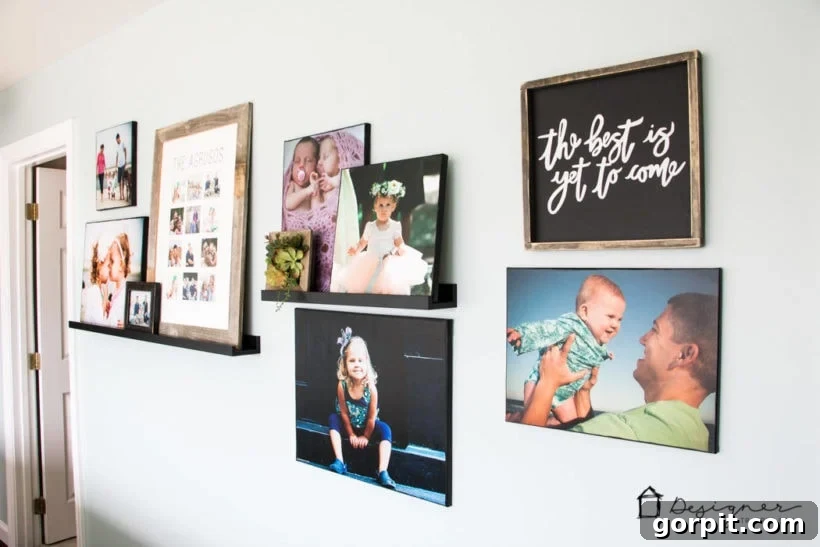
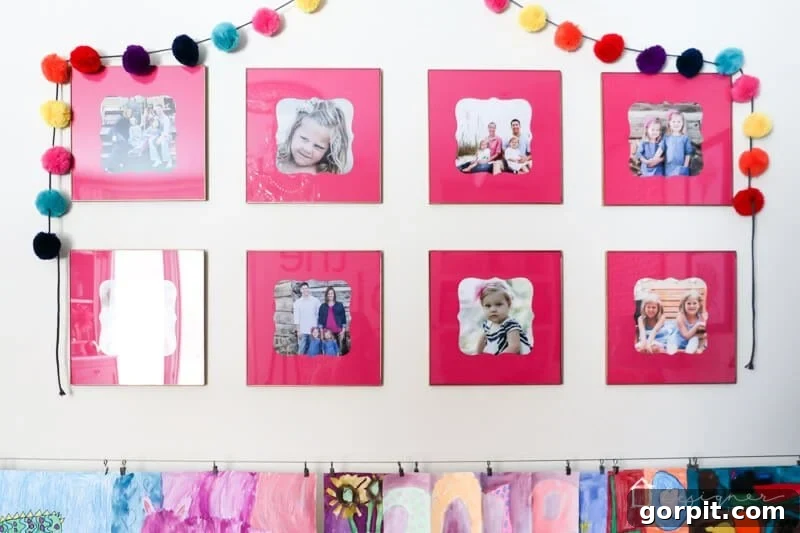
By opting for larger, more impactful decor pieces and grouping smaller items thoughtfully, or ideally, displaying them vertically, you can achieve a more streamlined and sophisticated look. This strategy not only enhances the aesthetic appeal of your home but also makes cleaning significantly easier, allowing your meticulously cleaned surfaces to truly shine without being overshadowed by a sea of trinkets.
Mistake #5: Overstuffed Spaces and Excessive Clutter
Last but certainly not least, let’s address the overarching issue of general clutter and overstuffed spaces. A common misconception in home organization is that if items are contained – even if crammed into every available nook and cranny – the space is organized. This couldn’t be further from the truth. For example, bookcases that are literally bursting with books, magazines, and various objects, with every shelf filled to capacity, create a sense of visual oppression and disorganization. Even if the items themselves are neatly stacked, the sheer volume eliminates any “breathing room,” making the entire display feel chaotic and overwhelming.
The principle here applies to every room and surface in your home: every space needs room to breathe. When every corner, cabinet, drawer, and shelf is packed full, even with items that are technically “organized,” your house will invariably look and feel messy. This overabundance of stuff, often referred to as clutter, prevents the eye from resting and creates a feeling of visual fatigue, undermining any efforts you’ve made to keep the home clean.
To combat this, embrace the “less is more” philosophy. Instead of cramming every shelf, drawer, or surface to its maximum capacity, practice thoughtful curation. On bookshelves, for instance, display only the books you truly love, reference frequently, or intend to re-read. Mix these with carefully selected decorative accessories, and most importantly, leave some empty space on each shelf. This negative space is crucial; it allows the eye to rest and highlights the items you’ve chosen to display, creating a sense of balance and sophistication. You can see a prime example of this approach with these IKEA pieces that I “hacked” to create the organized, airy look below in my daughter’s room.
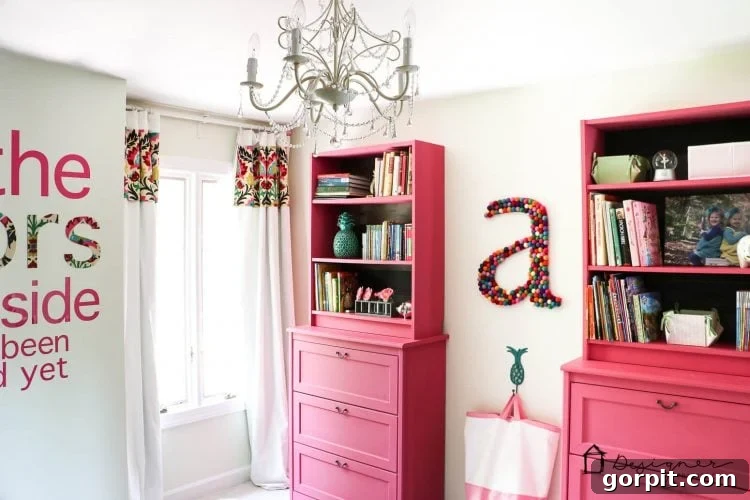
Apply this principle throughout your entire home. Regularly declutter your belongings, asking yourself if each item truly serves a purpose or brings you joy. Store items vertically where possible, utilize smart storage solutions that hide clutter, and resist the urge to fill every empty space. By doing so, you create an environment that feels spacious, inviting, and genuinely tidy, allowing your interior design to shine and promoting a greater sense of calm and order in your daily life. Remember, a clean house is good, but a tidy, clutter-free house is truly transformative.
By consciously avoiding these five common organizing mistakes, you’ll be well on your way to transforming your clean house into a beautifully tidy and functional home. Embrace these strategies, and experience the profound impact a truly organized space can have on your daily life and peace of mind.
Continue Your Organization Journey
Ready to dive deeper into decluttering and organization? Explore these related posts for more inspiration and practical advice:
- Learn How to Declutter Your Home: A Realistic Guide
- How to Conquer the Emotions of Decluttering
- Genius Small Space Organization Hacks
- How to Organize Your Life With Work + Kids
- How to Go Paperless the Easy Way
- How to Organize Kitchen Cabinets (In a “Normal” Kitchen)
- Stay Organized with the Perfect Family Wall Calendar
Wondering how I personally approach transforming rooms and spaces in our home? Check out Designer in a Binder® for a comprehensive guide.
For exclusive content and behind-the-scenes sneak peeks into more organizing and design tips, be sure to subscribe to our newsletter before you go!