Crafting Your Own All-Natural DIY Bug Spray: A Comprehensive Guide to Effective, DEET-Free Protection
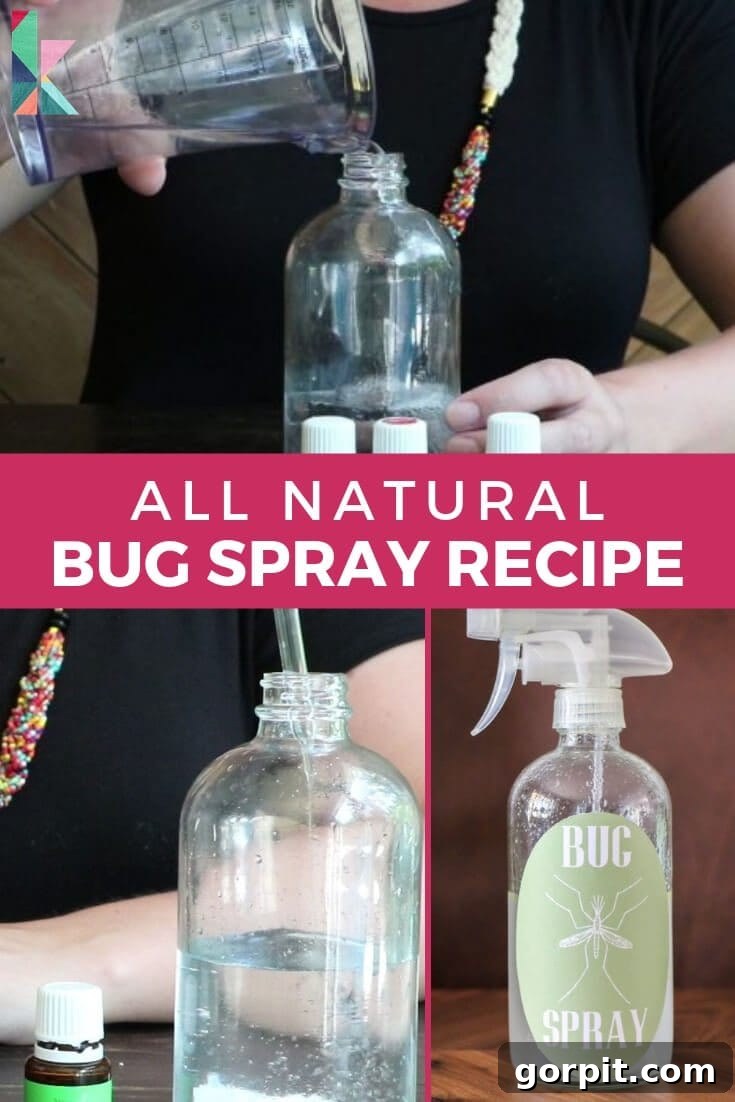
Welcome to a world where effective bug protection doesn’t come with a side of harsh chemicals! I’m thrilled you’re here to explore the simplicity and efficacy of making your own DIY natural bug spray. For over three years, our family has relied on this homemade mosquito repellent, and the results have been overwhelmingly positive. If you’re curious about why we’ve wholeheartedly embraced natural alternatives and consciously steer clear of DEET-based products, you’ve come to the right place. We believe in safeguarding our loved ones without compromising on health or peace of mind.
Bugs, particularly mosquitoes, can turn a pleasant outdoor experience into an irritating ordeal. While most of us can tolerate a few bites, my children, Avery and Joe, seem to be mosquito magnets. I can understand why—they’re both incredibly sweet! But on a more serious note, Avery suffers from Skeeter Syndrome, a condition that transforms ordinary mosquito bites into painful, swollen, and long-lasting welts. Though her symptoms have lessened with age, these bites still cause significant discomfort and take an unusually long time to heal. This personal challenge fueled my determination to find a truly effective, yet gentle, solution for our family.
My strong desire to keep my family, especially Avery, free from mosquito bites is coupled with an even stronger aversion to DEET. My personal alarm bells rang loudly when a DEET-based bug spray accidentally spilled on my car door and literally melted the plastic. This chilling incident served as a powerful, undeniable testament to the chemical’s potency. If it can degrade car plastic, what could it be doing to our skin, our largest organ? This single event solidified my commitment to finding safer alternatives for pest control, driving me to research and create a homemade remedy that offers peace of mind.
Just like many other household necessities, effective bug spray can be crafted affordably and naturally right in your own home. I’m excited to share a natural bug spray recipe that has proven its worth for my family. It’s important to set realistic expectations: while this natural option is incredibly effective for everyday use, it might not offer the same ultra-long-lasting, impenetrable barrier as DEET-based sprays in extremely high-risk, mosquito-infested environments or areas with specific disease concerns (like the Zika virus). However, for 95% of our outdoor adventures, this homemade solution provides ample protection without the worries associated with harsh chemicals.
This post contains some affiliate links for your convenience (which means if you make a purchase after clicking a link I will earn a small commission which helps keep my blog up and running but it won’t cost you a penny more)! Click here to read my full disclosure policy.
Unlock Natural Protection: How to Make Your Own DEET-Free Bug Spray
Creating your own natural bug spray is a surprisingly simple process that puts you in control of the ingredients, ensuring a safe and effective product for your family. This recipe yields a generous batch, perfect for lasting through the summer season. If you prefer a smaller quantity, simply adjust the ingredient volumes proportionally.
Essential Ingredients & Materials for Your Natural Bug Spray
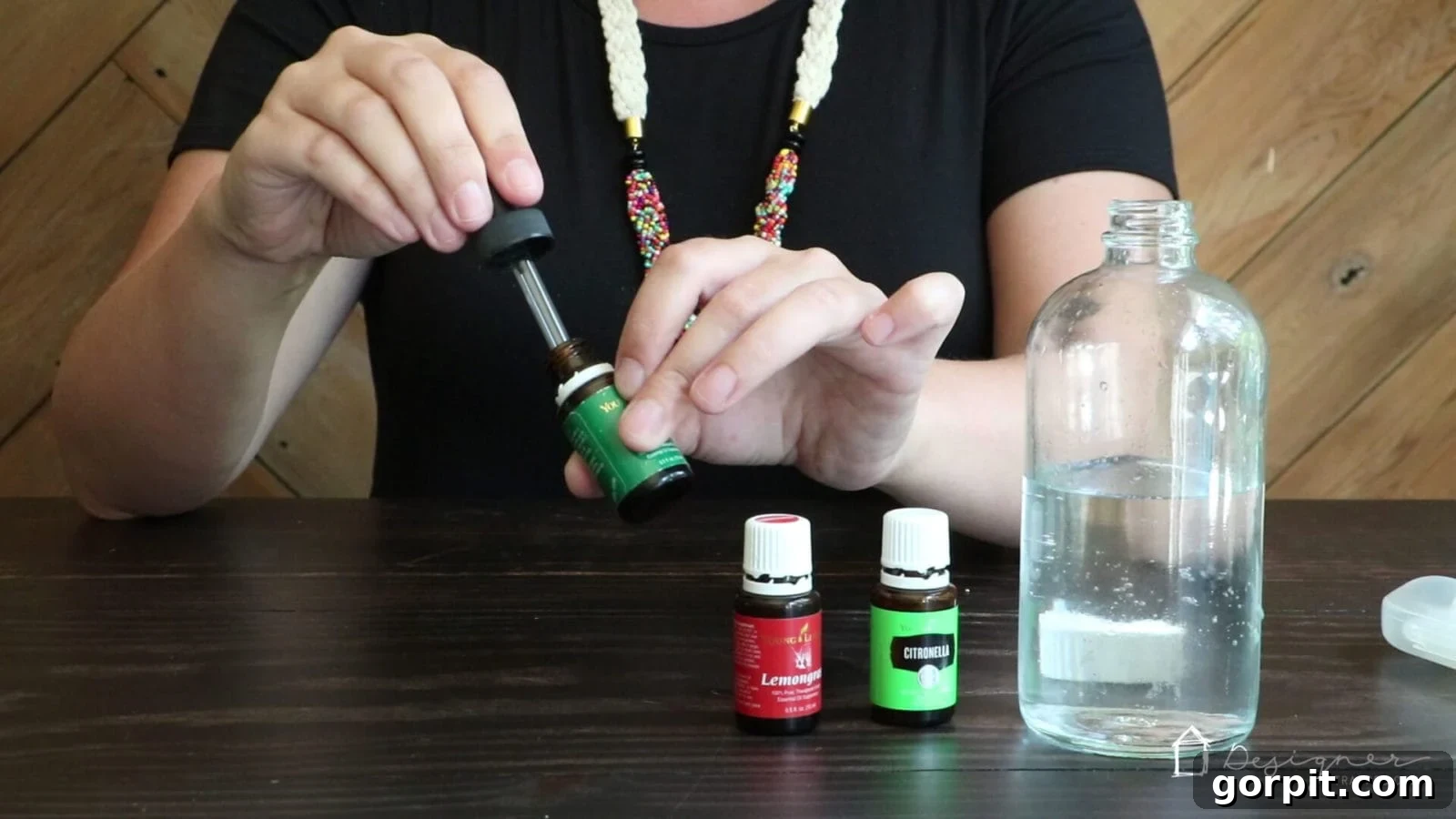
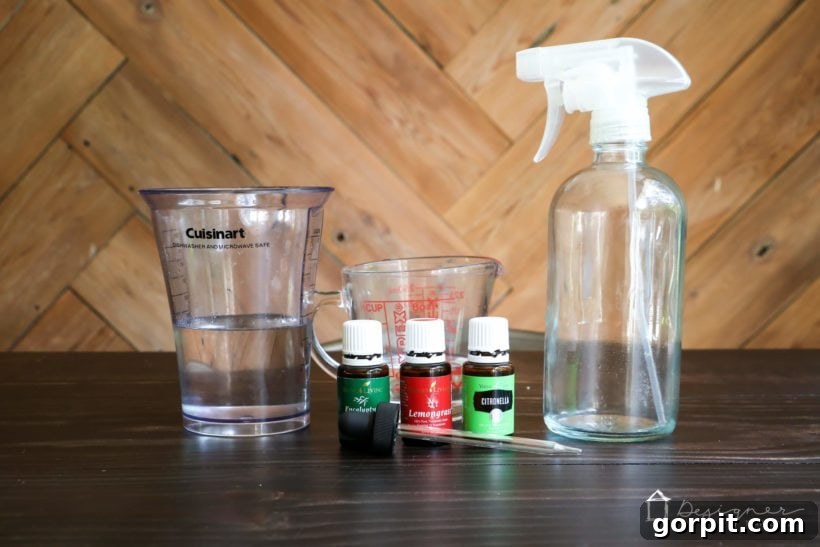
- Essential Oils: Approximately 150 drops total. My preferred blend includes one dropper full (roughly 50 drops) each of Citronella, Eucalyptus, and Lemongrass essential oils. These oils are renowned for their insect-repelling properties.
- Witch Hazel: 8 ounces of Witch Hazel acts as a natural emulsifier, helping to disperse the essential oils evenly throughout the water base.
- Water: 2 ounces of distilled or purified water to dilute the mixture.
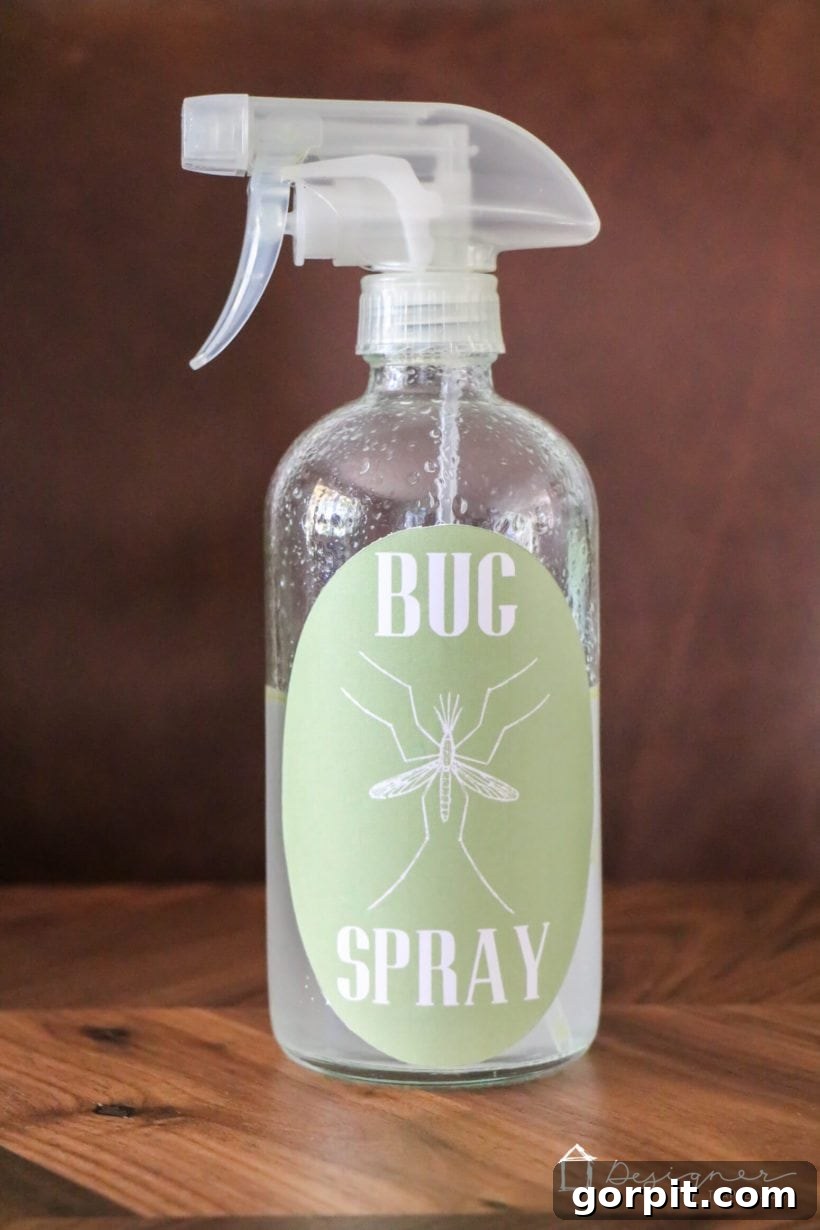
- Glass Spray Bottle: A 16-ounce glass spray bottle is ideal, especially when working with essential oils, as they can sometimes degrade plastic over time. This is the exact glass bottle I recommend.
- Custom Label: While a clear sticker paper label might fade, a label made on regular sticker paper offers greater durability. You can find instructions and a FREE label template here.
Simple Steps to Your Homemade Natural Bug Spray:
Making your own bug spray is incredibly straightforward. Follow these easy steps to create your natural deterrent:
1) Begin with your 16-ounce glass spray bottle. Carefully pour in 8 ounces of witch hazel. Witch hazel is crucial as it helps to emulsify the essential oils, ensuring they mix properly with the water rather than simply floating on top.
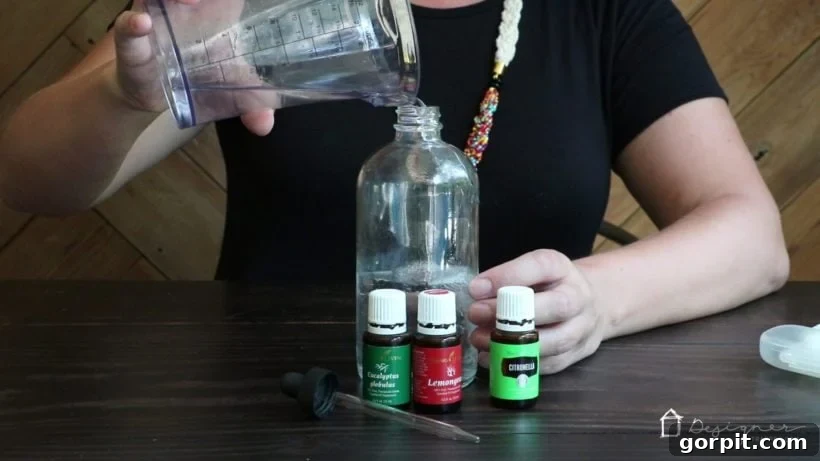
2) Next, add 2 ounces of clean water to the mixture. Distilled or purified water is recommended to avoid any impurities that might affect the spray’s stability or shelf life.
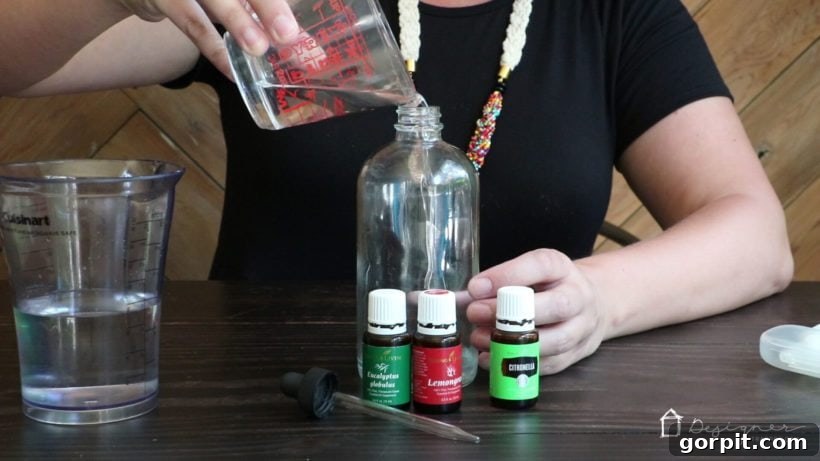
3) Now comes the aromatic and effective part: adding your essential oils. For a total mixture of 12 ounces, I suggest approximately 150 drops of essential oils. Since I opted for a trio of powerful bug-repelling oils, I added about 50 drops of each. While I meticulously counted drops during my first batch, now I simply use one dropper full of each essential oil, which consistently equates to roughly 50 drops. This blend creates a potent yet pleasant aroma that pests despise.
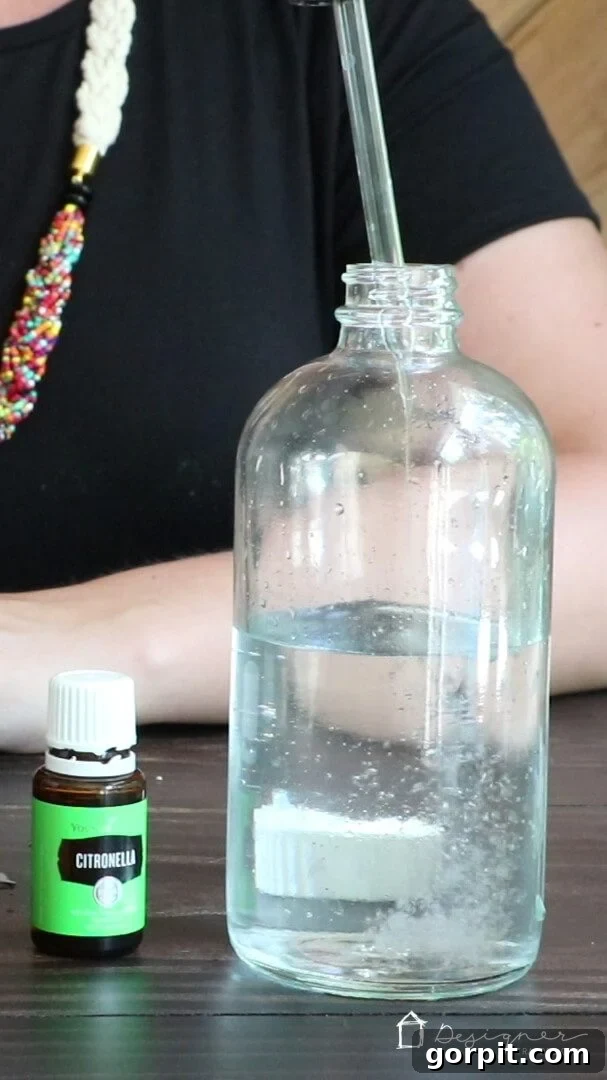
4) Once all ingredients are in the bottle, secure the cap and shake vigorously. It’s vital to shake the bottle well before each subsequent use to ensure the essential oils are thoroughly mixed and evenly distributed for maximum effectiveness.
And that’s it! Your homemade, all-natural bug spray is ready to use. It’s truly that simple to create a safe and effective repellent. To personalize your bottle, you can download a free bug spray label template to add a professional and charming touch.
Understanding the Power of Essential Oils in Bug Repellent
Essential oils are more than just fragrant liquids; they are concentrated plant extracts that possess natural repellent properties. Insects, particularly mosquitoes, are highly sensitive to certain compounds found in these oils, which they perceive as threats or deterrents. This is why oils like Citronella, Eucalyptus, and Lemongrass are so effective:
- Citronella: A classic and widely recognized insect repellent, citronella oil works by masking the scents that attract insects, making it harder for mosquitoes to find their targets.
- Eucalyptus: Specifically Lemon Eucalyptus oil (PMD), is recognized by the CDC as an effective alternative to DEET. Its strong, camphoraceous aroma is highly disliked by mosquitoes and other biting insects.
- Lemongrass: With its fresh, citrusy, and earthy aroma, lemongrass oil contains compounds that are known to repel mosquitoes, ticks, and fleas. Its scent is pleasant to humans but off-putting to pests.
When selecting essential oils, opt for high-quality, pure oils from reputable sources to ensure both safety and efficacy. Dilution is key when using essential oils on the skin, and witch hazel serves as an excellent carrier to ensure proper dispersion and reduce the risk of skin irritation.
Cost-Effectiveness & Long-Term Savings of DIY Bug Spray
Let’s break down the economics of making your own natural bug spray. The glass bottle is a one-time purchase, making it a sustainable choice. While essential oils might seem like an initial investment, remember that a 15 mL bottle typically contains around 300 drops, meaning 50 drops constitutes only about one-sixth of the bottle. Even using premium Young Living essential oils (which are generally pricier than many essential oils available on Amazon), the cost savings are remarkable.
- Eucalyptus Globulus 50 drops: Approximately $2.40
- Lemongrass 50 drops: Approximately $1.87
- Citronella 50 drops: Approximately $3.25
- 8 ounces Witch Hazel: Approximately $5.28
TOTAL ESTIMATED COST: $12.80 for 12 ounces –> approximately $1.07 per ounce
Compare this to popular commercial options like Deep Woods Off, which often retails for around $1.44 per ounce on Amazon, depending on the specific product. This means you can protect your family safely and naturally for even LESS money! Beyond the immediate cost savings, you’re investing in your family’s well-being by avoiding exposure to harsh chemicals and contributing to a more sustainable lifestyle by reducing reliance on single-use plastics and industrially produced repellents. It’s a win-win for your wallet, your health, and the environment.
Tips for Maximizing the Effectiveness of Your Natural Bug Spray
To ensure you get the best performance from your homemade repellent, consider these additional tips:
- Reapply Frequently: Natural bug sprays, while effective, often require more frequent reapplication than their chemical counterparts. Plan to reapply every 1-2 hours, or more often if you’re sweating heavily or swimming.
- Storage Matters: Store your bug spray in a cool, dark place away from direct sunlight and extreme temperatures to preserve the potency of the essential oils. The glass bottle helps protect the oils from degradation.
- Shake Before Each Use: This cannot be stressed enough! Essential oils and water naturally separate. A good shake ensures an even distribution of the active repellent compounds with every spray.
- Patch Test: Before applying generously, do a small patch test on an inconspicuous area of skin to ensure you don’t have any sensitivities to the essential oils.
- Cover Up: Complement your bug spray with protective clothing, especially during peak bug activity times (dawn and dusk). Long sleeves, pants, and hats can significantly reduce exposed skin.
- Avoid Direct Face Application: Spray the repellent onto your hands first, then carefully apply to your face, avoiding eyes and mouth.
Beyond Mosquitoes: Other Natural Pest Prevention Strategies
While this DIY spray is highly effective against mosquitoes, its blend of essential oils can also help deter other common summer pests like gnats and some types of flies. For broader pest control, consider integrating these natural strategies:
- Garden Harmony: Plant natural repellent plants like marigolds, basil, and lavender in your garden to create a natural barrier.
- Standing Water: Eliminate all sources of standing water around your home, as these are prime breeding grounds for mosquitoes. This includes bird baths, old tires, and clogged gutters.
- Screening: Ensure windows and doors have intact screens to keep insects out of your living spaces.
- Outdoor Fans: A simple oscillating fan on your patio can help keep mosquitoes at bay, as they are weak fliers.
By combining this powerful homemade bug spray with smart environmental practices, you can significantly reduce your encounters with pesky insects and enjoy your outdoor time worry-free.
Ready to share the secret to safe, natural, and cost-effective bug protection with your friends and family? Spread the word about this amazing DEET-free solution! Why not share it on Facebook or pin it to Pinterest? Let’s empower more families to make healthier choices for their outdoor adventures!