
The Ultimate Guide to Cleaning and Protecting Your Leather Furniture for Lasting Beauty
This comprehensive guide is proudly sponsored by Mohawk. All opinions expressed are 100% my own, shaped by my extensive experience with these exceptional products. This post contains some affiliate links for your convenience. Click here to read my full disclosure policy.
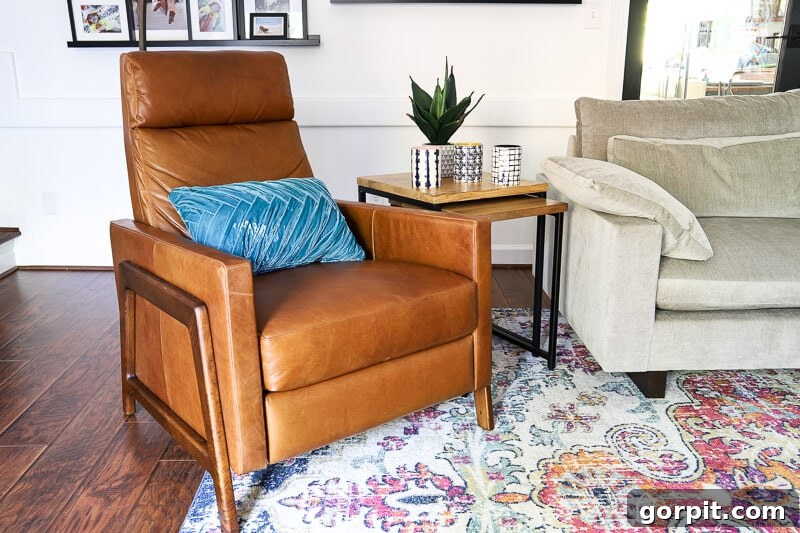
Leather furniture stands as a testament to timeless elegance and enduring quality. It’s a statement piece, an investment in comfort and style that can elevate any living space. Just recently, we brought home this exquisite leather recliner for our family room, a carefully considered purchase that wasn’t made lightly. After years of searching for a recliner that satisfied both my aesthetic preferences and my husband Joe’s desire for ultimate comfort – a quest spanning our entire 16 years of marriage – we finally found our perfect match in the West Elm Spencer recliner. This wasn’t just another piece of furniture; it was an investment in our home’s comfort and style for decades to come.
However, the beauty and cost of leather furniture often come with a lingering concern: how do you keep it looking pristine, especially in a bustling household with active children and curious pets? For many, the thought of scuffs from toys, accidental spills, or the inevitable claw marks from beloved furry companions can make owning leather seem daunting. Historically, I shared these anxieties. Yet, my perspective shifted dramatically a few years ago when Joe discovered a weathered leather ottoman by the roadside. With the right techniques and products, we were able to transform it in mere minutes. You can witness its incredible restoration in this detailed post. This experience was a revelation: caring for leather isn’t nearly as difficult as it seems, provided you’re equipped with the correct knowledge and tools.
Since that transformative project, my confidence in maintaining leather furniture has soared. I’ve learned that with a consistent routine and high-quality products, your leather pieces can retain their allure and last a lifetime. This comprehensive guide is designed to empower you with precisely that knowledge. Read on to discover the most effective methods for not only cleaning your cherished leather furniture but also protecting it against the rigors of daily life, ensuring its lasting beauty for the long haul.
Essential Strategies for Cleaning and Protecting Your Leather Furniture
Maintaining the luxurious appeal of your leather furniture involves a straightforward process that combines regular cleaning with protective conditioning. By dedicating a small amount of time to this routine, you can safeguard your investment and enjoy its beauty for many years.
Materials You’ll Need:
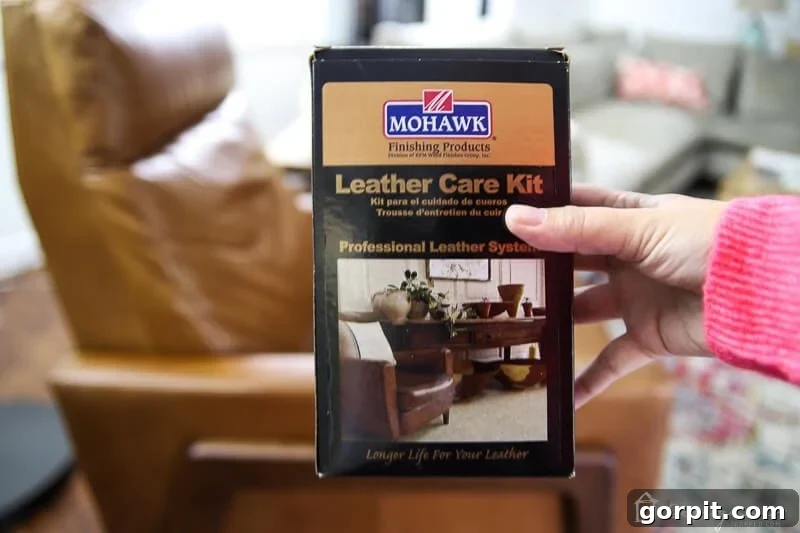
- Mohawk Finishing Products Leather Care Kit (This kit typically includes a leather cleaner, leather protector, ink remover, a foam pad, and a soft cloth.)
- Clean, lint-free cloths (several are recommended)
- Paper towels (for testing and initial clean-up)
- A soft-bristled brush or vacuum cleaner with a brush attachment (for pre-cleaning)
For those who prefer a visual demonstration, the video below provides a clear, step-by-step walkthrough of the cleaning and conditioning process. It also illustrates how to effectively address scratches and other marks, which will begin playing after a brief advertisement.
If you prefer detailed written instructions accompanied by illustrative photos, please continue reading below.
Understanding Your Leather: A Crucial First Step
Before you begin any cleaning or protection regimen, it’s vital to understand the type of leather your furniture is made from, as different leathers require different care. The Mohawk Leather Care Kit is specifically formulated for pigmented (top-coated) leathers and aniline leathers. These are the most common types found in homes today. Pigmented leather has a protective coating that makes it more resistant to stains and wear, while aniline leather is known for its natural, soft feel and rich color, though it is more absorbent. It is crucial NOT to use these products on nubuck or suede leather, as they have a different surface texture and require specialized cleaning methods. Always check your furniture’s care label or manufacturer’s recommendations if you are unsure.
Step-by-Step Guide to Cleaning Your Leather Furniture
Regular cleaning is the cornerstone of effective leather maintenance, removing dirt, oils, and grime that can accumulate over time. For optimal results, high-traffic leather furniture should be cleaned and protected about once a month, while less frequently used pieces can benefit from treatment every six months or so.
1. Initial Preparation and Pre-Test
Begin by gently dusting or vacuuming your leather furniture with a soft brush attachment. This removes loose dirt and debris, preventing it from scratching the surface during cleaning. Once surface dust is removed, shake the leather cleaner bottle thoroughly to ensure all components are well mixed. Dispense a small amount onto a clean paper towel or a discrete, hidden area of your furniture (such as the back or an underside panel). Allow it to dry completely. This crucial pre-test confirms that the cleaner will not affect your leather’s color or finish. If any color transfers onto the white cloth or if the leather appears discolored, do not proceed with using the product on that piece of furniture.
2. Applying the Leather Cleaner
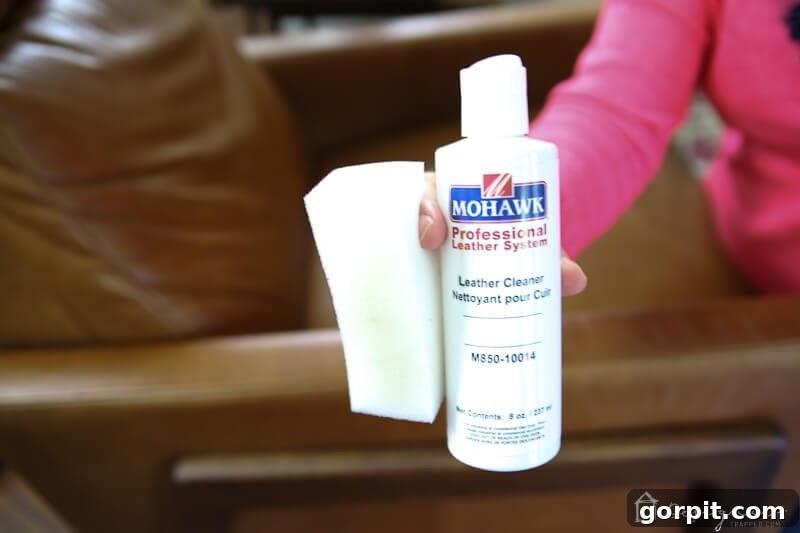
Once you’re confident that the cleaner is safe for your furniture, apply a generous amount of the Mohawk Leather Cleaner directly onto the foam sponge provided in the kit. Gently squeeze the sponge to create a rich foam. Using this foam, lightly scrub the leather surface in small sections. Work methodically, applying light pressure and circular motions. The foam helps lift dirt and oils from the leather’s pores. As you work through your furniture, apply more cleaner to the sponge as needed, ensuring a consistent layer of foam.
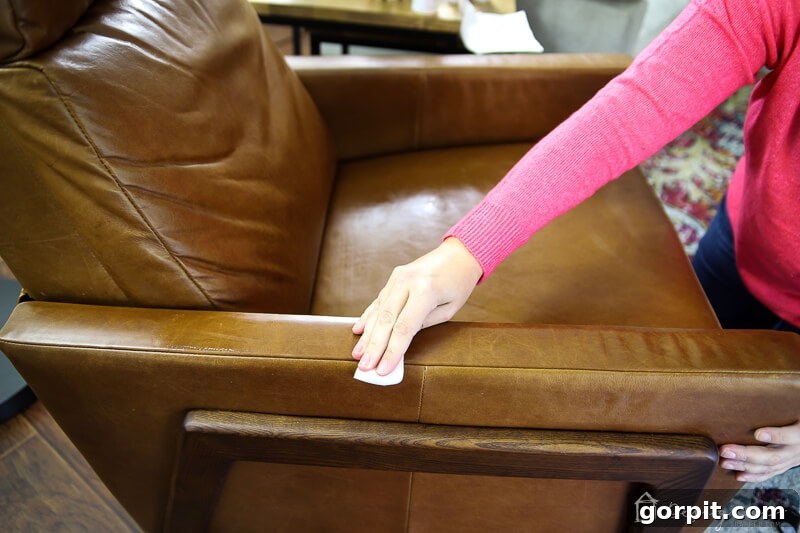
3. Wiping Dry
Immediately after cleaning each section, use a clean, soft, lint-free cloth to gently wipe away any excess cleaner and residue. Ensure you wipe thoroughly to remove all traces of dirt and cleaning solution. Allow the leather to air dry completely. This step is crucial for preparing the surface for the protector.
Step-by-Step Guide to Protecting Your Leather Furniture
After cleaning, applying a leather protector is essential. It creates a barrier that helps repel spills, prevent stains, and reduce the effects of daily wear and tear, extending the life and beauty of your leather.
4. Applying the Leather Protector
Once your leather has completely dried from the cleaning process, shake the Mohawk Leather Protector bottle thoroughly. Pour a liberal amount of the protector onto the soft cloth included in your kit. Begin to wipe the protector onto the leather surface. Aim for a generous but even application, covering all areas uniformly. The goal is to nourish the leather and create a protective layer, so don’t be shy with the product, but avoid excessive pooling.
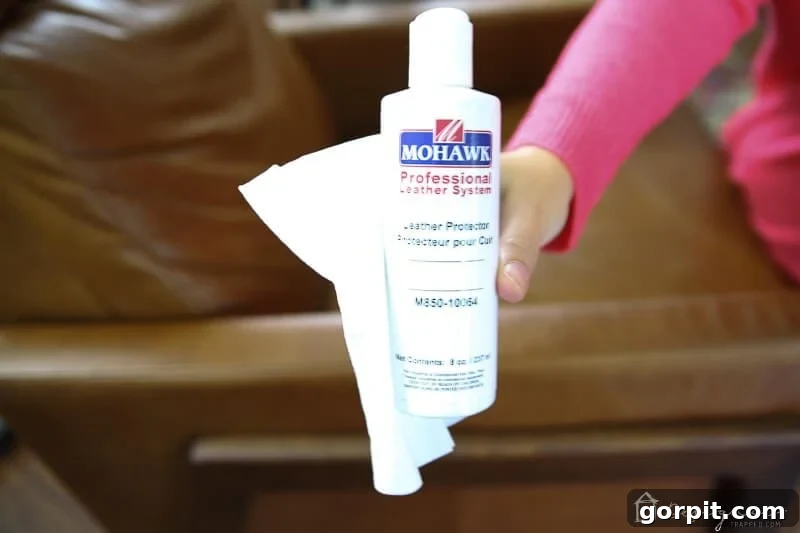

5. Allowing to Dry
After applying the protector, allow the furniture to dry undisturbed for at least one hour before using it. This drying time is crucial for the protector to fully penetrate and cure, forming an effective barrier. Avoid placing anything on the furniture or sitting on it during this period.
Addressing Specific Stains: The Ink Remover
While prevention is key, accidents happen. The Mohawk Leather Care Kit also includes an effective ink remover. Although we didn’t have any fresh stains to tackle during this particular session, I’ve personally used the ink remover in the past with great success – it’s incredibly easy and effective. The accompanying video demonstrates precisely how to use it for quick and efficient stain removal.
General Tips for Long-Term Leather Care
Beyond regular cleaning and protection, a few simple habits can significantly extend the life and beauty of your leather furniture:
- Act Quickly on Spills: The moment a spill occurs, blot it gently with a clean, dry cloth. Avoid rubbing, which can spread the stain. The protector will give you a precious window of time to act.
- Avoid Direct Sunlight and Heat: Prolonged exposure to direct sunlight can fade and dry out leather, causing it to crack. Keep your leather furniture away from windows where it receives harsh sun, or use curtains/blinds. Similarly, keep it a safe distance from heat sources like radiators or fireplaces.
- Maintain Humidity Levels: Leather thrives in a stable environment. Extremely dry air can lead to cracking, while excessive humidity can encourage mold. Aim for moderate indoor humidity levels, ideally between 40-60%.
- Rotate Cushions: If applicable, regularly rotate and fluff cushions to ensure even wear and prevent permanent depressions.
- Protect from Sharp Objects: Be mindful of sharp objects like pet claws, buckles, or even certain toys that can scratch or puncture the leather. Consider placing throws or blankets in high-traffic areas or where pets frequently rest.
- Avoid Harsh Chemicals: Never use abrasive cleaners, furniture polish, oils, or any product not specifically designed for leather. These can damage the finish, cause discoloration, or dry out the leather.
The Value of Consistent Care
That’s all there is to it! For furniture like Joe’s recliner, which sees daily, heavy use, we’ll diligently repeat this cleaning and protection process using the Mohawk Leather Care Kit once a month. The entire hands-on process typically takes me only about 15-20 minutes. Considering the significant investment and the desire for this recliner to endure for years, this small dedication of time is undoubtedly worth it. Regular care not only preserves the aesthetic appeal of your leather but also maintains its structural integrity, preventing premature aging and costly repairs down the line. By following these simple, consistent steps, you can ensure your beautiful leather furniture remains a cherished and stunning centerpiece in your home for decades to come, proving that luxury and practicality can indeed coexist.