Are you staring at your living room, wondering if something is missing, or perhaps feeling a bit disconnected? Often, the answer lies right beneath your feet: an area rug. Choosing the perfect rug size for your living room or family room can feel like a daunting task. With countless shapes, styles, and sizes available, it’s easy to get overwhelmed and inadvertently select a rug that disrupts your space rather than enhances it. But fear not! With over two decades of experience as an interior stylist, I’ve guided countless clients through this very challenge, and I’m here to tell you that selecting the ideal living room rug size and mastering its placement doesn’t have to be complicated. These straightforward, expert-backed tips will demystify the process, ensuring your living room feels cohesive, inviting, and beautifully designed.
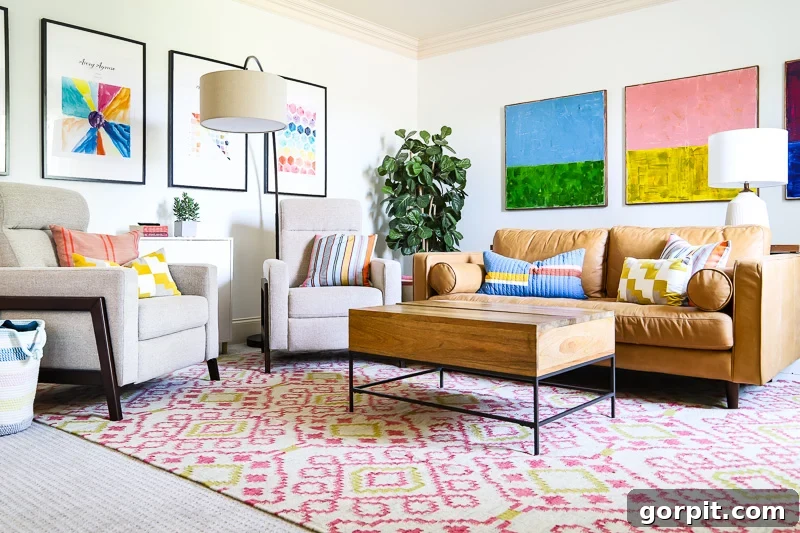
As an interior stylist, rug size and placement are critical elements I focus on, as area rugs play an indispensable role in achieving a balanced and harmonious interior design. They are so fundamental, in fact, that I’ve dedicated sections to them in my comprehensive interior design system, Designer in a Binder. There’s truly nothing quite like a well-chosen area rug to pull a room together, creating a sense of warmth, style, and completeness. This is why I even advocate for placing area rugs in carpeted rooms – they add layers of texture and define specific zones. Conversely, a rug that is too small or overwhelms the space can make a room feel disjointed and uninviting. It’s all about striking that perfect balance. If you’re wondering where to find beautiful, high-quality rugs without breaking the bank, there are many fantastic places to shop for affordable rugs, often for well under $300. Remember, a rug is a major focal point and a significant investment in your home’s aesthetic, so take your time to select a piece that truly ties your entire design together. You can start by exploring this inspiring collection of GORGEOUS colorful rugs that make a perfect foundation for any room.
This post contains some affiliate links for your convenience. Click here to read my full disclosure policy.
What is the Purpose of a Living Room Rug?
The importance of a thoughtfully chosen living room area rug cannot be overstated. I’ve often had to explain its significance, even to my own husband! On two separate occasions – once when we installed new flooring in our old family room, and again when we moved into our current home – he suggested, “Let’s skip the area rug. I don’t want to cover up these beautiful floors.” While I appreciate his love for pristine flooring, my reaction each time was a mix of disbelief and an immediate need to explain the multifaceted benefits of a living room rug.
A living room rug serves as far more than just a decorative element; it’s the anchor for your entire space. Firstly, it visually grounds your furniture arrangement, providing a defined “island” for your sitting or conversation area. This is especially crucial in open-concept floor plans, where an area rug literally helps to delineate zones like the living room from the dining area or kitchen, without the need for physical walls. Without a rug, furniture can appear to float aimlessly, leading to a disconnected and unfinished look. Secondly, rugs add essential warmth, texture, and color, injecting personality and softness into a room that might otherwise feel cold or stark. They can introduce a pop of color, a subtle pattern, or a luxurious texture that elevates the overall design. Beyond aesthetics, rugs enhance comfort by providing a soft surface underfoot and can even help absorb sound, improving acoustics in larger spaces. They also protect your valuable flooring from wear and tear. In my professional opinion, a well-chosen area rug is one of the single most important aspects of any living room or family room, transforming it from a mere collection of furniture into a cohesive, inviting, and stylish retreat.
What is a Good Size Rug for a Living Room?
Determining the “right size” rug is, of course, dependent on the dimensions of your room and the scale of your furniture. However, there are general guidelines that prove incredibly helpful. The most common and versatile living room rug sizes you’ll encounter are 8′ x 10′ and 9′ x 12′. These dimensions typically accommodate standard living room layouts, allowing furniture to be properly grounded. For exceptionally large living rooms or expansive open-concept living spaces, an even grander statement might be necessary, with a 12′ x 18′ rug often being the perfect fit to unite all elements. It’s crucial to understand that, with very few exceptions, a 5′ x 8′ rug or a 5′ x 7′ rug is almost always too small for a primary living room. These smaller rugs tend to “float” in the middle of the room, making the space feel fragmented rather than unified. If you happen to possess a smaller rug that you absolutely adore and wish to incorporate into your living room scheme, don’t despair! Consider layering it on top of a larger, foundational rug, a technique we’ll delve into later. This allows you to achieve the necessary scale while still showcasing your beloved smaller piece. The key is always to aim for a rug that feels substantial and connected to your furniture, rather than an afterthought.
Rug Size Tips & Placement Advice for Living Room Rugs
Choosing the right area rug and placing it correctly are two of the most impactful decisions you can make in your living room. Here are some fundamental tips to guide you toward a perfectly styled space:
Essential Tips
- **Standard Sizes:** The most frequently used living room rug sizes are 8′ x 10′ and 9′ x 12′. For truly expansive or open-concept spaces, a 12′ x 18′ rug often works best to define the area adequately.
- **Wall Clearance:** Aim to leave a consistent border of 10 to 24 inches of bare floor between your living room rug and the walls. This creates a pleasing visual frame and prevents the room from feeling entirely carpeted, even if you’re trying to cover a large area.
- **Orientation with Sofa:** Always ensure the length of your area rug runs parallel to your longest sofa or primary seating arrangement. This creates a sense of symmetry and balance in the conversational area.
- **Furniture Connection:** A crucial rule for grounding your space is that a minimum of the front two legs of *every* piece of major furniture (sofa, armchairs, accent chairs) in your living room seating arrangement should sit on the rug. This visually connects the furniture to the rug, making the space feel unified.
- **Sofa Depth:** Your rug doesn’t necessarily need to extend all the way beneath the entire depth of your sofa. As long as the front two legs are comfortably on the rug, you’ve achieved proper placement. For larger sectionals, tucking the rug 8-12 inches under the front edge is usually sufficient.
- **Avoid “Floating” Rugs:** Under no circumstances should a living room rug “float” in the middle of the room with only a coffee table placed on it. This makes the rug appear too small and disconnected, undermining its purpose as an anchor for your seating area. Ensure at least some furniture legs make contact.
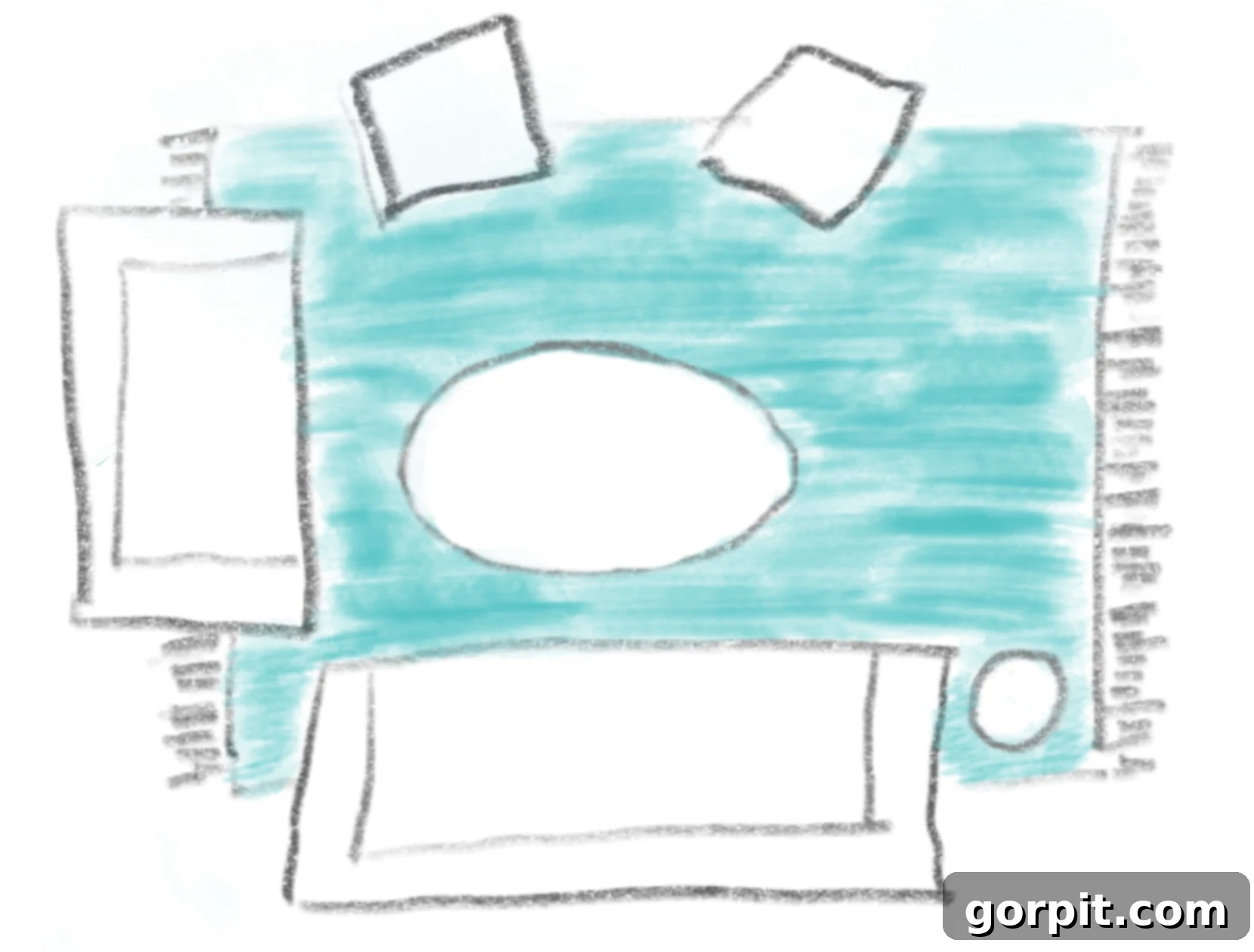
Let’s delve a bit deeper into these essential rug placement principles. When it comes to positioning your rug in the living room, the goal is to create a well-defined zone without mimicking wall-to-wall carpeting. That’s why maintaining a consistent gap of approximately 10 to 24 inches between the edge of your area rug and the walls is ideal. This border allows your flooring to act as a frame, enhancing the rug’s presence and preventing the room from feeling visually cramped. Conversely, you absolutely want to avoid the “tiny island” effect—a rug that’s too small and seems lost in the vastness of your living room floor, with all furniture completely off of it. This creates a visual disconnect and makes the room feel unfinished. The rug should be large enough to comfortably accommodate at least the front legs of your primary seating pieces, anchoring the entire conversation area.
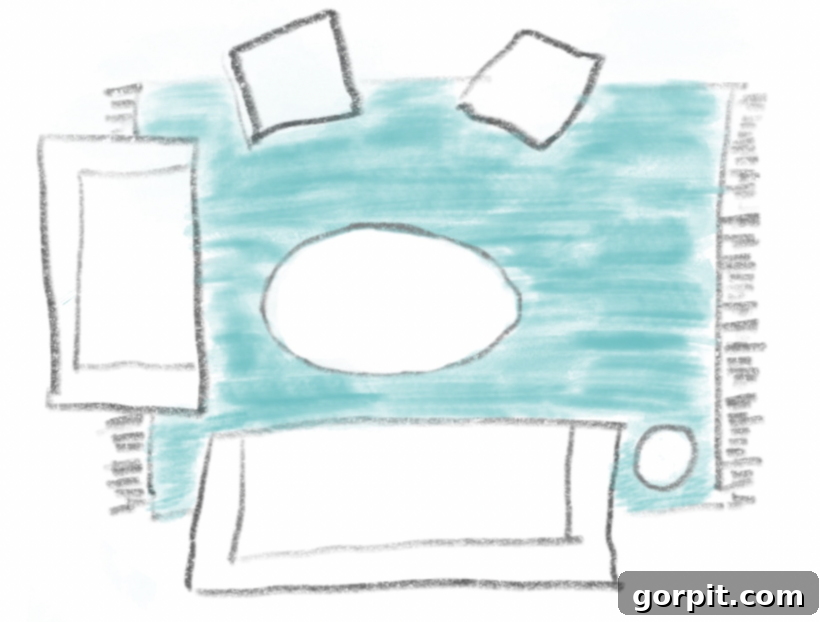
Below, you’ll find a visual guide, my personal sketch of ideal living room rug sizing and placement. While your specific room might accommodate an even larger rug than depicted, it should never be smaller than what allows at least the front two legs of each primary furniture piece to rest upon it. This ensures that essential connection between the rug and your seating arrangement.
How to Arrange Your Living Room Furniture On Your Rug
Understanding the different ways to position your furniture on an area rug is key to achieving a professional and harmonious look. There are generally two primary approaches, each with its own advantages, depending on the size of your room and furniture.
Some Legs of Your Furniture Pieces On Your Rug (Front-Legs-On Approach)
The most common and often practical approach is to place at least the front two legs of each major furniture piece onto the area rug. This method works beautifully in most living rooms and provides a strong visual anchor for your seating arrangement without requiring an excessively large rug.
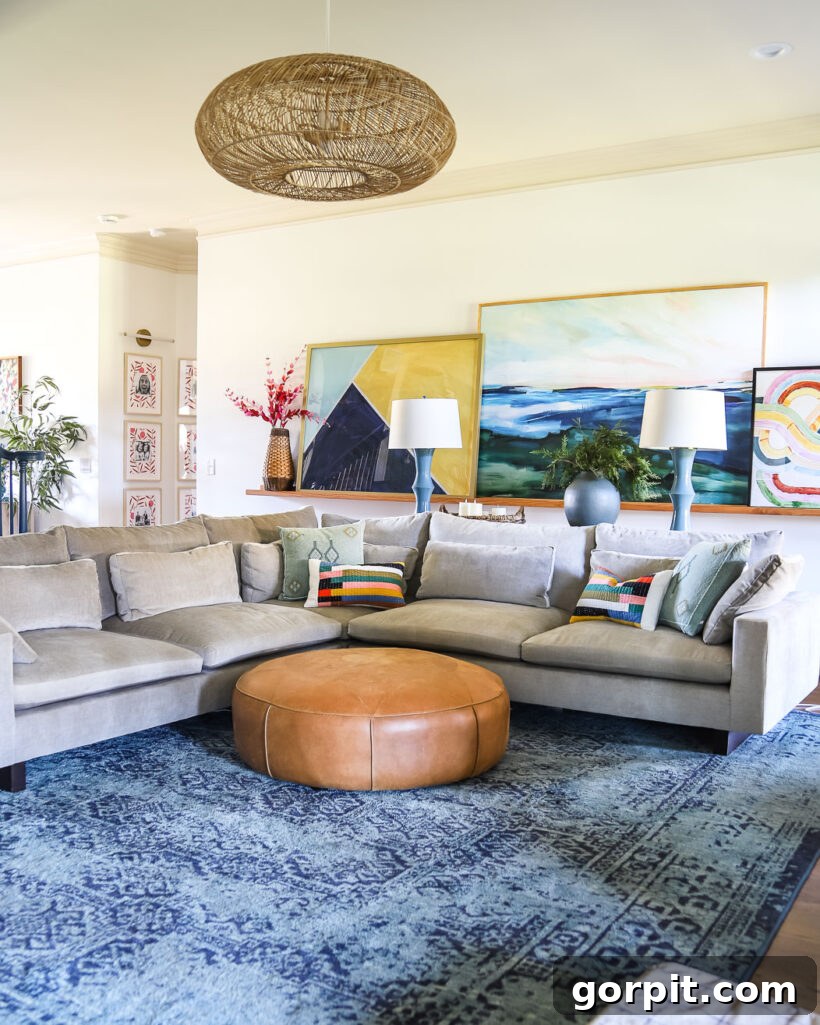
You can observe a clear example of good living room rug placement in the photo below of our old family room. The rug’s proportions align well with the room, and critically, at least two legs of each furniture piece (our sofa and armchairs) are resting comfortably on it. In retrospect, given the substantial size of our West Elm Harmony sectional sofa, a slightly larger rug might have created an even more expansive and luxurious feel. However, anything smaller would have undoubtedly failed to properly ground the space, leading to that undesirable “floating” effect.
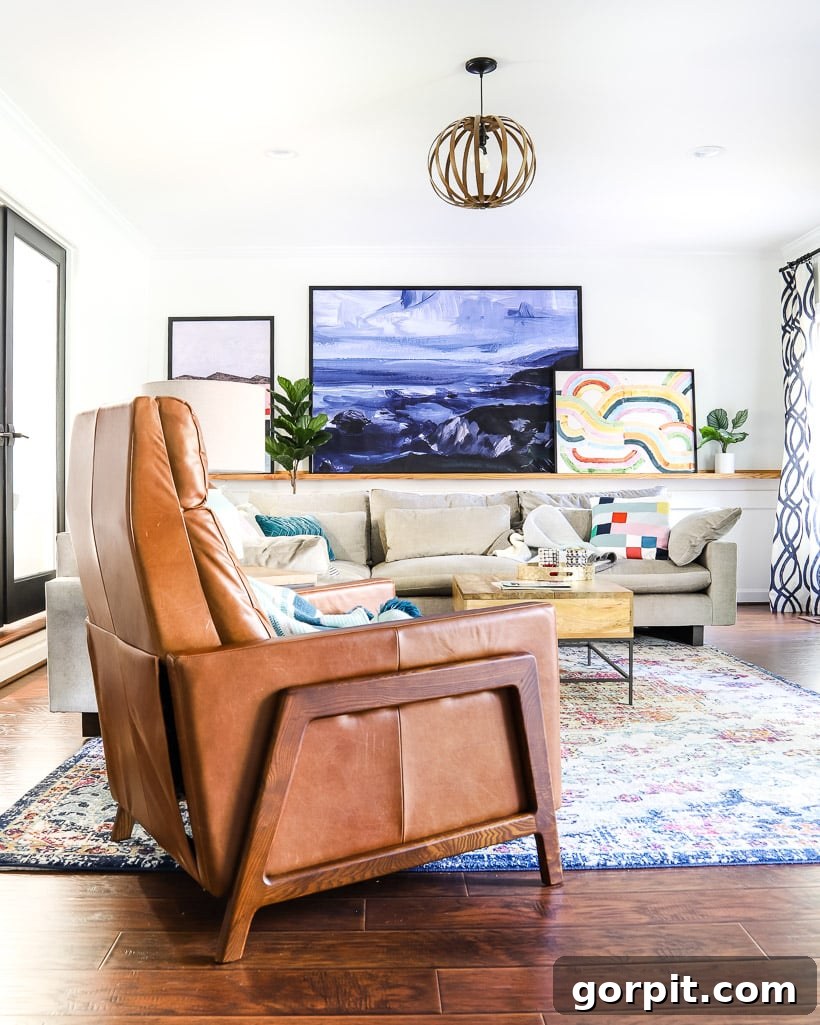
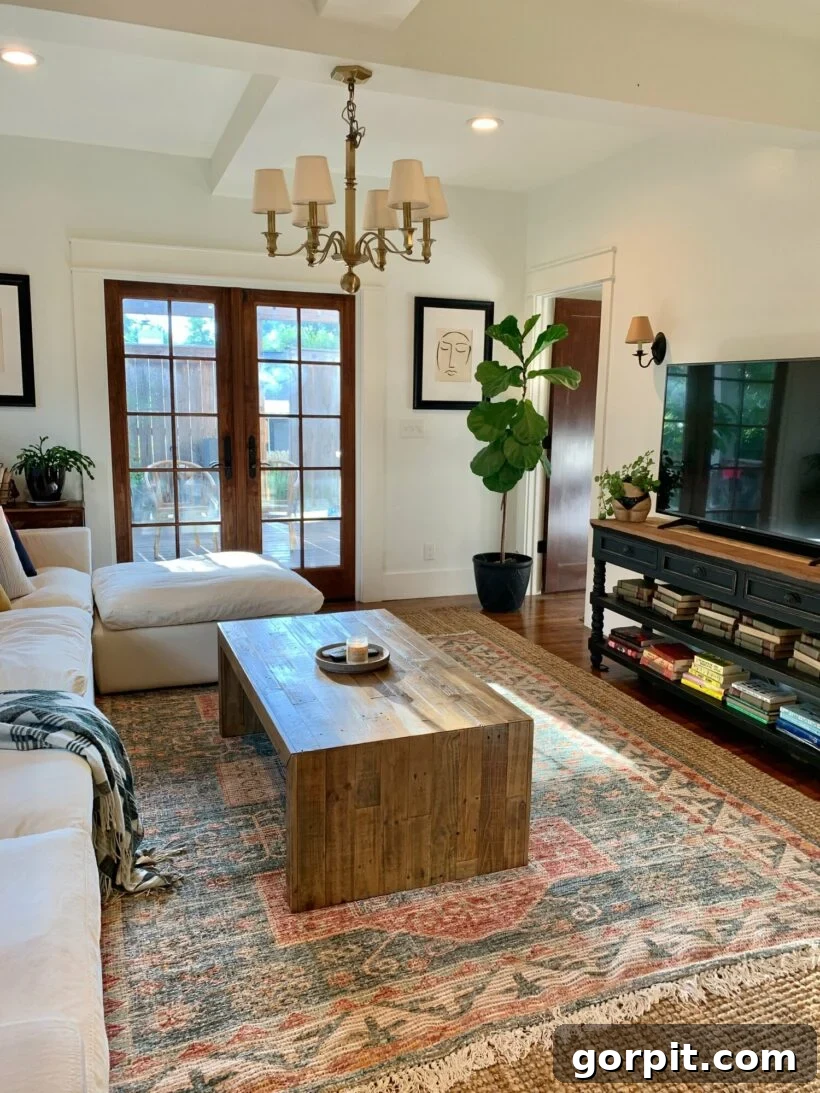
In our current family room, where we’ve used the same furniture, we opted for a slightly larger area rug. This choice has proven to be an improvement, as we now have approximately 8 inches of rug extending beyond the edge of our sectional sofa, creating a more generous and welcoming feel.
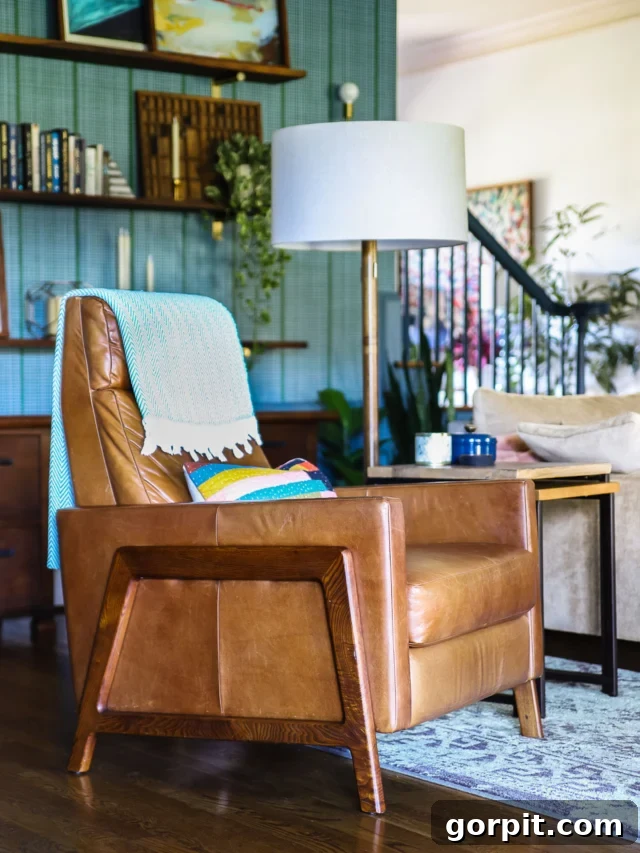
Even with this larger rug, you can see in the view below that we consciously chose to place only the front two legs of our West Elm Spencer recliner on the rug. This demonstrates that consistency within a seating arrangement, rather than strict adherence to “all legs on,” can be the deciding factor for visual balance.
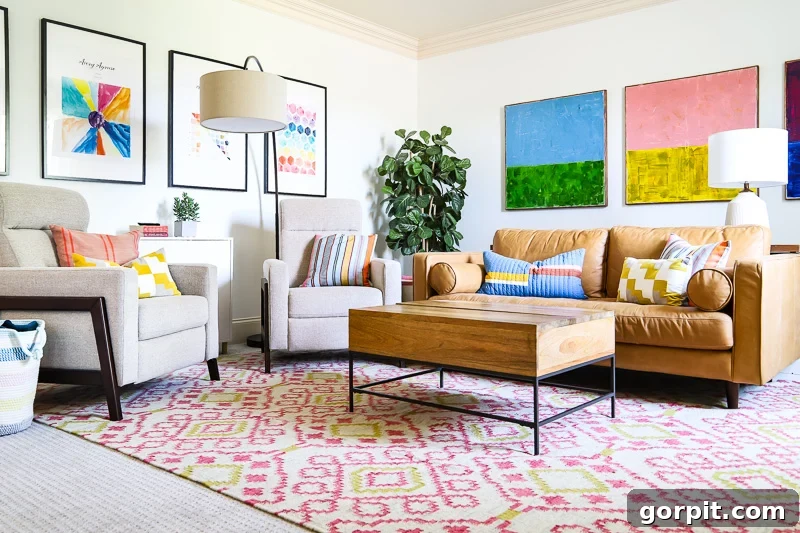
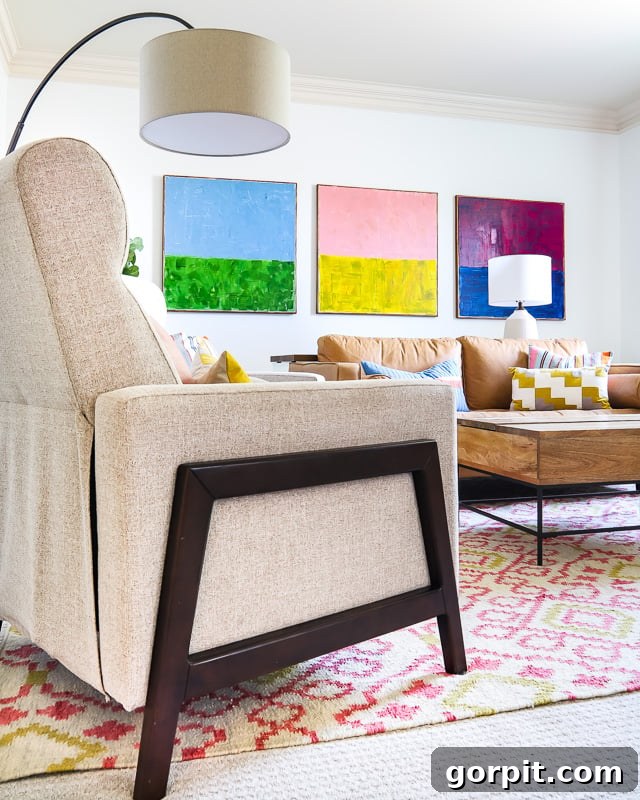
Moving to our upstairs family room, also known as our bonus room, we utilized a 9′ x 12′ rug. In this setup, nearly all our furniture rests on the rug, with the exception of the back legs of our two stylish recliners and the cabinet positioned between them. This still creates a perfectly cohesive and grounded seating area, as the bulk of the furniture makes contact with the rug.
All Legs of Your Furniture Pieces On the Rug (All-Legs-On Approach)
For those who prefer a grander, more enveloping feel, or in particularly large rooms, the “all legs on” approach is an excellent choice. This means every single leg of every piece of furniture within your seating arrangement rests entirely on the area rug. When opting for this style, it’s imperative that the rug is generously sized, extending at least 8 to 12 inches beyond the outermost edges of your furniture grouping. This ensures that the rug doesn’t look like it’s struggling to contain the furniture, but rather comfortably embraces it, creating a truly luxurious and expansive zone. As mentioned earlier, I believe this option would have looked even more impactful in our family room if we had chosen a rug one size larger, allowing for that generous overhang.
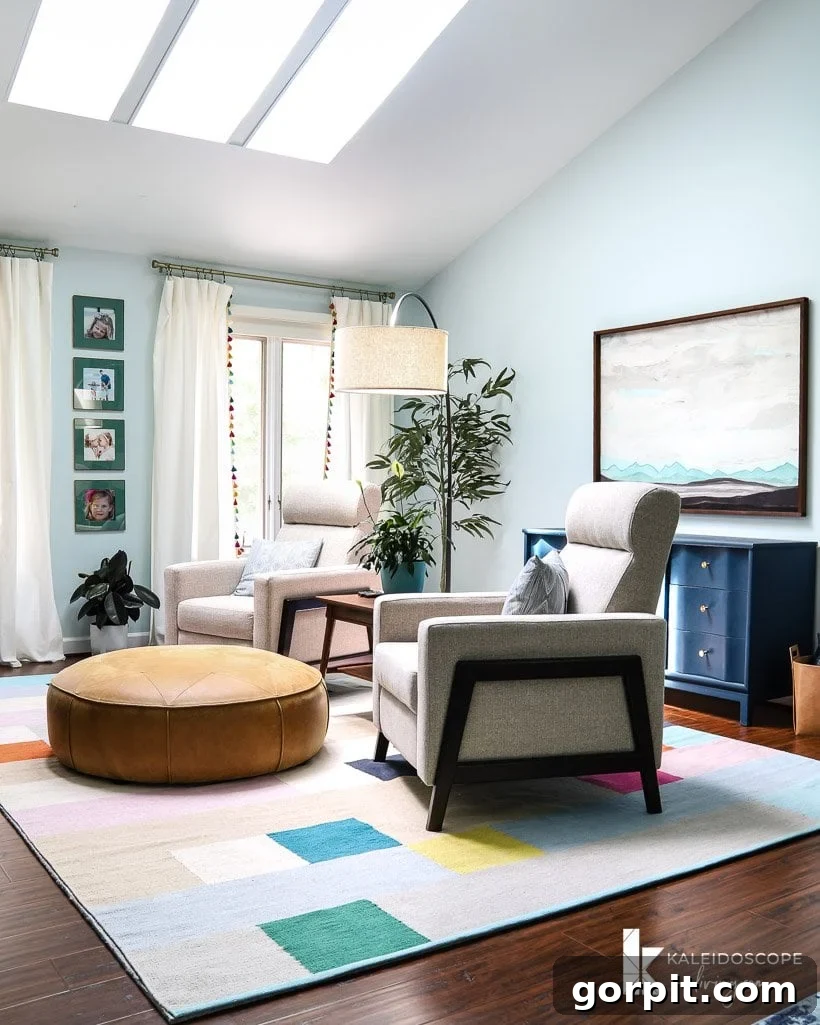
An exemplary demonstration of the “all legs on” placement is found in the sitting area of our master bedroom. We designed this space much like a small living room due to its generous size. Our entire seating arrangement – comprising two recliners and a plush leather ottoman – fits completely and comfortably on the area rug, with ample rug extending beyond.
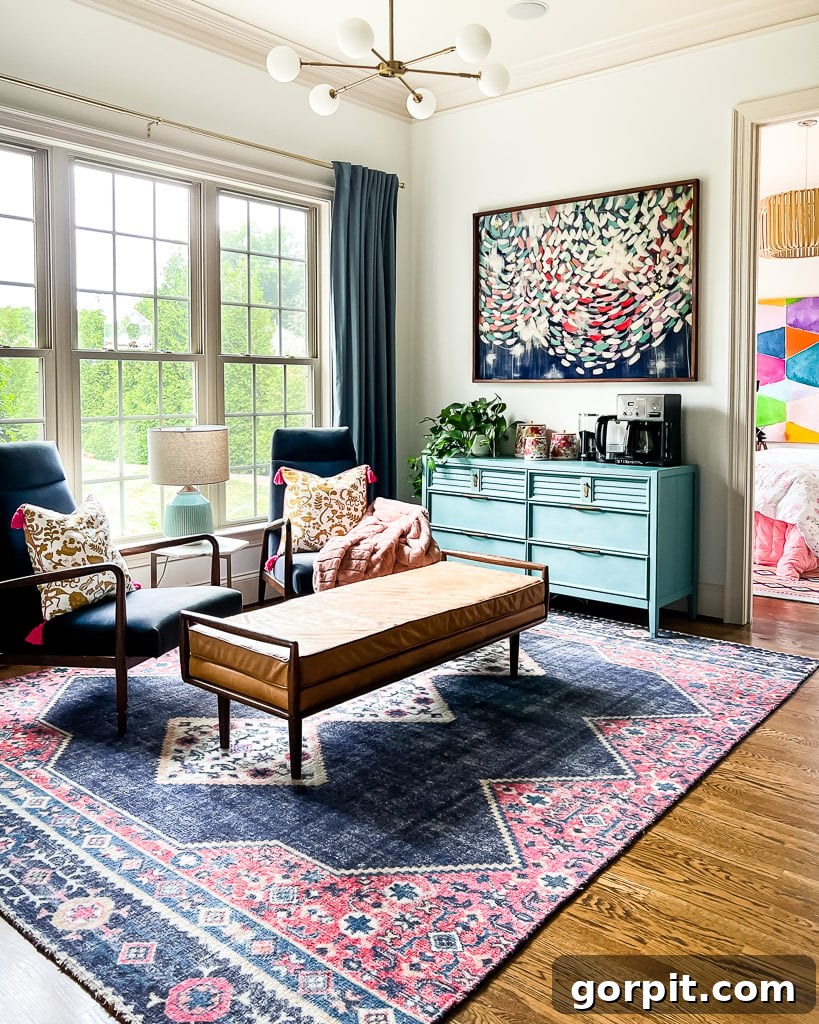
The principles of rug placement are universal and apply equally well to secondary sitting areas. In the cozy sitting nook off our kitchen in our current home, we selected an 8′ x 10′ rug. This size perfectly accommodates all legs of the seating furniture, including the two armchairs and a leather bench. Additionally, the front legs of the dresser, which functions as our charming coffee bar, also rest on the rug, further unifying the space. And for those who fall in love with a rug that’s slightly too large for their ideal “all legs on” arrangement, did you know that you can actually cut a rug to resize it? It’s a fantastic DIY solution!
A final important consideration regarding furniture legs: for pieces with delicate or slender legs, it’s generally best practice for all four legs to be placed on the rug. This not only looks more intentional but also provides stability for lighter furniture. For larger, more robust furniture, such as a substantial sectional sofa, tucking the rug 8-12 inches under the front edge is perfectly acceptable and visually balanced. Observe the side chairs in the image below; their delicate structure necessitates that all four legs are securely placed on the rug, unlike a heavy, deep-seated sofa.
Options for Smaller Rugs in a Living Room
If you’re reading this and thinking, “But I already have a small rug I love!” or “Is there *any* way to make my 5′ x 8′ rug work in the living room?”, the answer is a resounding yes! Don’t worry, you absolutely have creative and stylish options to incorporate those smaller rugs into your design scheme.
The most popular and effective solution for utilizing a smaller rug in a living room is to layer it. This technique involves placing your cherished smaller rug (like a 5′ x 8′ or 5′ x 7′) on top of a larger, foundational rug. This way, you achieve the necessary overall rug size to properly anchor your living room furniture, while still showcasing the unique beauty and character of your smaller piece. Layering adds depth, texture, and a sophisticated, well-traveled aesthetic to your space. It allows you to introduce intricate patterns, bold colors, or sentimental rugs that might otherwise be too small on their own.
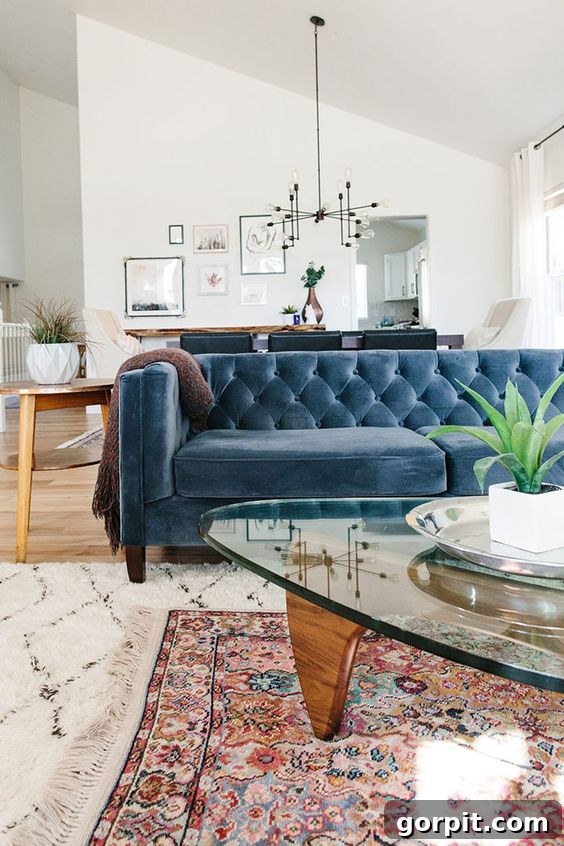
When it comes to selecting the larger, base rug for layering, jute rugs are an incredibly popular and versatile choice. Their natural fibers introduce beautiful warmth and texture to the room, instantly adding an organic and inviting feel. Furthermore, the neutral, earthy tones of jute rugs make them an ideal canvas, complementing virtually any color or pattern of smaller rug placed on top. This creates a balanced, harmonious look that feels both effortless and sophisticated. Experiment with different textures and patterns between your base and top rug for an even richer design statement.
So there you have it! With these practical tips and illustrative examples, I sincerely hope you now feel empowered and ready to confidently choose your next living room rug. Say goodbye to the stress of worrying about sizes and furniture placement, and say hello to a beautifully grounded and inviting living space! Remember, a well-chosen rug is the foundation of a truly successful room design.
Where Can I Buy an Affordable Rug for My Living Room?
Finding a gorgeous area rug that fits your budget is absolutely possible! I’ve curated a selection of beautiful and affordable rugs to help you get started. The prices listed are typically based on an 8 x 10 size at the time this post was written. Keep in mind that prices fluctuate, and sales are frequent, so if you spot a rug you love that’s currently above the listed price group, keep an eye on it – it’s likely to go on sale! For even more deals and my latest finds, be sure to follow me on Like to Know It, where I regularly share sales on my favorite rugs. And remember, a quality rug pad is just as important as the rug itself for comfort, longevity, and safety. Check out my comprehensive rug pad guide for all the details.
Large Rugs Under $300
Click on any rug below for full product details.
Large Rugs Under $500
Click on any rug below for full product details.
Large Rugs Under $600
Click on any rug below for full product details.
More RUG Posts
SEE ALL rug POSTS
-
Designer Tips for Choosing Perfect Kitchen Rug Runners
-
How to Choose the Best Rug Size for Your Living Room
-
How to Install a Stair Runner: A Step-by-Step Tutorial
-
How to Keep Rug Corners Down – Tips and Tricks for Every Homeowner
-
The Best Places to Shop for Affordable Rugs
-
The Rug Pad Guide: What You Need to Know Before You Buy
Be sure to save this post so you can refer back to these invaluable tips whenever you’re ready to refresh your living room or choose a new rug!
Curious about my holistic approach to transforming rooms and spaces within our home? Dive deeper into the methodology with Designer in a Binder® – your comprehensive guide to creating a home you love.
And for exclusive content, behind-the-scenes sneak peeks, and direct access to more interior design wisdom, make sure to subscribe before you go!