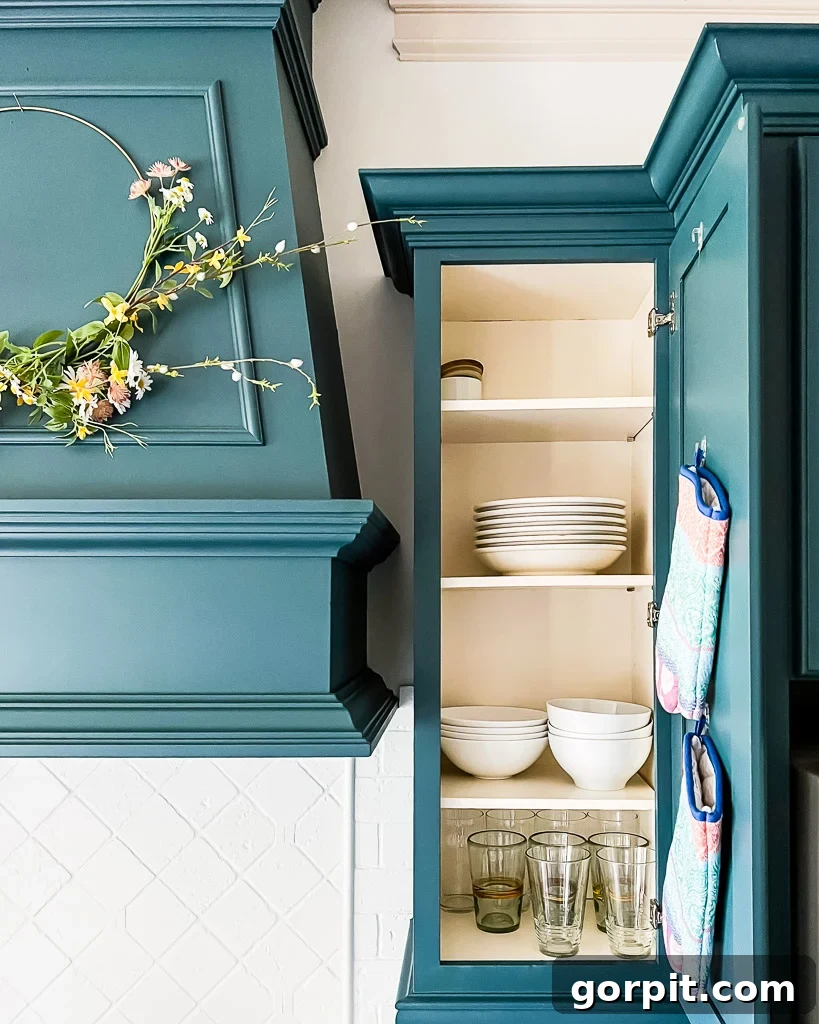
Transforming your kitchen from chaotic to functional is easier than you think. By implementing smart organization strategies for your kitchen cabinets and drawers, you can create an efficient space that truly serves your entire family. Imagine a kitchen where every item has its designated place, making cooking and meal prep a joy, not a chore. Maximizing your storage doesn’t just clear clutter; it elevates your entire culinary experience and brings a renewed sense of calm to the heart of your home. Get ready to fall in love with your kitchen all over again!
Table of Contents
For me, a highly functional kitchen isn’t just a luxury—it’s an absolute necessity. As a busy individual who genuinely enjoys cooking, I need my kitchen to be a space where efficiency reigns supreme. My time is best spent creating delicious meals and baking treats, not endlessly searching for a measuring cup or a pot lid. Over the years, I’ve discovered a few core kitchen organization ideas that have been nothing short of sanity-saving!
If you’ve followed my journey for a while, you might recall the extensive kitchen renovation we undertook in our previous home. That experience was invaluable, teaching us countless lessons that we brought to the organization of our current kitchen. When we moved in and realized we had fewer and less functional cabinets, I immediately set out to implement small, impactful improvements. Our goal was to make every storage area, from the dish cabinets and pantry to the often-neglected space under the kitchen sink, work as efficiently as possible. This meticulous approach has undeniably simplified our daily lives. The secret truly lies in beginning with the best kitchen cabinet organization ideas; from there, everything else naturally falls into place.
I’m excited to share all my top tips for crafting an organized kitchen space that is uniquely tailored to *your* needs. While every kitchen layout differs, they all share fundamental components: appliances, cupboards, counter space, and kitchen drawers. The ultimate objective is to maximize the storage you have, ensuring seamless movement and effortless use of the area. Achieving this delicate balance is made possible through smart, thoughtful organization.
Steps for Organizing Your Kitchen Cabinets
Organizing your kitchen cabinets might seem like a daunting task, but by breaking it down into a simple, two-step process, it becomes entirely manageable. And please, I cannot emphasize this enough: complete step one before even contemplating step two. Attempting to organize items you no longer want or need is not only overwhelming but fundamentally impossible. Once the initial decluttering phase is complete, you’ll be perfectly positioned to create an efficient and beautifully organized kitchen.
Step 1: Declutter Your Kitchen Cabinets
Do you find yourself dreading time in the kitchen because it’s perpetually full of clutter and lacks proper organization? If so, you’re certainly not alone! Kitchen clutter is a pervasive and very real problem that can sap joy from your cooking experience. This crucial first step, decluttering your cabinets, is an absolute prerequisite before you even think about organizing them. It lays the groundwork for a truly functional and serene kitchen environment.
Remove and Put Away Any Items That Belong in Other Rooms
Before diving deep into individual cabinets, do a quick sweep of your kitchen for anything that doesn’t belong. It’s common for items from other rooms—like mail, office supplies, children’s toys, or craft bits—to migrate into the kitchen. Grab a dedicated basket or bin and collect all these misplaced items. Once your basket is full, return each item to its proper home. This initial pass immediately reduces general clutter and ensures you’re only dealing with kitchen-specific items when you start decluttering your cabinets.
Clear and Declutter One Cabinet at a Time
To avoid feeling overwhelmed, tackle your kitchen cabinets one by one. This focused approach allows you to see progress and stay motivated. Empty the entire contents of a single cabinet or drawer onto your counter or a nearby table. This “empty slate” method is incredibly effective for truly assessing what you own.
For cabinets and drawers storing non-food items: Focus on ruthless elimination. Get rid of anything you haven’t used in a significant amount of time (a year is a good benchmark), items you no longer like or enjoy, duplicates, anything broken or not in proper working order, and anything that consistently proves difficult to store or doesn’t fit the space well. Be honest about those “just in case” items; if “just in case” hasn’t happened in years, it’s probably time for it to go.
For cabinets and drawers storing food items: This requires a slightly different approach. First, check all labels for expiration dates. Spices, baking ingredients, canned goods, and dry pasta all have shelf lives—don’t keep anything past its prime. Next, identify non-perishable food items that your family simply doesn’t like or won’t consume. These are perfect candidates for donation to a local food bank. For perishable items you know won’t be eaten, either give them to someone who will use them immediately or dispose of them to prevent spoilage.
Decide What to Donate, Sell, or Toss
Once you’ve sorted through each cabinet, you’ll have piles for items to keep, donate, sell, or toss. For high-quality, gently used kitchenware or small appliances that are still in excellent condition but no longer serve your needs, consider selling them. Platforms like eBay, Facebook Marketplace, or Craigslist can be great avenues. However, be proactive; don’t let these items sit around for weeks. If they don’t sell quickly, move them to the “donate” pile.
For items that aren’t quite “sale-worthy” but are still perfectly usable, donate them to a local charity or thrift shop, such as Goodwill or Habitat for Humanity ReStore. Always ask for a donation receipt, as these contributions may be tax-deductible. Finally, anything that is broken, chipped, stained beyond repair, or truly useless should be tossed into the garbage or recycling, ensuring it’s responsibly disposed of.
This post contains affiliate links for your convenience. Click here for my full disclosure policy.
Step 2: Organize Your Kitchen Cabinets
If you follow me on Instagram, you know that our recent kitchen makeover wasn’t just about painting the cabinets and making them aesthetically pleasing. A significant portion of our focus was dedicated to maximizing organization and function for peak efficiency. Now that your cabinets are decluttered, it’s time to implement smart strategies that will keep them neat and prevent you from ever wanting to pull your hair out again. Here are my best tips for truly organized kitchen cabinets.
Make Sure the Items You Use Every Day Are Easy to Access
Accessibility is key to an efficient kitchen. Items you use daily, such as bowls, plates, and coffee mugs, should be stored in easily reachable locations – ideally on lower shelves of upper cabinets or in accessible drawers. Conversely, less frequently used items, like a gravy separator, specialty bakeware, or an oyster knife, can be stored in harder-to-reach cabinets or the deeper recesses of your pantry. If you constantly find yourself having to dig through stacks or climb a ladder for something you regularly need, it’s a clear sign that item needs to be relocated. Our family’s dishes, for example, are all on the lower shelves of our upper cabinets, ensuring everyone can reach them. The fondue set and pancake griddle, used only occasionally, reside in the cabinet above the refrigerator, a perfect spot for those less-demanding items.
While we benefit from a separate walk-in pantry for food storage (we recently completed a budget-friendly pantry makeover), if you don’t have a dedicated pantry, don’t despair. There are many amazing tips for organizing your food within kitchen cabinets, such as utilizing clear containers, vertical dividers, and tiered shelves to maximize space and visibility.
Add Pull-Outs to Your Lower Cabinets
During our last kitchen renovation, we specifically chose to have drawers for all our base cabinets, and we absolutely adored them! Drawers inherently make organization simpler compared to traditional cabinets. One of the primary reasons kitchen cabinets descend into disarray is the jumbled mess that often accumulates, especially in deep base cabinets. Trying to find a specific pot or pan in a stacked, cluttered cabinet is a frustrating exercise in futility.
We were initially disappointed to discover that our current kitchen features mostly standard base cabinets, having grown accustomed to the sheer convenience of drawers. However, there’s fantastic news: you can easily install pull-out shelves and organizers to transform your base cabinets into highly functional and effortlessly organized spaces! I wholeheartedly recommend these enhancements, particularly if you plan on staying in your home for any considerable length of time. Remember, you only need to invest in the solutions that genuinely work for your kitchen and specific organizational needs.
In our kitchen, we’ve installed a new pull-out trash can and recycling system, an under-the-sink organizer, a dedicated pots and pans organizer, and a double-tier pull-out for our larger cooking vessels. These thoughtful additions have been game-changers. The beauty of these various pull-outs is their specialized design for specific tasks. For example, the organizer for cleaning supplies and sponges keeps the area under the sink tidy, preventing it from becoming a black hole of cleaning products, dish detergent, paper towels, and garbage bags. I also appreciate how the pull-out trash system neatly conceals the garbage can, keeping it out of sight yet perfectly accessible when needed.
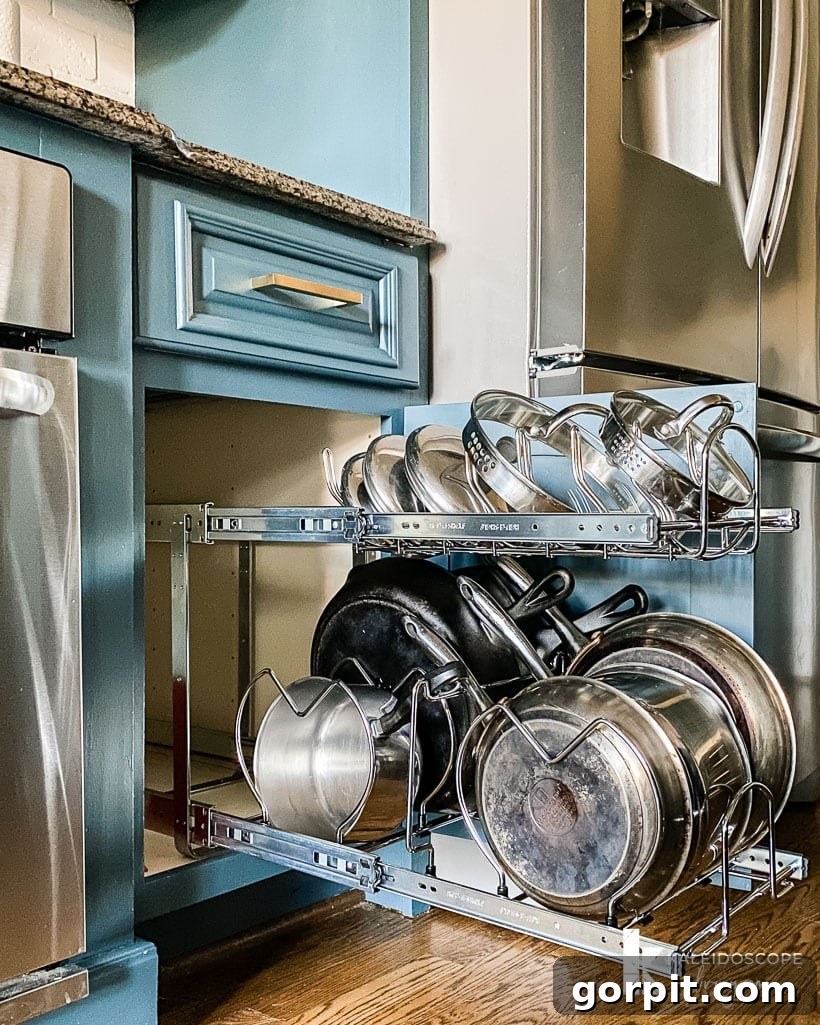
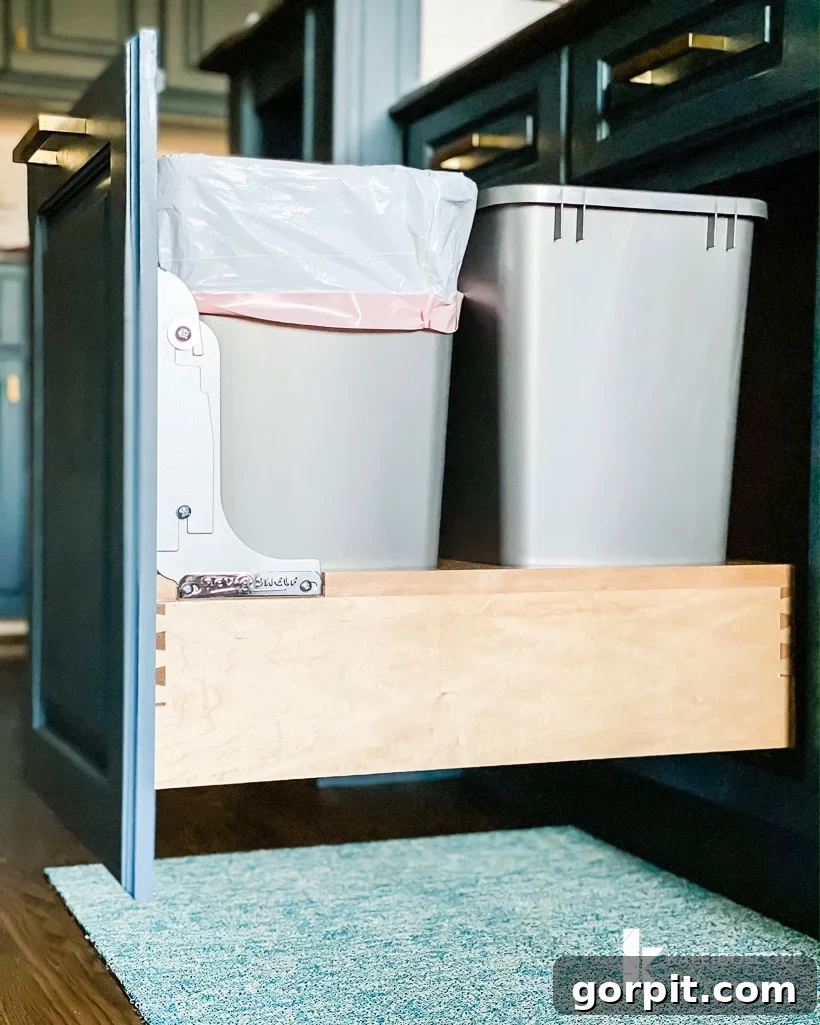
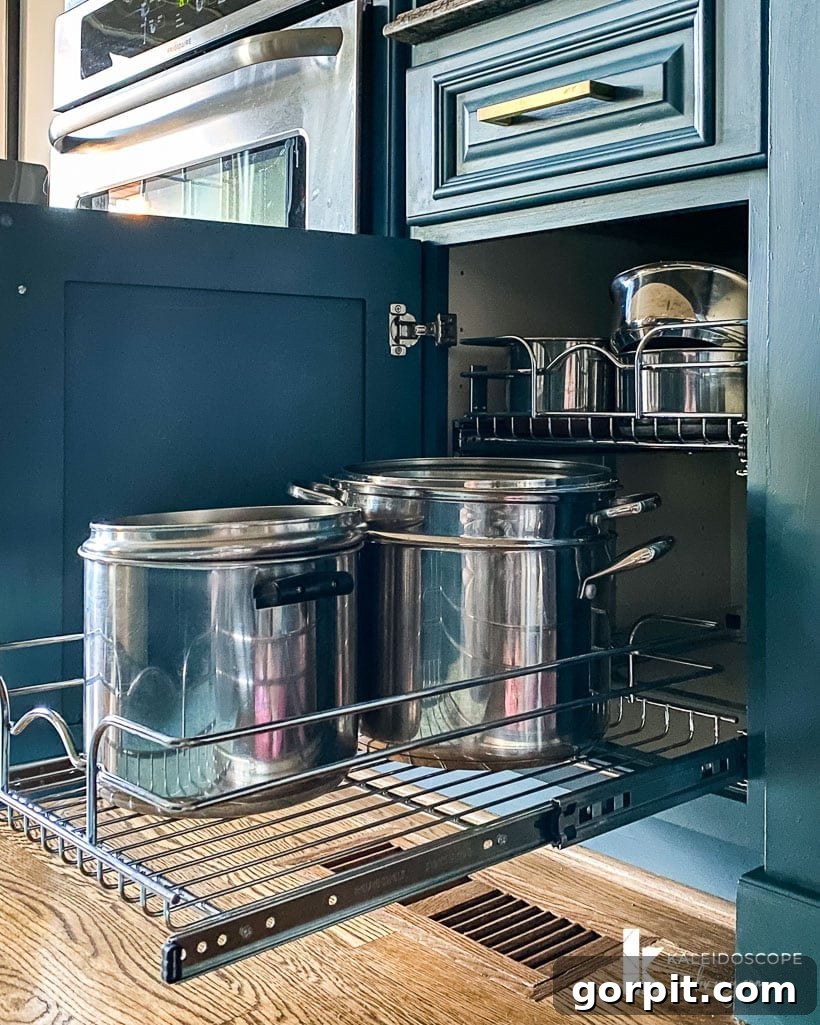
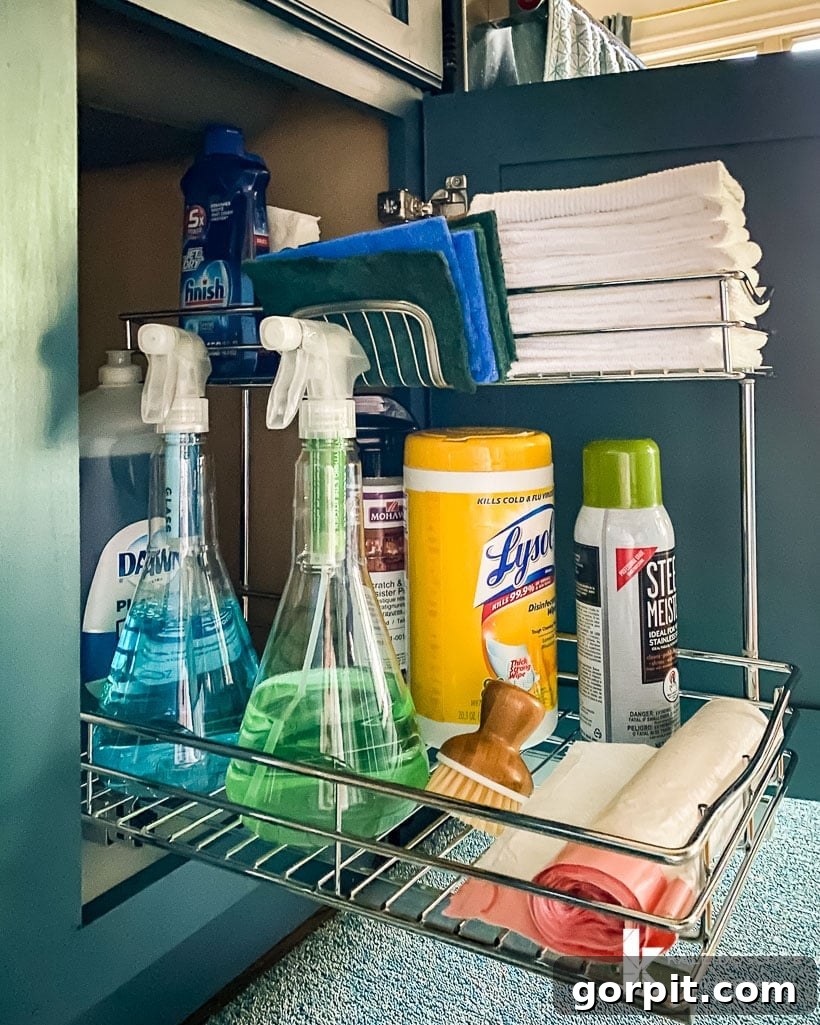
Scroll and click on any image for full product details.
Maximize Your Drawer Storage
With only three small drawers in the main work zone of our kitchen, maximizing every inch of drawer storage was a significant challenge. Yes, you read that correctly – only three small drawers! This limitation pushed us to seek out truly innovative solutions.
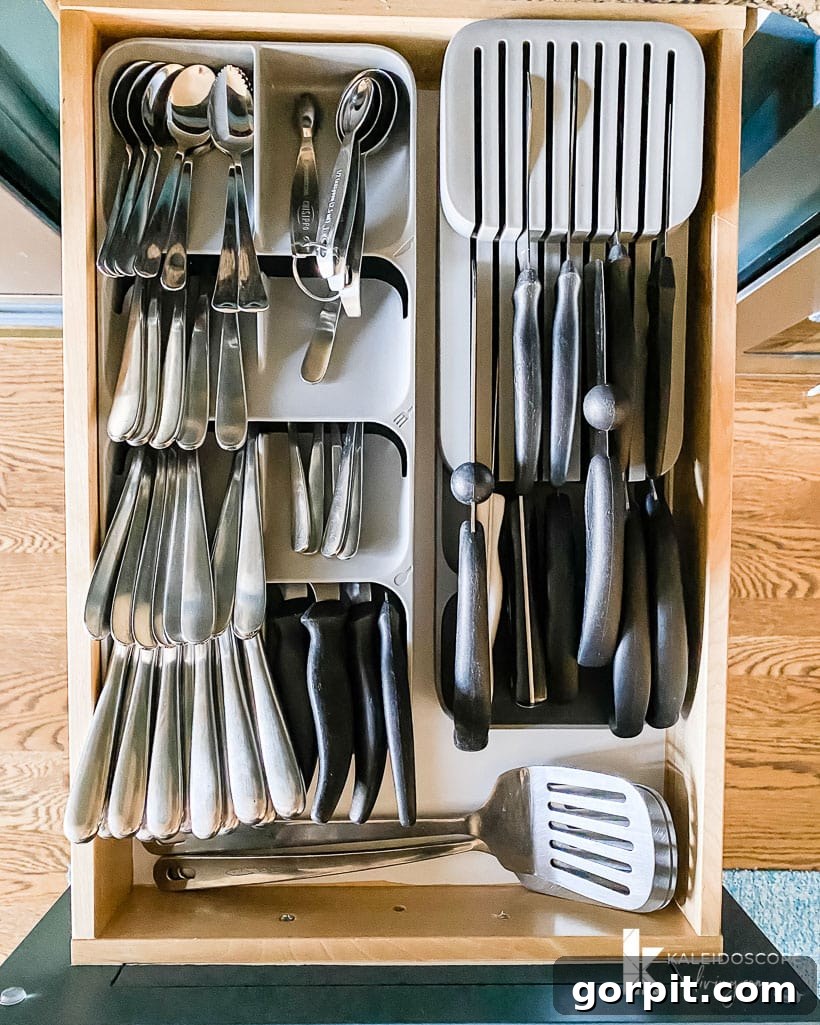
I discovered some truly ingenious space-saving utensil and knife storage solutions. These clever products allowed us to consolidate the contents of two drawers into a single, compact space. That’s right – all our everyday utensils AND knives now fit neatly into one small drawer. And yes, the drawer still opens and closes effortlessly! While many people favor a traditional knife block and a jar of cooking utensils on their countertop, I prefer a clean, clutter-free look. If you share my aversion to visual clutter and need those essential tools tucked away, then investing in solutions that maximize your drawer storage is an absolute must.
Beyond utensils, I also found these incredibly versatile clear stacking organizers, which proved invaluable for condensing a wide array of miscellaneous kitchen items. Far too often, these smaller, disparate tools simply get tossed into a drawer, becoming a disorganized jumble where you can’t see what you have, let alone find it. These stacking organizers elegantly solve that problem, making them one of the best storage solutions I’ve encountered for kitchen tools. The top organizer slides smoothly back and forth, and can even be removed completely, providing easy access to items stored on the bottom layer. They’re fantastic! I’ve linked to all the drawer organizers we used below, demonstrating how effective thoughtful design can be even in limited spaces.
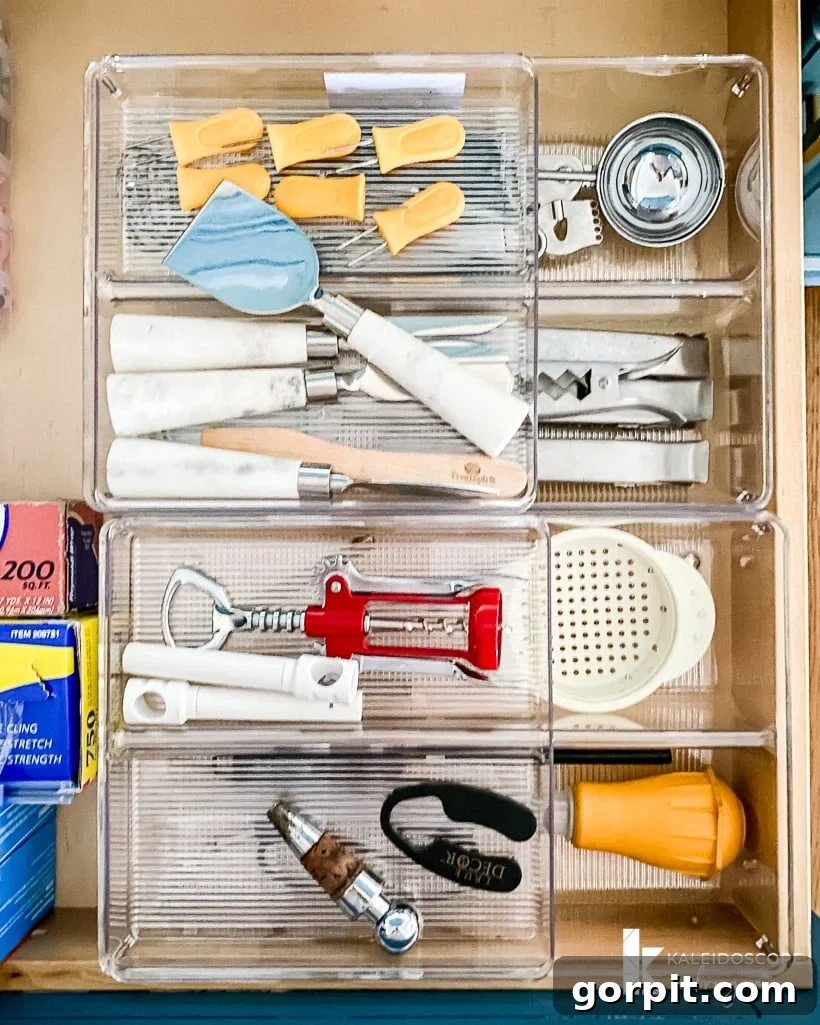
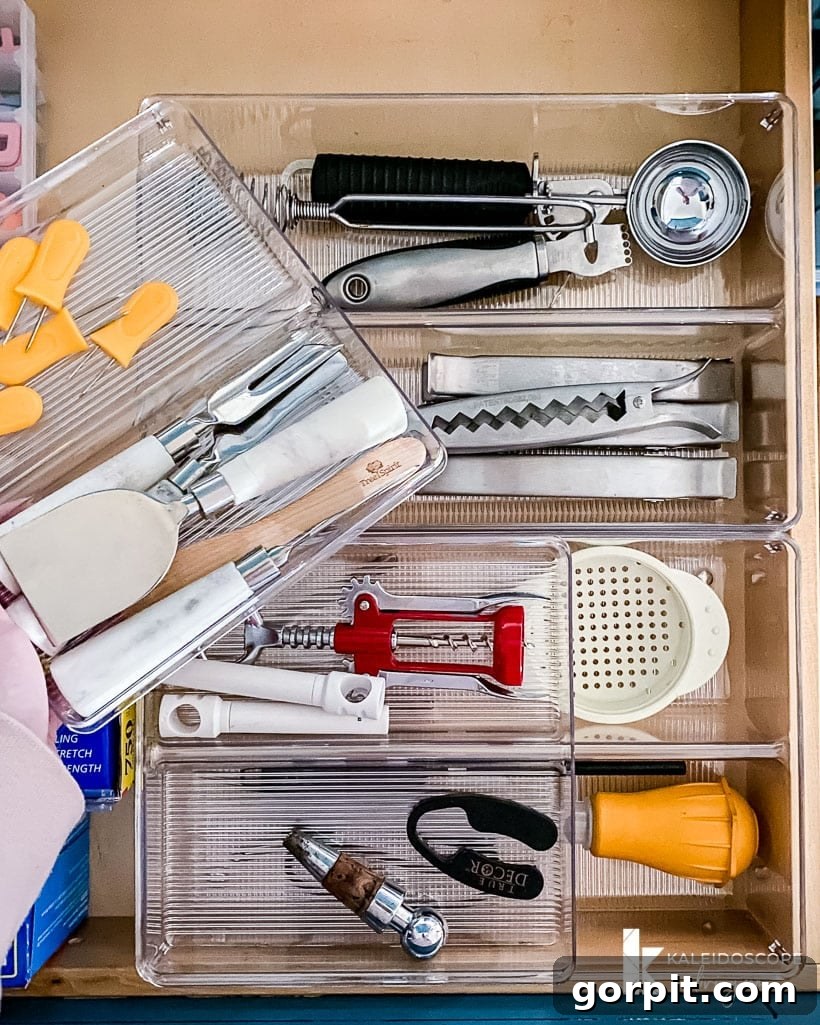
Scroll and click on any image for full product details.
Create Zones of Similar Items
Implementing a “zoning” system in your kitchen is one of the most effective strategies for instant efficiency. By grouping similar items together and storing them in the area where they are most frequently used, you streamline your workflow and save valuable time. For instance, we’ve created a dedicated “kid stuff” drawer, which houses plastic bowls, water bottles, and all the essentials for packing lunches. This means lunch preparation is quick and effortless, and our children can easily access everything they need independently. If your kids enjoy snacking and you’re tired of continually fetching items or finding your pantry in disarray, consider establishing a “snack zone” stocked with pre-approved, easily accessible options for them.
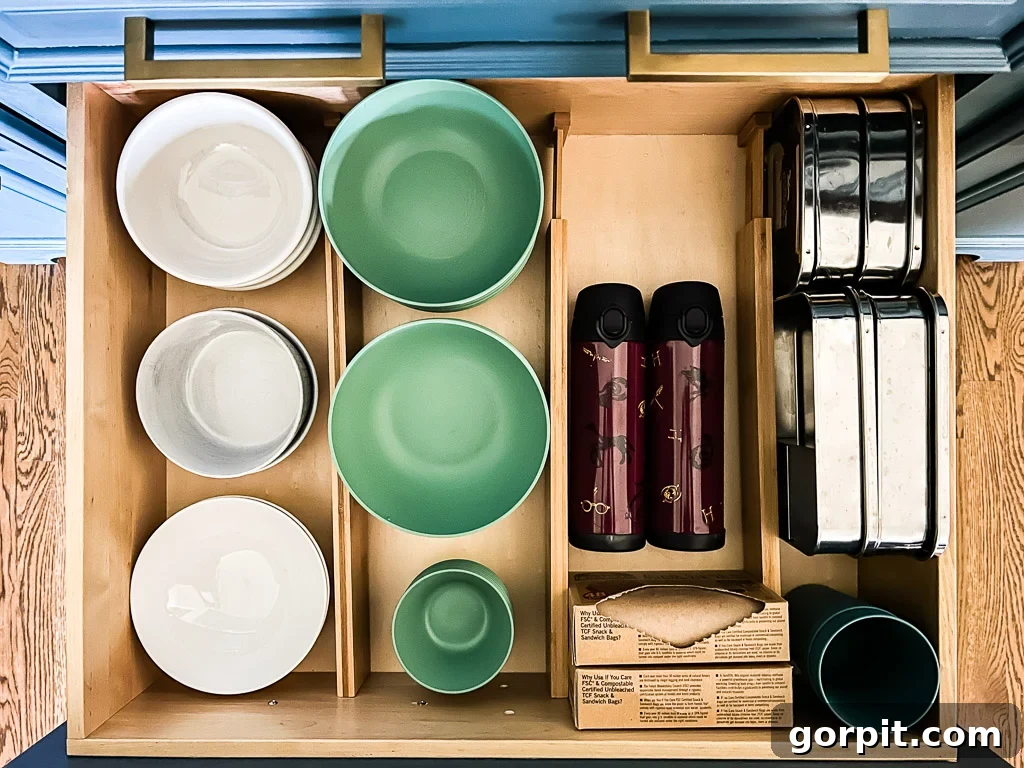
Another excellent example is a baking zone. If you frequently bake, consolidate all your baking supplies—flour, sugar, spices, measuring tools, mixing bowls, and cookie cutters—into one cabinet or drawer near your primary baking surface. This prevents you from running all over the kitchen searching for ingredients or tools. We also have a “workspace” zone, which is our primary food preparation area. Here, knives, glass storage containers, pots, pans, and our pull-out trash can are all within easy reach, making meal prep a smooth and enjoyable process.
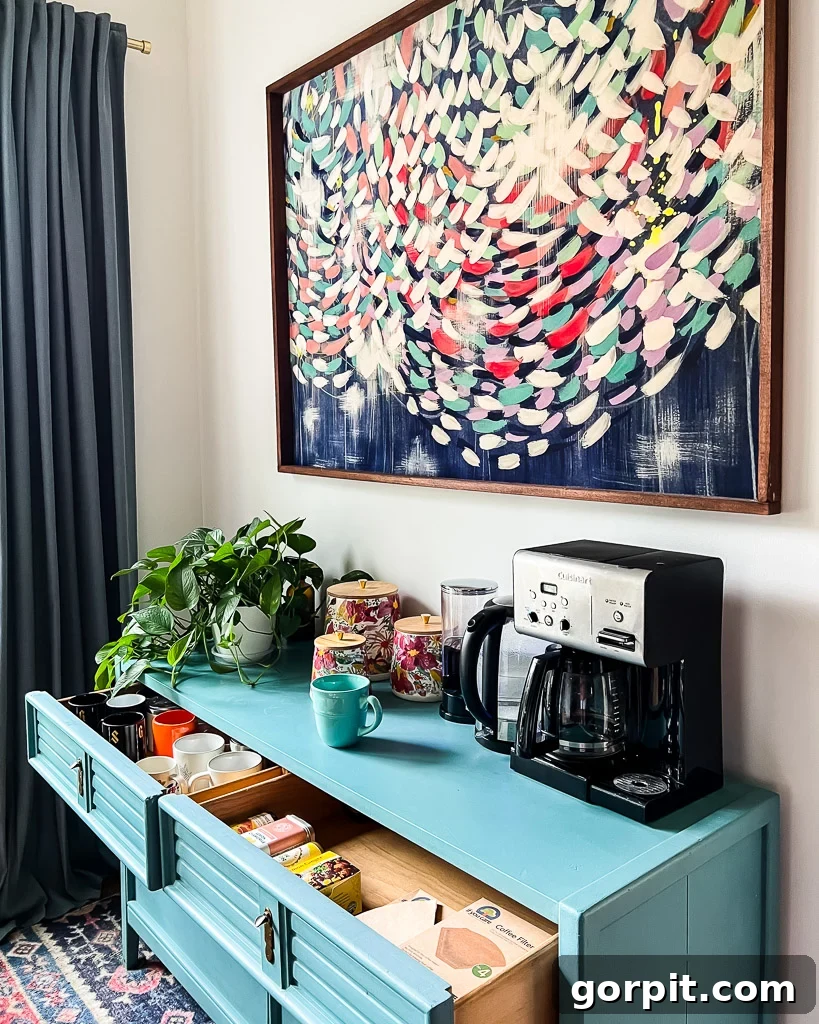
A particularly popular zone in our home is our coffee bar, conveniently located just off the kitchen (check out these awesome coffee bar ideas). I know from personal experience that the last thing I want to do first thing in the morning, while still half-asleep, is wander through the entire kitchen just to make my coffee. We repurposed an old thrifted dresser that I painted to create this station, keeping the coffee maker, mugs, sweeteners, and all our tea-making supplies together in one organized spot. Zoning truly makes a remarkable difference in daily efficiency and enjoyment.
Use Drawer Dividers in Large Drawers
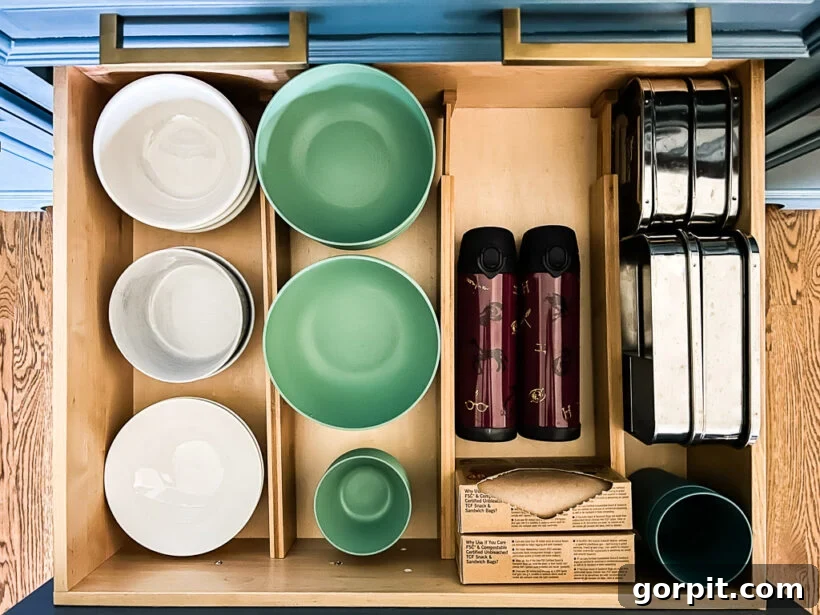
For the few large drawers we have, bamboo drawer dividers have been instrumental in maintaining order. These simple yet effective tools prevent items from shifting and becoming a chaotic mess every time a drawer is opened or closed. We extensively use them in our “kid stuff/lunch packing” drawer, ensuring that everything from small containers to reusable snack bags remains neatly separated and easy to find. Drawer dividers are particularly useful for organizing larger, bulkier items in drawers, creating designated compartments that keep everything tidy and functional.
Use the Back of Cabinet Doors for Extra Storage
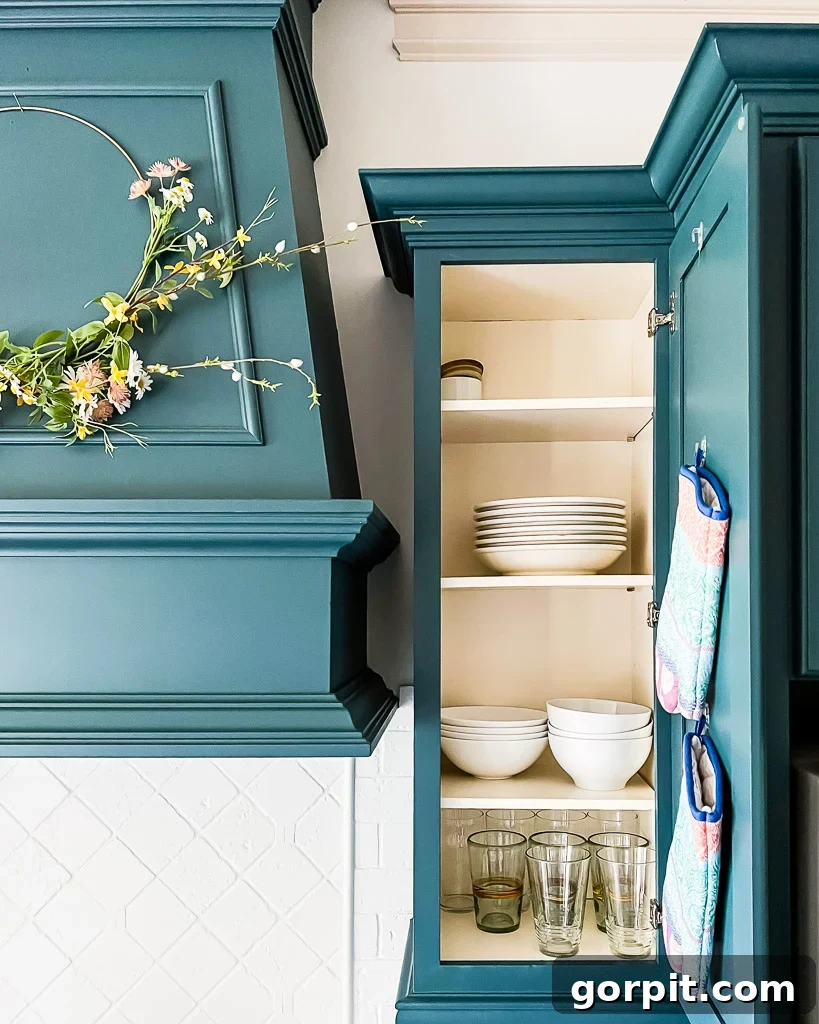
To truly maximize every available inch of space in your kitchen, don’t overlook the back of your cabinet doors—a frequently underutilized area with significant storage potential. We’ve installed simple adhesive plastic hooks on the inside of our upper cabinet doors to conveniently hang hot pads and oven mitts. This method also works perfectly for dish towels or even large, oddly shaped utensils like tongs, grilling implements, or oversized spoons that don’t fit neatly into a drawer. For smaller items, you can easily attach adhesive plastic bins or small organizers to the back of the doors. These are ideal for storing sponges, cleaning supplies, tin foil, plastic wrap, or other odds and ends that might otherwise get lost in a drawer or on a shelf. Utilizing this space ensures that small, often-used items are always within reach and accounted for.
Organize Your Junk Drawer
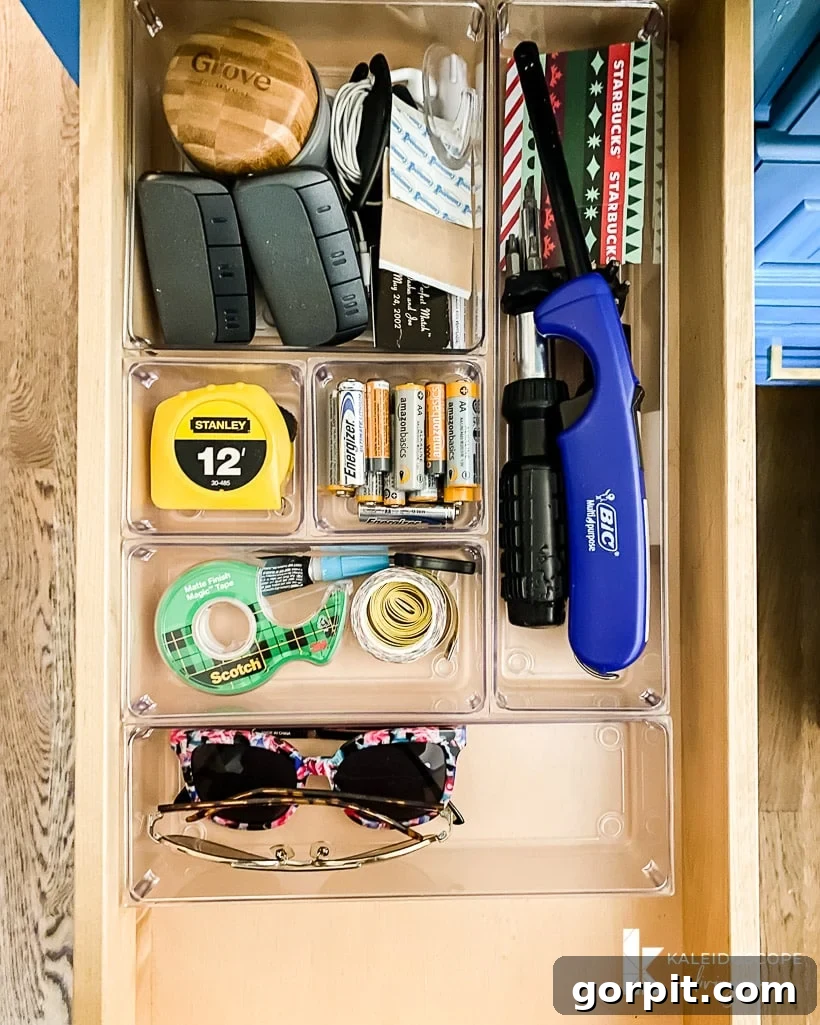
Let’s be honest, everyone needs a “junk drawer.” It’s the designated catch-all spot for all those miscellaneous odds and ends of life that otherwise tend to accumulate on countertops or disappear without a trace. However, the term “junk drawer” doesn’t have to imply chaos! Even this collection of disparate items can be organized and functional. I meticulously organized our junk drawer with this simple set of drawer organizers, and I have absolutely no regrets. Clear, compartmentalized inserts help to categorize and contain everything from batteries and rubber bands to pens and small tools, transforming a potential mess into an easily navigable repository. A well-organized junk drawer becomes a utility drawer, making it simple to find what you need without digging. It truly makes a difference in maintaining overall kitchen tidiness.
Y’all, we absolutely LOVE our kitchen now. It’s not just that it finally reflects our personal style; it also functions seamlessly for our family’s busy lifestyle. Never underestimate the transformative power of a fresh coat of paint combined with thoughtful organizing supplies! These simple steps can profoundly impact your daily routine and enjoyment of your home.
Tools to Help you Organize your Kitchen
Beyond the fundamental steps of decluttering and strategic placement, a few key organizational tools can significantly enhance your kitchen’s efficiency and aesthetic. Let’s explore some additional items designed to help you achieve the ultimate kitchen cabinet organization.
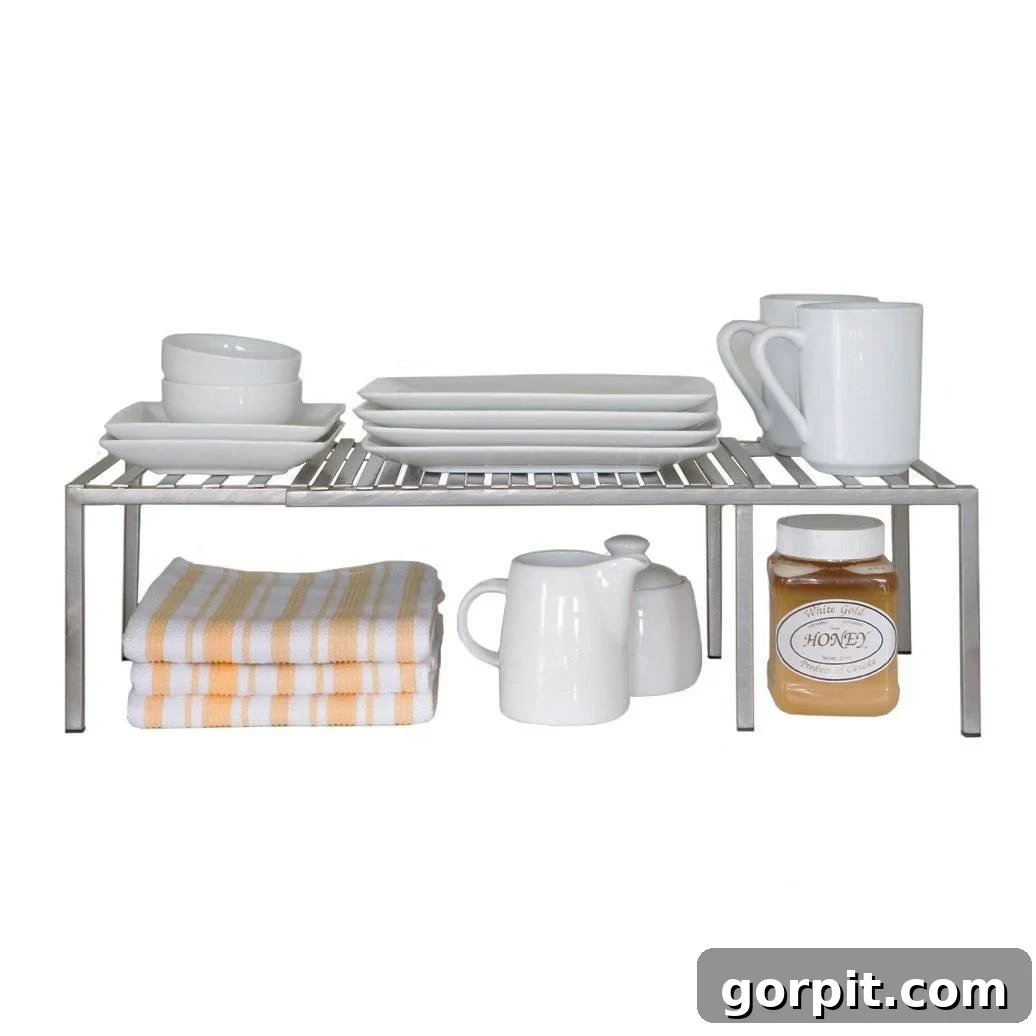
Expandable Kitchen Cabinet Shelves
Many upper cabinets have ample vertical space that often goes unused, leading to stacked items and difficult access. You can effectively double your storage capacity in these cabinets by adding adjustable or expandable shelves. These simple inserts create an additional layer, perfect for storing plates, bowls, or mugs without piling them precariously high. It’s a quick, easy, and incredibly effective way to maximize vertical space and improve visibility, making everything easier to grab.
Pan Organizer Rack
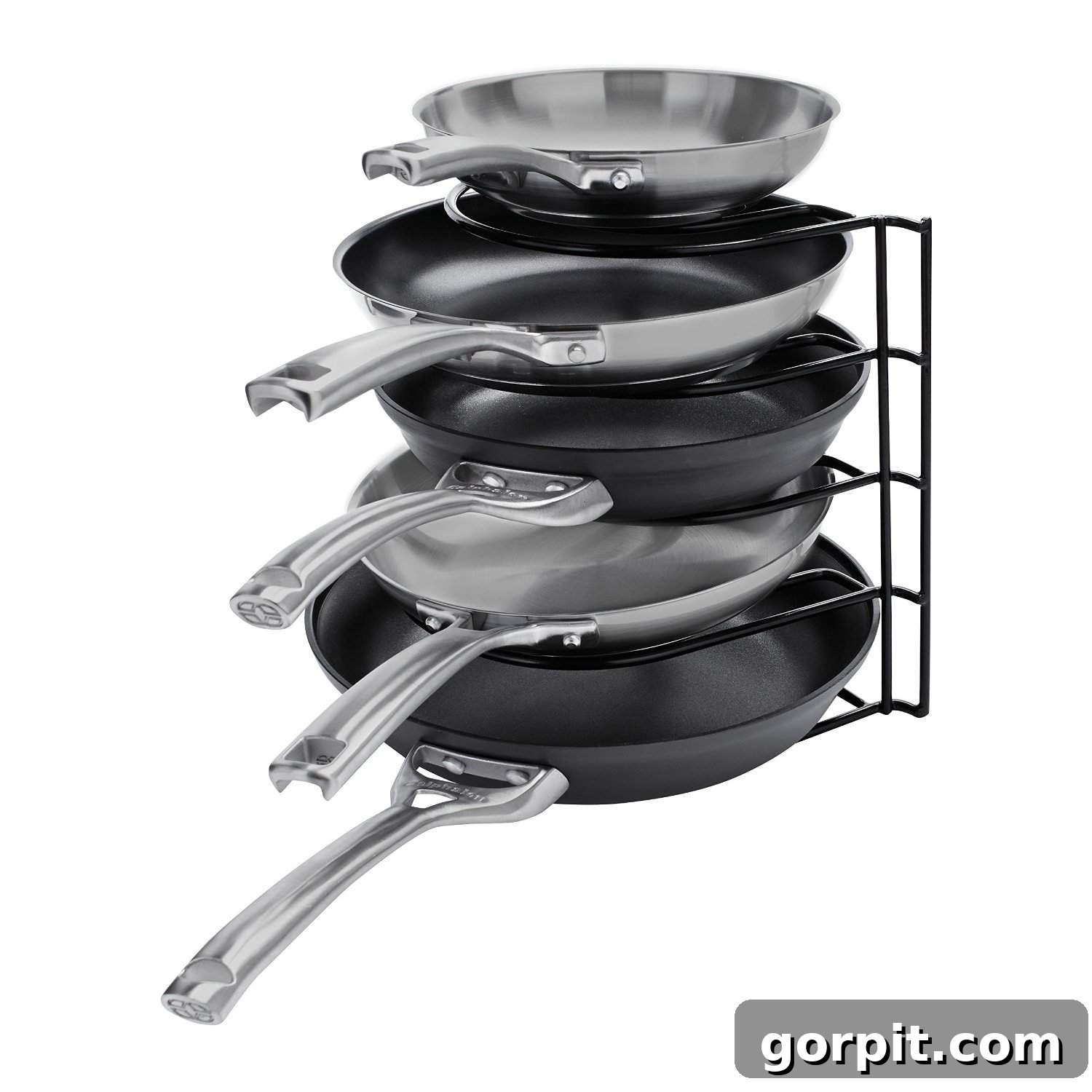
If installing pull-outs in your lower cabinets isn’t feasible, a simple pan organizer rack can be a game-changer. These vertical racks allow you to store frying pans, saucepans, and even lids in an orderly fashion, preventing the dreaded clang and clatter of nested cookware. I absolutely adore this system for maximizing cupboard space and ensuring you can easily grab the pan you need without having to juggle a whole stack. This is especially helpful when you’re in a hurry or if your hands are messy from cooking.
Cookie Sheet/Cutting Board Organizer
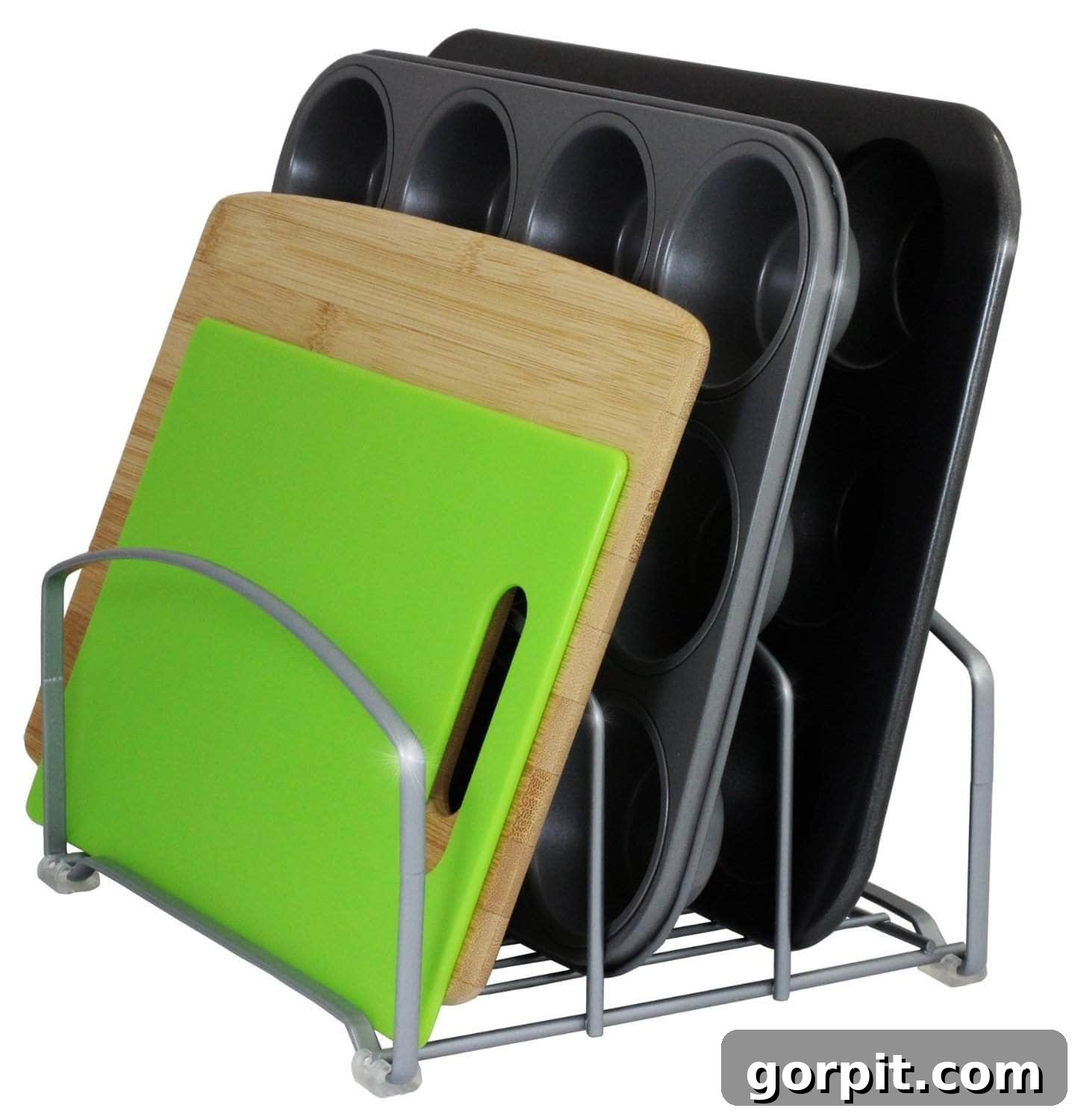
Thin, flat items like cutting boards, cookie sheets, muffin tins, and serving platters can be notoriously difficult to store neatly. A simple organizer that allows you to store them vertically completely solves this problem. This way, each item is easy to slide out individually, eliminating the need to wrestle with a stack to retrieve the one you need at the bottom. No more clanging and searching through your cabinets for your cookie sheets! This is an excellent use of kitchen cabinet space, vastly improving accessibility and making your life in the kitchen much smoother.
Sliding Drawers for Lower Cabinets
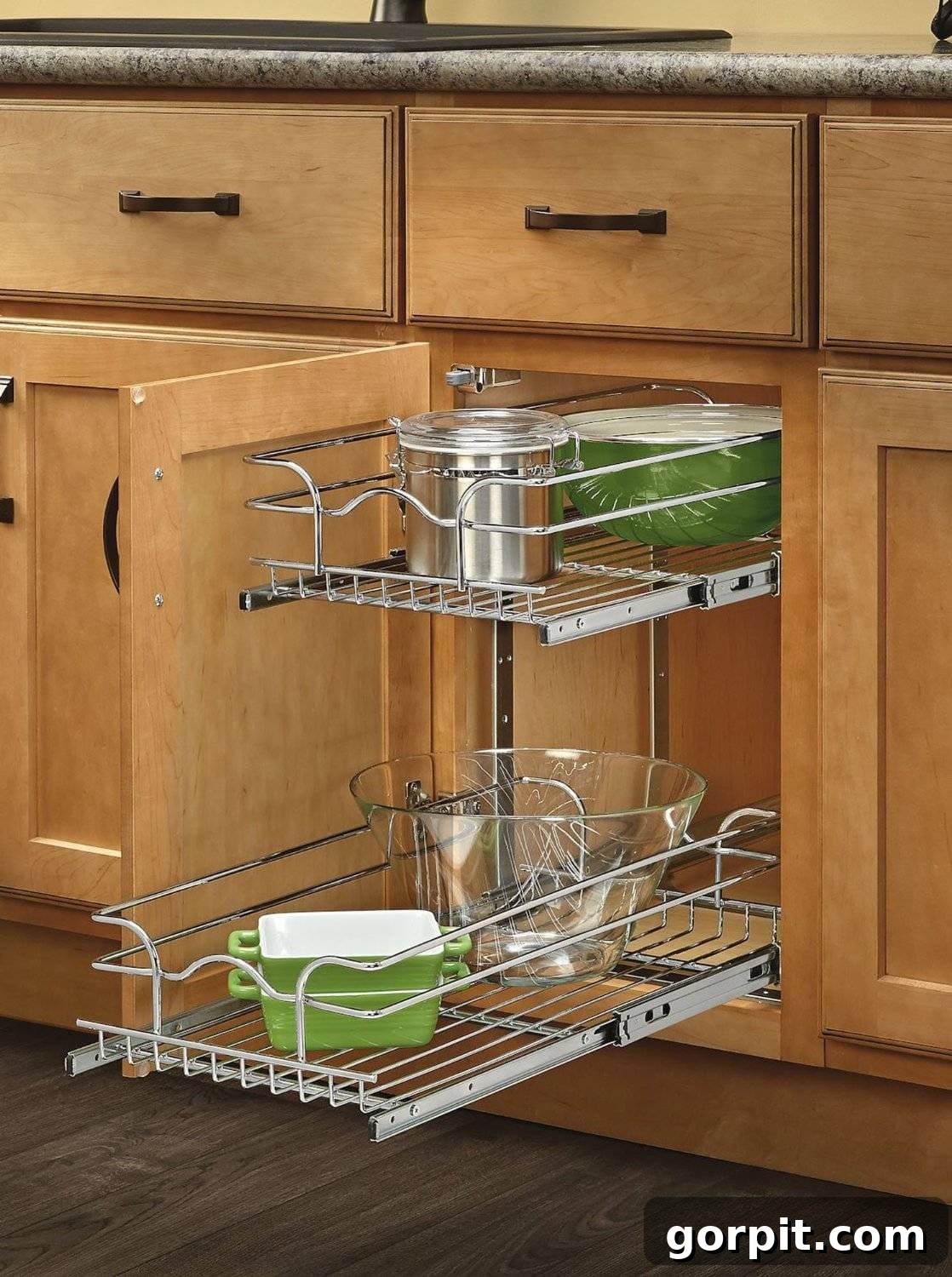
If you anticipate residing in your current home for many years to come, consider the significant long-term benefits of installing sliding drawers for some or all of your lower cabinets. While a larger investment than basic organizers, these custom pull-out drawers dramatically increase both your storage capacity and the accessibility of items, especially in deep, hard-to-reach spaces. We can personally attest to the convenience and efficiency gained from having pull-out drawers for storing our pots and pans; they make retrieving even the heaviest items effortless and keep everything perfectly visible.
Functional Spice Storage
Effective spice storage is crucial for any cook, and there are numerous excellent options available. While some people enjoy transferring all their spices into labeled, matching glass jars for a uniform look, it’s not a mandatory step for organization. The most important goal is to have your spices easily accessible and neatly arranged. Although I’ve seen fantastic spice drawer ideas, our limited drawer space meant I couldn’t dedicate one solely to spices, leading me to explore alternative solutions.
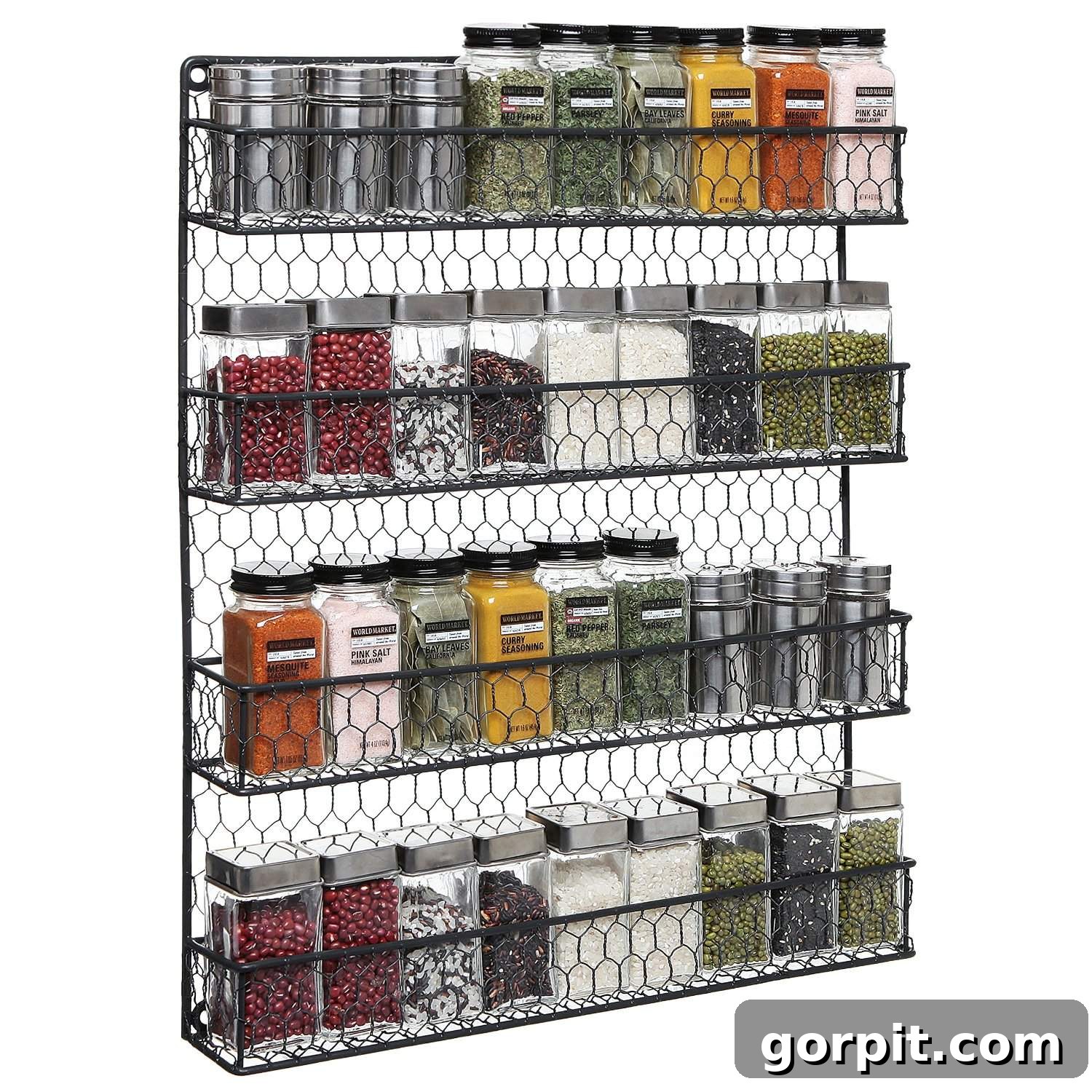
One of my favorite solutions is a charming chicken wire spice rack. It’s not only highly functional but also attractive enough to be hung openly on a kitchen wall, serving as both storage and decor. Of course, if you prefer a more discreet approach, it can easily be mounted on the inside of a cabinet door.
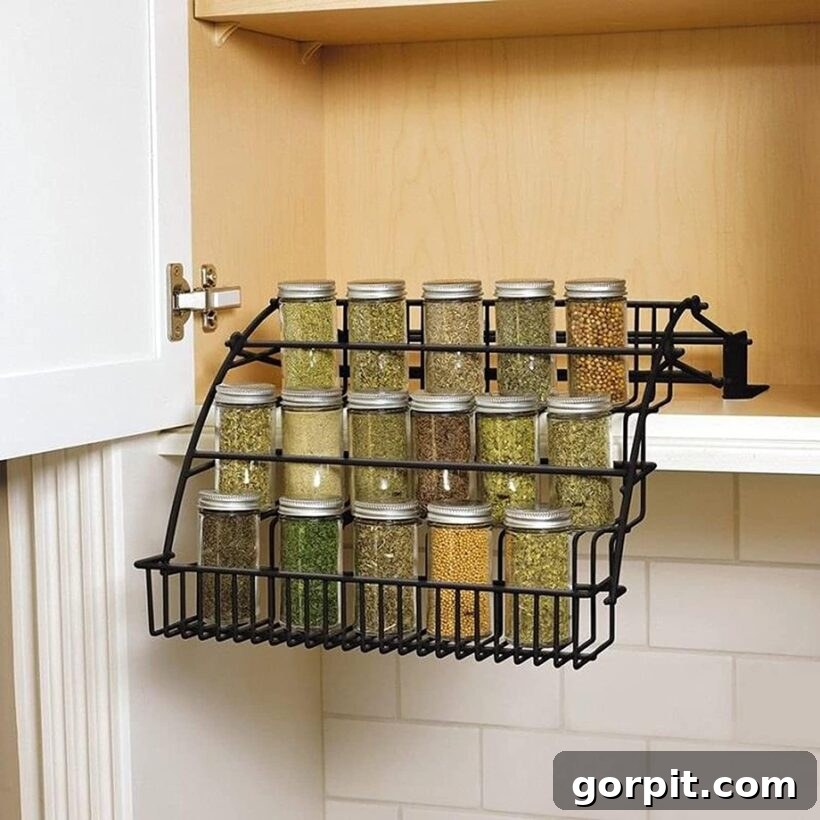
My other top recommendation is the Pull-Down Cabinet Spice Rack. This innovative organizer allows you to pull the entire rack down and out from the cabinet, making it incredibly easy to see and select the exact spice you need without rummaging or stretching. Both options ensure your spices are organized and ready for your next culinary adventure.
Click on any image below for full product details.
More Cabinet Posts
SEE ALL cabinet POSTS
-
The Best Neutral Paint Colors for Kitchen Cabinets
-
Should I Paint My Kitchen Cabinets? Crucial Questions to Ask Before Getting Started
-
How to Organize Kitchen Cabinets (In a “Normal” Kitchen)
-
The Best Paint for Kitchen Cabinets: Everything You Need to Know!
Wondering how I approach transforming rooms and spaces in our home? Check out Designer in a Binder®, my comprehensive guide to decorating your home with confidence and ease.
And if you want exclusive content, behind-the-scenes sneak peeks, and even more home organization tips, be sure to subscribe before you head out! Join our community and keep your home beautiful and functional.